
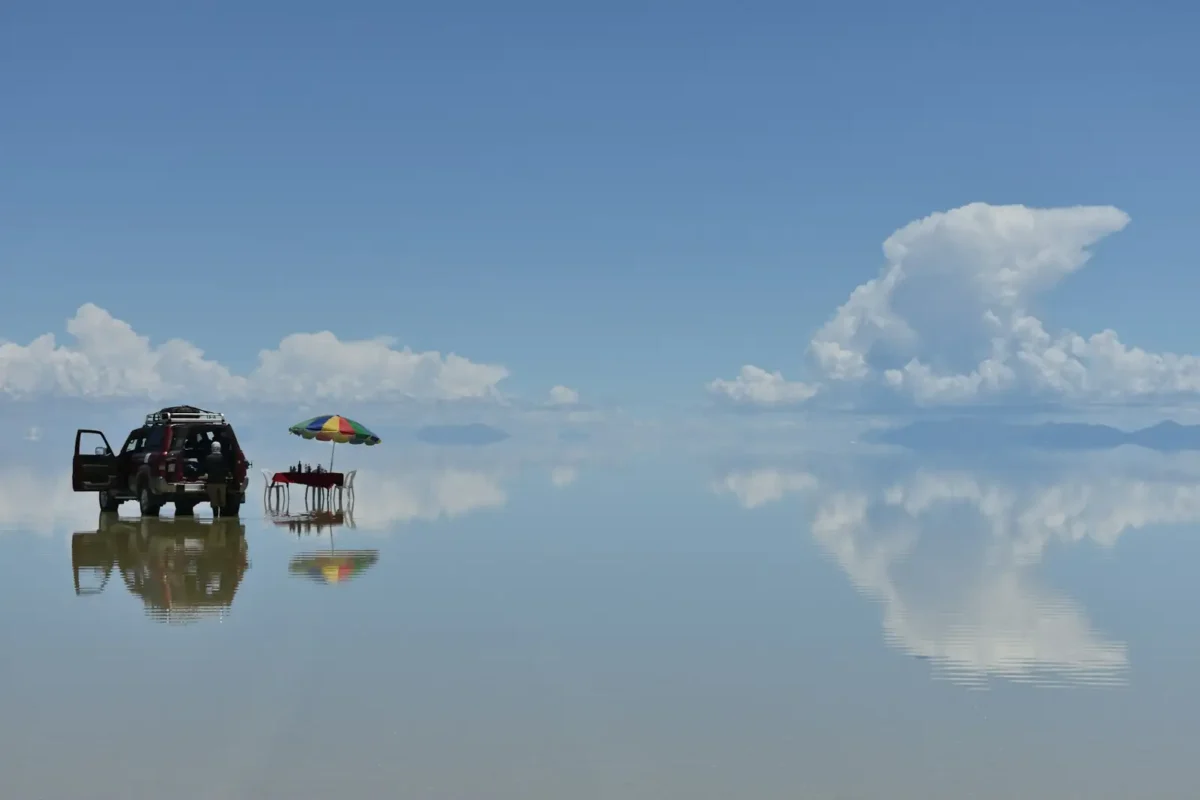
Packing for the Salar de Uyuni is not like packing for a normal beach or city trip. You will stand on a white salt crust at roughly 3,650 m, under a sun strong enough to burn you in 20 minutes, and a few hours later you may be sleeping in a basic lodge where the night drops well below freezing. In the rainy season you will also be wading through a few centimetres of salty water that eats cheap shoes and corrodes cameras. The good news: none of this needs expensive expedition gear. It needs the right layers, a small health kit, cash in the right denominations and a few smart tricks.
We grew up in Bolivia, and most of the packing mistakes we see from visitors come from one assumption: “it’s a desert, so it must be hot.” It isn’t. This guide gives you a complete packing list for the Salar de Uyuni, split by season (rainy season, dry season and the cold winter months), plus what tour companies usually provide, what you must bring yourself, and a printable checklist at the end.
If you are still deciding when to go, read our guide on when to see the mirror effect first, because the season changes your packing list more than anything else.
Quick answer: For the Salar de Uyuni, pack in layers: a thermal base layer, a fleece, a warm down or synthetic jacket and a windproof shell. Add SPF 50+ sunscreen, UV400 sunglasses, a hat, lip balm with SPF, 2-3 litres of water per day, a power bank, a headlamp and cash in bolivianos (small bills). In the rainy season (Dec-Apr) add rubber boots (often provided) and a dry bag for your camera. In the dry season and winter (May-Nov, coldest Jun-Aug) add a 4-season sleeping bag or rent one for 3-day tours.
Why packing for Uyuni is different
Three things make the Salar a tricky place to pack for: altitude, temperature swings and salt. Understanding them makes every other decision on this list easier.
Altitude: thin air and strong sun
The salt flat sits at about 3,650 m above sea level, and if you take a 3-day tour toward the Eduardo Avaroa reserve you will cross passes and geyser fields above 4,800 m. At that height there is less atmosphere filtering ultraviolet light, and the white salt reflects much of it back up at you. That means you get UV from above and below, which is why people burn under their chin and inside their nostrils. It also means you dehydrate faster, because the air is extremely dry and you breathe harder.
Day and night: a 25 °C swing is normal
On a typical sunny day the Salar sits around 15-20 °C in the afternoon. After sunset the temperature falls fast. On the salt flat itself, nights often hover around or below freezing, and in the high desert lodges near Laguna Colorada and the Sol de Mañana geysers, winter nights can drop to roughly -10 °C to -20 °C. Most lodges on the 3-day route have no central heating. So the challenge is not “hot” or “cold”, it is both, often within the same 12 hours. Layers solve that. For a month-by-month view, see the weather notes in our guide to where the Salar is and what to expect.
Salt: it gets into everything
In the dry season the crust is hard and dusty, and fine salt gets onto lenses, zips and shoes. In the rainy season you are walking in a thin layer of salt water. Salt water dries into a white crust on fabric and leather, and if it reaches camera electronics or phone ports it can corrode contacts. Anything that touches the ground should be something you don’t mind rinsing or ruining.
The layering system that works at 3,650 m
Instead of one big coat, think in four layers you can add or remove as the jeep stops, the wind picks up or the sun drops behind the mountains. This is the backbone of the packing list for every season.
Layer 1: base layer
A long-sleeve thermal top and thermal leggings in merino wool or synthetic fabric. Avoid cotton as your base layer: it holds sweat and makes you cold once you stop moving. On the coldest nights you will sleep in this layer. Pack two sets for a 3-day tour so you always have a dry one for bed.
Layer 2: insulation
A mid-weight fleece or a light wool sweater. This is the layer you will wear most of the day in the dry season, often over a T-shirt, and take off at midday when the sun is strong.
Layer 3: warm jacket
A down or synthetic puffer jacket. In the rainy season a light one is enough for sunrise and evenings on the salt flat. From May to November, and especially June to August, bring a proper warm jacket that packs small. Sunrise at the geysers on day 3 of the multi-day tour is the coldest moment most visitors experience on the whole trip.
Layer 4: wind and rain shell
A light waterproof, windproof jacket. The altiplano wind is dry and constant, and a shell over your fleece blocks it far better than a second sweater. In the rainy season it also handles afternoon showers.
Legs, hands and head
Comfortable trousers (trekking pants or soft-shell are ideal; jeans are fine for a day tour but cold and slow to dry), a warm beanie, a sun hat with a brim or a cap, a buff or neck gaiter (doubles as dust and sun protection), and thin gloves. In winter, add thicker insulated gloves. Warm wool socks matter more than people think: lodge floors are cold.
🧥 LAYER UP FOR THE ALTIPLANO
A packable down jacket is the one item to get right
Look for one that compresses into its own pocket, so it fits in your daypack between sunrise and noon. Pair it with a merino base layer for sub-zero lodge nights.
See packable down jackets →✓ Also useful: merino base layers · ✓ Compare sizes and reviews on Amazon
Packing list by season
The Salar has two very different faces. From roughly December to April, rain floods the surface and creates the mirror effect (best from January to March). From May to November the crust is dry, white and hexagonal, and the 3-day route through the lagoons is fully open. June to August is the cold heart of the dry season. Our dry season guide covers what you see in those months. Here is how the packing list changes.
| Item | Rainy season (Dec-Apr) | Dry season and winter (May-Nov) | Both |
|---|---|---|---|
| Rubber boots | Essential (often provided by the tour) | Not needed | – |
| Dry bag / waterproof phone pouch | Essential for camera and phone | Useful against salt dust | Recommended |
| Rain jacket / shell | Essential (afternoon showers) | Needed as a windbreaker | Yes |
| Down or synthetic jacket | Light to mid weight | Warm, especially Jun-Aug | Yes |
| Thermal base layers | 1 set | 2 sets for 3-day tours | Yes |
| Sleeping bag | Optional (lodges add blankets) | Strongly recommended on 3-day tours (rent or bring, rated to about -10 °C or lower) | – |
| Hot water bottle / insulated bottle | Nice to have | Highly recommended | – |
| Insulated gloves | Thin gloves | Thick gloves | Yes |
| Quick-dry trousers and spare socks | Essential (things get wet and salty) | Useful | Yes |
| Sandals or flip-flops | For the jeep after wading | For hot springs at Polques | Yes |
| Swimsuit and quick-dry towel | Only on multi-day tours | For the hot springs on day 3 | Multi-day only |
| SPF 50+ sunscreen, UV400 sunglasses, hat, SPF lip balm | Essential (water doubles the glare) | Essential | Yes |
| Power bank and spare batteries | Essential | Essential (cold drains batteries) | Yes |
| Headlamp | For sunrise and starlight tours | For lodges with limited electricity | Yes |
| Cash in bolivianos (small bills) | Essential | Essential | Yes |
Rainy season packing specifics (December to April)
The rainy season is when people come for the mirror. The flooded areas usually have just a few centimetres of water, but salt water is unforgiving to gear. These are the items that matter most.
Rubber boots (often provided)
Most reputable operators running mirror tours lend rubber boots to every passenger, usually in a range of sizes kept in the jeep. Confirm this when you book, and if you have very large or very small feet, ask whether your size is available. If boots are not included, you can usually buy or rent a pair cheaply in Uyuni town. Do not plan to walk in trainers or hiking boots: the salt water soaks through, and the white crust that forms when they dry is hard to remove.
Protecting your camera and phone from salt water
This is where most damage happens. A phone dropped in salty water, or a camera set down on a wet tripod, can be ruined. Our advice:
- Carry a small dry bag (5-10 litres is enough) for your camera, lenses and spare batteries while you are standing in water.
- Use a waterproof phone pouch with a lanyard so a slip doesn’t drop your phone in the brine.
- Keep a microfibre cloth and a few lens wipes handy. Salty spray dries into white spots on lenses.
- If your tripod goes in the water, rinse the legs with fresh water that night and dry them fully.
- Keep a UV or clear filter on your lens as a cheap layer of protection.
- Bring a couple of zip-lock bags for anything salty you need to keep away from clean gear.
Clothes that can get wet
Quick-dry trousers you can roll up, a spare pair of socks in the jeep, and sandals or flip-flops to change into after wading. Leave your favourite white jeans at the hotel. Salt marks on dark fabric wash out, but it takes effort.
Rain jacket and a light warm layer
Afternoon showers and storms are common in January and February. A shell jacket keeps you dry, and a light puffer is enough for sunset and starlight tours, when temperatures on the flooded flat drop to a few degrees above zero.
📷 PROTECT YOUR GEAR
Keep salt water away from your camera
A roll-top dry bag and a floating phone pouch cost far less than a new camera. Essential for mirror-season tours from January to March.
Find dry bags on Amazon →✓ Also see: waterproof phone pouches · ✓ Lightweight and packable
Dry season and winter packing specifics (May to November)
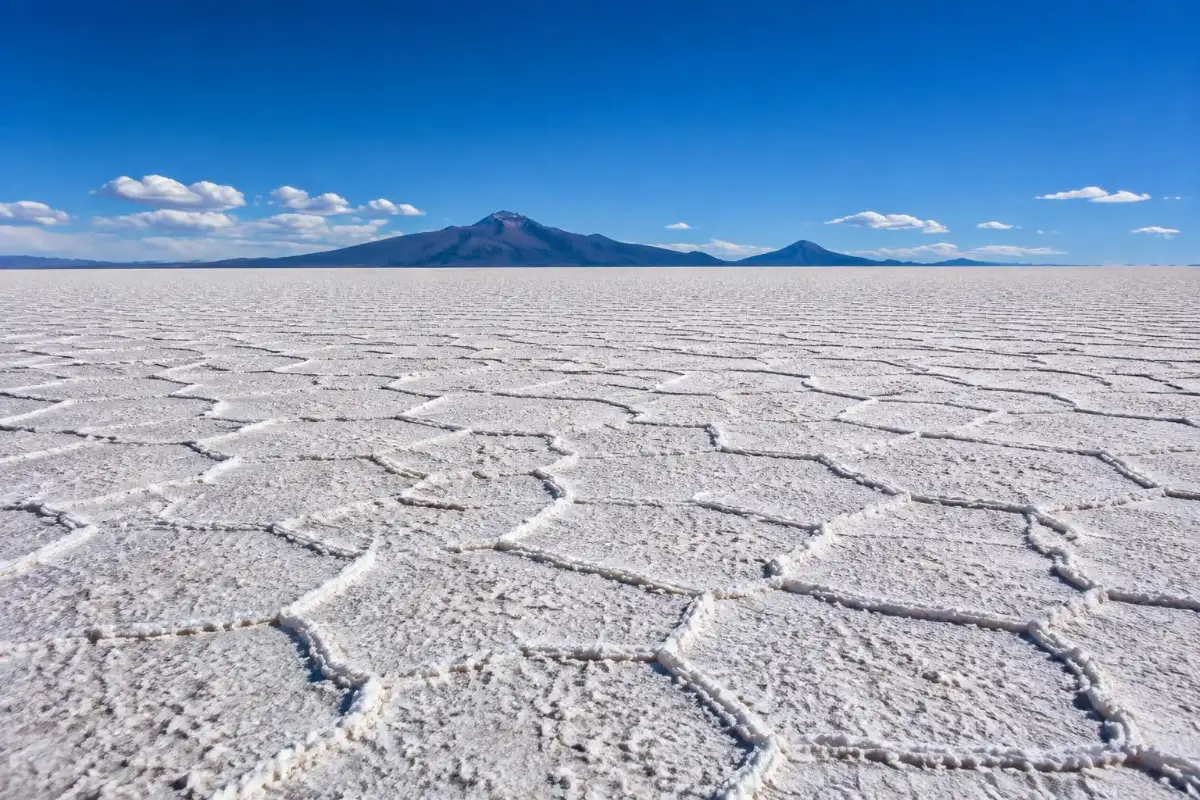
From May the water evaporates and the Salar turns into a bright white plain of hexagons. Multi-day tours reach the coloured lagoons, flamingos and geysers in the south. These months also bring the coldest nights, especially from June to August.
A real warm jacket
Your warmest layer should be a down or synthetic jacket that keeps you comfortable at around -10 °C when combined with a base layer and fleece. If you only own a light puffer, wear it over your fleece and under your shell. Many travellers end up buying alpaca-style sweaters and gloves in Uyuni or La Paz markets, which are cheap and warm, but a proper insulated jacket is hard to find there in good quality.
Sleeping bag for 3-day tours
Lodges on the 3-day route, especially the second night near Laguna Colorada or Villa Mar, are basic, high (often above 4,200 m) and unheated. Beds come with several blankets, but in June, July and August many travellers still feel cold. Most operators rent sleeping bags for a modest extra fee; ask how warm the bag is and whether it has been cleaned. If you travel with your own, a bag rated to about -10 °C (comfort) or lower is a good target for winter. Some people bring a sleeping bag liner to add a few degrees and keep a rented bag hygienic.
The hot water bottle trick
This is the single best tip we can give for cold nights. In the evening, ask the lodge or your guide for hot water (they boil water for tea at dinner). Fill a hard plastic or metal bottle that is rated for hot liquids, close it tightly, wrap it in a sock and put it in your sleeping bag 15-20 minutes before you get in. It warms the bag, keeps your feet warm for hours, and in the morning you have water that hasn’t frozen. Never use a thin disposable plastic bottle: it can deform and leak. A rubber hot water bottle also works and weighs little.
More warm extras
- Thick wool socks for sleeping, plus a dry pair for the next day.
- A warm beanie you can sleep in. You lose a lot of heat through your head.
- Insulated gloves for the 5 am geyser stop.
- Chemical hand warmers, if you feel the cold easily.
- Swimsuit and quick-dry towel for the Polques hot springs, usually visited early on the last morning of the 3-day tour.
Wondering which tour length suits you? Our comparison of 1-day vs 3-day vs 4-day Salar tours explains what each covers and how cold the nights get.
🗺️ 3-DAY SALAR + DESERTS TOUR
Lagoons, flamingos and geysers with local licensed guides
Three days in a 4×4 from the salt flat to Laguna Colorada and the Sol de Mañana geysers, with meals and lodging included. Ask about sleeping bag rental when you book.
Check availability →✓ Free cancellation on most tours · ✓ Instant confirmation · ✓ Local operators
Sun protection at 3,650 m and above
We cannot stress this enough: the sun on the Salar is stronger than almost anywhere most travellers have been. UV intensity increases with altitude, and fresh salt reflects a large share of it. On a clear day the UV index here regularly reaches extreme levels. A burn on day one can make a 3-day tour miserable.
Sunscreen: SPF 50+, broad spectrum
Use a broad-spectrum SPF 50+ sunscreen and reapply every 2 hours, more often if you are sweating or wading. Don’t forget the places people miss: ears, back of the neck, under the chin, the tops of your hands and the backs of your knees if you wear shorts. A small tube in your pocket is more useful than a big bottle left in your backpack on the jeep roof.
Sunglasses: UV400, ideally polarised and wraparound
Snow-blindness-style eye irritation is a real risk on bright white salt. Pick sunglasses labelled UV400 (they block wavelengths up to 400 nm). Polarised lenses cut the glare on the mirror surface, and a wraparound shape stops light coming in from the sides. Bring a cheap spare pair in case you lose or scratch the first. Fashion sunglasses without a UV rating are not enough.
Lip balm with SPF, and moisturiser
The altiplano air is so dry that lips crack within a day. Carry lip balm with SPF 15-30 and use it constantly. A small tube of moisturiser helps your hands and face, and saline nasal spray helps if your nose gets dry and bleeds a little, which is common at altitude.
Cover up
A wide-brimmed hat or cap with a neck flap, a buff you can pull over your nose and cheeks, and a long-sleeve shirt do more than any sunscreen. Lightweight UPF clothing is ideal.
😎 BEAT THE ALTITUDE SUN
UV400 sunglasses and SPF 50+ sunscreen
The salt reflects sunlight back at you. Polarised UV400 lenses cut the glare, and a high-SPF sunscreen keeps a day-one burn from ruining your tour.
Shop UV400 sunglasses →✓ Also see: SPF 50+ sunscreen · SPF lip balm
What tours usually provide vs what you must bring
Inclusions vary between operators and between a 1-day excursion and a multi-day trip, so always read the details of the specific tour you book. That said, this is what is typical for licensed operators running from Uyuni.
| Item | 1-day tour | 3-day tour | You should bring |
|---|---|---|---|
| 4×4 transport and driver-guide | Usually included | Usually included | – |
| Lunch | Usually included | All main meals usually included | Snacks (nuts, chocolate, crackers) |
| Drinking water | Limited, sometimes only at lunch | Some provided, often not enough | 2-3 litres per day |
| Rubber boots (rainy season) | Often included | Often included | Confirm size; bring if not included |
| Lodging | Not applicable | Basic lodges, often a salt hotel night 1 | Earplugs, headlamp |
| Sleeping bag | Not needed | Usually rented for an extra fee | Your own, or budget for rental |
| Perspective photo props | Some guides carry a toy or two | Some guides carry a toy or two | Your own small props |
| Park and island entrance fees | Often NOT included | Usually NOT included | Cash in bolivianos |
| Hot springs entry and public toilets | Not included | Not included | Small bills and coins |
| Showers | Not applicable | Sometimes, often for a small fee and not always hot | Wet wipes, small towel |
| Charging points | Rarely in the jeep | Limited hours in lodges, sometimes for a fee | Power bank, car charger |
| Oxygen and first aid | Better operators carry a kit | Better operators carry oxygen | Your personal health kit |
A useful habit: message the operator a day before your tour and ask three things: are boots included, is a sleeping bag included or how much is rental, and which entrance fees are not covered. If you have questions about a specific tour we list, you can reach us through our contact page on WhatsApp.
Health kit for altitude
We are not doctors, and nothing here is medical advice. Altitude affects everyone differently and has little to do with fitness. What follows is general practical guidance; please talk to your own doctor before the trip, especially if you have heart or lung conditions, are pregnant, or take regular medication.
Hydration
Drink more water than you think you need, roughly 2-3 litres a day, and go easy on alcohol for the first days at altitude. Bring a reusable bottle and fill it in Uyuni before leaving; shops in town sell large bottles of water for a few bolivianos.
Coca tea and coca leaves
Coca tea (mate de coca) is served in almost every hotel and lodge in the Bolivian highlands, and many locals chew coca leaves. It is a traditional and legal practice in Bolivia and many travellers find it helps them feel better. Two practical notes: coca leaves are illegal to carry into many countries, so don’t take any home, and coca can show up in drug tests.
Acetazolamide: ask your doctor
Acetazolamide (sold under brand names such as Diamox) is a prescription medicine some doctors recommend for preventing altitude sickness. Whether it is right for you, and how to take it, is a decision for your doctor. Ask about it at a travel clinic a few weeks before your trip.
The rest of the kit
- Any personal prescription medicines, in their original packaging, with a little extra.
- Pain relief you normally use for headaches.
- Something for an upset stomach, plus oral rehydration salts.
- Plasters, blister pads and hand sanitiser.
- Saline nasal spray and eye drops for the dry air.
- Toilet paper or tissues: many toilets on the route don’t have any.
Spending a night or two in La Paz, Sucre or Potosí before the Salar helps you adjust. Our guide on how to get to Uyuni from La Paz covers the flight, bus and train options.
🩺 TRAVEL INSURANCE
Remote roads, high altitude: don’t travel uninsured
The nearest well-equipped hospital can be hours away from the lagoons. SafetyWing offers flexible travel medical cover you can buy before or during your trip. Check the policy wording for high-altitude activities.
Get a SafetyWing quote →✓ Buy online in minutes · ✓ Subscription-style cover · ✓ Built for travellers
Money: cash in bolivianos, small bills
Uyuni has ATMs and some places accept cards, but once you leave town, cash is the only thing that works. The currency is the boliviano (BOB). Bring enough from La Paz or withdraw in Uyuni before the tour, because the town’s ATMs sometimes run out of cash on busy days or refuse foreign cards.
What you will pay in cash
- Eduardo Avaroa Andean Fauna National Reserve: the entrance fee on the multi-day route has been around 150 BOB for foreign visitors. Fees change, so check with your operator.
- Isla Incahuasi (the cactus island in the middle of the Salar): a separate entry fee, typically a few tens of bolivianos.
- Polques hot springs, small sites and some lodge showers: small fees.
- Public toilets: often 1-5 BOB at stops like Colchani and the train cemetery.
- Snacks, drinks, souvenirs and tips for your driver-guide and cook.
Carry small bills (10, 20 and 50 BOB notes) and coins. Change for a 200 BOB note can be hard to find in remote stops. US dollars are useful as a backup, in clean, undamaged notes, but you will get a better deal paying in bolivianos. For more on money in Uyuni, see the practical notes in our Salar guide.
Electronics: power bank, spare batteries and the cold
Lithium batteries lose capacity quickly in the cold. A phone at 60% can switch off at the geysers at dawn, and a camera battery that lasts all day at home may give you half that on a winter morning in the high desert. Lodges usually have electricity only for a few hours in the evening, sometimes from a generator, and the number of sockets is limited.
What to bring
- A power bank of 10,000-20,000 mAh. It must go in your carry-on if you fly to Uyuni.
- Two or three spare camera batteries, kept in an inside pocket close to your body.
- A 12V car charger (USB); some jeeps have a lighter socket, ask the driver.
- A headlamp with spare batteries, for night-time toilet trips and stargazing.
- A short multi-port USB cable or plug so you can charge several devices from one socket.
- Bolivia generally uses type A and C sockets (US flat pins and European round pins) and 220-230 V. A universal adapter covers both.
- Offline maps and downloaded music or podcasts: there is little or no signal across much of the route.
Sleep with your phone and batteries inside your sleeping bag on cold nights. It sounds strange, but it is the simplest way to wake up with charged devices.
🔋 KEEP YOUR DEVICES ALIVE
A 20,000 mAh power bank pays for itself on day one
Cold drains batteries fast and lodge sockets are scarce. Bring your own power and a headlamp for nights with no electricity.
See power banks →✓ Also see: rechargeable headlamps · ✓ Carry-on friendly
Documents
Keep these in a waterproof pouch or zip-lock bag inside your daypack:
- Passport valid for at least 6 months. You may be asked to show it at park checkpoints, and you need it at the border if your tour ends in Chile.
- Entry requirements for Bolivia vary by nationality. Some passport holders need a visa, and some travellers are asked for a yellow fever certificate depending on their itinerary. Check your government’s travel advice and the Bolivian consulate before you go.
- Paper copies of your passport, insurance policy and tour voucher, plus digital copies saved offline.
- Your tour booking confirmation with the operator’s phone number.
- If you cross into Chile at Hito Cajón, remember that Chile has strict rules on bringing food, especially fresh fruit, meat and coca leaves. Eat or leave them before the border.
Photography props for perspective photos
The flat white horizon of the dry Salar makes it easy to play with forced perspective: a person standing in a giant’s hand, a dinosaur chasing your group, everyone climbing out of a wine bottle. Many guides know the classic shots and help direct them, and some carry a toy dinosaur, but bringing your own props makes the photos personal.
Props that work well
- A small toy dinosaur, animal or action figure.
- An empty bottle, a can of your favourite drink or a Pringles tube (people “climb out” of it).
- A shoe, a hat or sunglasses to “stand on”.
- A flag from your country or a small banner with names for group photos.
- Fruit, a chocolate bar or a toy car.
Tips for good perspective shots
- Get the camera very low, close to the salt, and use a wide angle.
- Use a small aperture (around f/8-f/11 on a camera) so both the prop and the people stay sharp.
- Your friends need to be far away, often 20-40 m, and you will need to shout or wave directions.
- A phone video of someone walking “out” of a prop works very well for reels.
- Perspective shots work best in the dry season; in mirror season the reflection is the star.
Please take every prop back with you. Leaving rubbish on the Salar is a real problem, and anything plastic stays there for years.
Daypack essentials for a 1-day tour
If you are only doing a day excursion from Uyuni, you can travel much lighter. Here is what we would carry in a 20-30 litre daypack:
- 2 litres of water and snacks.
- Fleece and warm jacket (even if it is sunny at 10 am).
- Rain shell in the rainy season.
- Sunscreen, sunglasses, hat, lip balm.
- Phone, power bank, camera and spare battery.
- Cash for Isla Incahuasi (if your route includes it), toilets and souvenirs.
- Tissues and hand sanitiser.
- Props for photos.
- Sandals and a spare pair of socks in the rainy season.
Many day tours return to Uyuni after sunset, so if you plan to stay for the sunset or a starlight extension, the warm jacket is not optional.
🧂 SALAR DAY EXCURSION
One day on the salt flat with a local driver-guide
Train cemetery, Colchani, the salt flat and sunset, with lunch included. Ideal if you are short on time or travelling in mirror season.
Check availability →✓ Free cancellation on most tours · ✓ Instant confirmation · ✓ Local operators
Luggage: what to leave in Uyuni
On a 3-day tour, your bags travel on the roof of the jeep, under a tarp, and get covered in dust. Space is limited because six passengers plus the driver share one vehicle. Pack a soft bag or a backpack of 40-50 litres rather than a hard suitcase, and keep a small daypack with you inside the jeep for water, layers, sunscreen and your camera.
If you are returning to Uyuni, most hotels and tour agencies let you leave extra luggage for free or a small fee. If your tour ends in Chile or continues to La Paz, you will need to take everything with you, so pack light from the start. A good night’s sleep before the tour helps too; you can compare places to stay in Uyuni town on Booking.com, and if you want something special, see our guide to salt hotels near the Salar.
🏨 WHERE TO SLEEP IN UYUNI
Start your tour rested and warm
Look for hotels with heating and luggage storage, so you can leave extra bags while you are on the salt flat.
Compare hotels on Booking →✓ Free cancellation on many rooms · ✓ Verified guest reviews · ✓ Pay at the property options
Common packing mistakes we see
- Only bringing summer clothes because “it’s a desert”. The nights are cold all year.
- Forgetting sunglasses or using ones without UV protection.
- Not bringing enough cash, or only large notes.
- Relying on lodge electricity to charge everything.
- Packing a hard suitcase for a jeep with roof storage.
- Bringing nice shoes to the mirror and ruining them in salt water.
- Not asking about the sleeping bag before a winter 3-day tour.
- Carrying coca leaves across a border, which can lead to fines or confiscation.
Printable Salar de Uyuni packing checklist
Copy this list, print it or screenshot it on your phone. Items marked (R) are for the rainy season, (W) for dry season and winter, and (3D) for multi-day tours.
Clothing
- ☐ 2 thermal base layer sets (merino or synthetic)
- ☐ Fleece or wool sweater
- ☐ Down or synthetic jacket (warm one for W)
- ☐ Waterproof, windproof shell
- ☐ 2 pairs of trousers (quick-dry)
- ☐ 3-4 T-shirts or long-sleeve shirts
- ☐ Warm wool socks (4+ pairs)
- ☐ Beanie, sun hat, buff
- ☐ Thin gloves and thick gloves (W)
- ☐ Comfortable closed shoes or hiking boots
- ☐ Sandals or flip-flops
- ☐ Rubber boots, if not provided (R)
- ☐ Swimsuit and quick-dry towel (3D)
Sleeping
- ☐ Sleeping bag, own or rented (W, 3D)
- ☐ Sleeping bag liner (3D)
- ☐ Hot water bottle or hot-safe bottle (W)
- ☐ Earplugs and eye mask
Sun and health
- ☐ SPF 50+ sunscreen
- ☐ UV400 sunglasses (plus a spare)
- ☐ SPF lip balm and moisturiser
- ☐ Personal medicines and anything your doctor recommends for altitude
- ☐ Pain relief, stomach medicine, rehydration salts
- ☐ Saline nasal spray and eye drops
- ☐ Toilet paper, wet wipes, hand sanitiser
- ☐ Reusable water bottle (2-3 L per day)
- ☐ Snacks
Electronics
- ☐ Phone and charger
- ☐ Power bank (10,000-20,000 mAh)
- ☐ Spare camera batteries
- ☐ Headlamp with spare batteries
- ☐ Universal adapter (types A and C)
- ☐ 12V USB car charger
- ☐ Dry bag and waterproof phone pouch (R)
- ☐ Lens cloth and wipes
Money and documents
- ☐ Passport (6+ months validity) and copies
- ☐ Travel insurance details
- ☐ Tour voucher and operator phone number
- ☐ Cash in bolivianos, small bills (park fees, toilets, tips)
- ☐ Some US dollars as backup
Fun
- ☐ Props for perspective photos
- ☐ Offline maps, music and podcasts
- ☐ A rubbish bag to take everything back out
Frequently Asked Questions
What should I wear on a Salar de Uyuni day tour?
Wear layers: a T-shirt or long-sleeve shirt, a fleece, a warm jacket and a windproof shell, plus comfortable trousers, closed shoes, a hat and UV400 sunglasses. Midday can feel warm, around 15-20 °C, but sunrise, sunset and wind make it cold quickly, so carry the jacket even if you start in a T-shirt.
How cold does it get at night on the Salar de Uyuni?
Nights are around or below freezing for much of the year. In winter (June to August), lodges on the 3-day route near Laguna Colorada and the geysers can drop to roughly -10 °C to -20 °C. Rainy-season nights are milder, usually a few degrees above or around zero.
Do I need rubber boots for the Salar de Uyuni?
Only in the rainy season (December to April), when parts of the flat are covered with water. Most operators running mirror tours provide rubber boots for free, so confirm your size when booking. If they are not included, you can usually buy or rent a pair in Uyuni.
Do I need a sleeping bag for the 3-day Uyuni tour?
It is strongly recommended in the dry season and essential for many people from June to August, because lodges are high and unheated. Most operators rent sleeping bags for an extra fee. In the rainy season the blankets provided are often enough, but a liner adds comfort.
How do I protect my camera from salt water at Uyuni?
Carry your camera in a dry bag when you are standing in water, use a waterproof phone pouch with a lanyard, keep a filter on your lens and wipe off salt spray with a microfibre cloth. Rinse tripod legs with fresh water and dry them fully after a mirror tour.
What sunscreen and sunglasses do I need for the Salar?
Use a broad-spectrum SPF 50+ sunscreen and reapply every 2 hours, plus lip balm with SPF. Choose sunglasses rated UV400, ideally polarised and wraparound, because the white salt reflects sunlight back toward your eyes and the altitude makes UV much stronger.
How much cash should I bring for the Uyuni tour?
Bring enough bolivianos for park entrance fees (the Eduardo Avaroa reserve has been around 150 BOB for foreigners), Isla Incahuasi, hot springs, toilets, snacks and tips. Fees change, so ask your operator. Carry small bills, since change is scarce outside Uyuni and there are no ATMs on the route.
What can I do about altitude sickness at the Salar de Uyuni?
Drink plenty of water, avoid alcohol at first, rest, and acclimatise in a high city like La Paz, Sucre or Potosí before the tour. Coca tea is widely served and many travellers find it helps. Ask your doctor whether a medicine like acetazolamide is appropriate for you; this is a medical decision.
Is there electricity to charge my phone on the 3-day tour?
Lodges usually have electricity for a few hours in the evening, with few sockets and sometimes a small fee. Cold weather also drains batteries quickly. Bring a 10,000-20,000 mAh power bank, spare camera batteries and a USB car charger, and keep batteries warm in your sleeping bag at night.
What props should I bring for perspective photos at Uyuni?
Small toys like a dinosaur or action figure, an empty bottle or can, a Pringles tube, a shoe or hat, and a flag work well. Shoot low to the ground with a wide angle and place your friends far behind the prop. Perspective photos work best in the dry season, and please take every prop back with you.
Ready to pack? Final thoughts
Packing for the Salar de Uyuni comes down to a few principles: dress in layers for a big day-to-night swing, protect yourself from a sun that is far stronger than it feels, keep salt water away from your electronics, and carry cash in small bills. Add a sleeping bag and the hot water bottle trick for winter tours, rubber boots and a dry bag for mirror season, and a few props for fun, and you are ready for one of the most unusual landscapes on Earth.
Once your bag is ready, choose your tour. Browse the options in our Salar tours section, book a day excursion on the salt flat if you are short on time, or the 3-day Salar and deserts tour if you want the lagoons and geysers too. Want to know who is behind these guides? Read our story, or head back to the home page for more Salar planning. And if you are still unsure what to bring for your exact dates, send us a message on WhatsApp through our contact page. We are happy to help.