
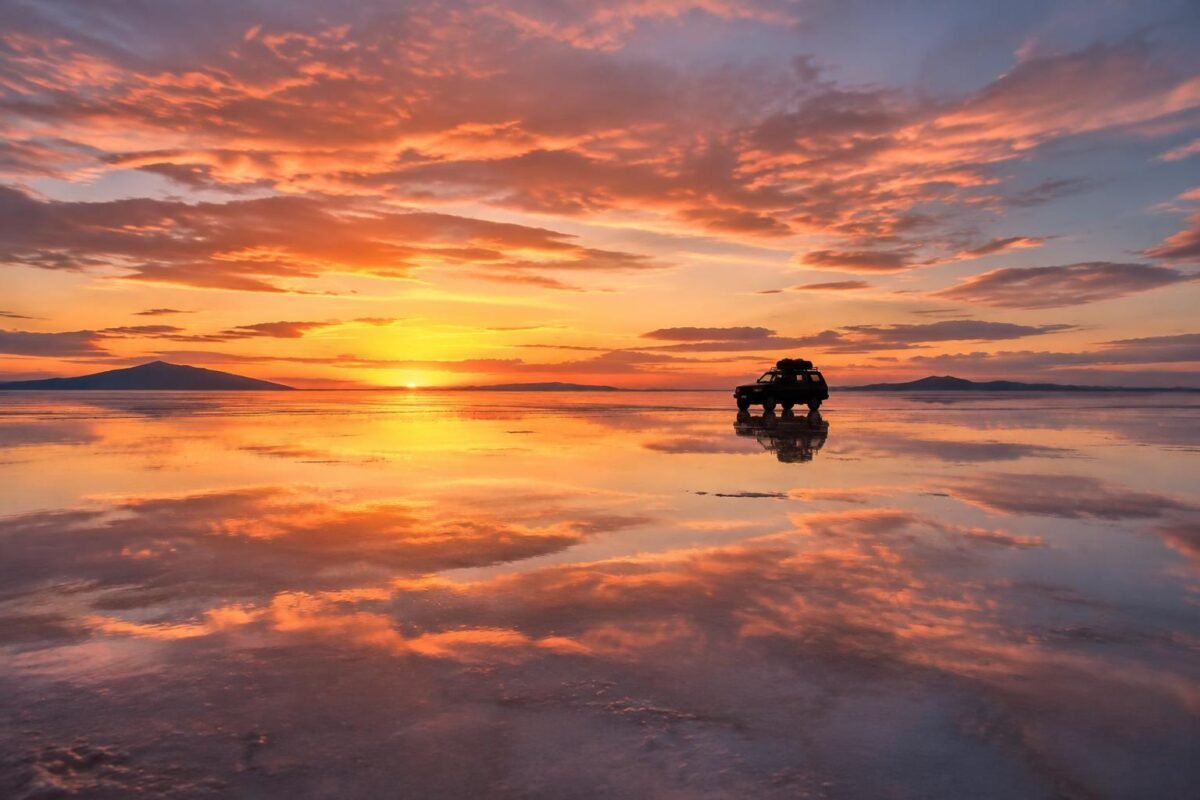
Sleeping inside a building made of salt sounds like a gimmick until you wake up at 6 a.m., walk outside in a down jacket and watch the sun rise over 10,500 km² of white crust that starts a few hundred meters from your door. That is the real reason people book salt hotels near the Salar de Uyuni: not the novelty of salt walls, but the chance to be on the edge of the flat at the hours when it looks its best, without a 20-minute drive from town in the dark.
We grew up in Bolivia, and the question we hear most from friends planning a trip is simple: “Where should we sleep?” The honest answer depends on your budget, your season, how much cold you can tolerate and what kind of tour you are doing. In this guide we explain what a salt hotel actually is, why none of them sit on the flat itself anymore, which areas make sense (Colchani, Uyuni town, the Tahua and Tunupa side, and Chuvica), and which well-known properties exist in each.
You will also find two comparison tables, a frank section on heating, hot water and altitude, booking tips for the busy months, and ideas for pairing a hotel night with a sunset or stargazing tour. By the end you should know exactly which type of bed fits your trip.
Quick answer: Salt hotels are built from blocks of salt cut from the Salar de Uyuni, and today they all sit on the edge of the flat, not on it. The best-known cluster is around Colchani, about 20-25 km north of Uyuni town (Palacio de Sal, Luna Salada, Cristal Samaña). Hotel Tayka de Sal sits on the quieter northern shore in Tahua, at the foot of Tunupa volcano. Book early for January to March and July, and always confirm heating and hot water before you pay.
What is a salt hotel?
A salt hotel (in Spanish, hotel de sal) is a building whose walls, and often its floors, beds, tables and chairs, are made from blocks of salt cut from the surface of the Salar de Uyuni. The salt crust on the flat is several meters thick in places, and local workers in villages like Colchani have harvested it for generations, mostly for table salt and livestock. At some point someone realized the same compressed salt could be cut into bricks, and an unusual building tradition was born.
How they are built
The basic method is straightforward. Workers cut rectangular blocks from the hard crust, let them dry, then stack them with a mortar made from wet salt. When the mortar dries it bonds with the blocks, giving solid, thick walls. The largest property in the area, Palacio de Sal, says it used roughly one million salt blocks for its walls, floors, ceilings and furniture. Smaller hostels use the same technique on a more modest scale, often with salt-block beds topped with a normal mattress, salt tables and salt benches covered in llama or sheep wool.
Most hotels combine salt walls with conventional roofs (tin, timber or traditional straw), glass windows and normal plumbing. So you are not sleeping in a salt cave; you are sleeping in a room whose walls happen to be salt. In practice it feels like a thick-walled adobe house with a pale, slightly sparkly finish. The floors in many places are loose salt granules, which crunch underfoot and are surprisingly pleasant.
One small rule you will see posted in several salt hotels: please do not lick the walls. It sounds like a joke, but enough visitors try it that hotels ask guests not to, both for hygiene and to protect the blocks.
Why there are no hotels on the salt flat itself
The first salt hotel, the original Palacio de Sal, was built in the mid-1990s in the middle of the flat, at a spot known as Playa Blanca. It had around a dozen basic double rooms and very limited plumbing. The location was spectacular, but waste had to be collected and carried out by hand, and over time this caused contamination of the salt crust. The hotel stopped operating as a lodging in 2002.
Since then, the clear practice in the region, backed by local authorities and environmental concerns, is that hotels belong on the shore and not on the crust. The old Playa Blanca building still stands as a museum and rest stop on jeep tours, with flags from many countries flying outside, but nobody sleeps there. Every salt hotel you can book today is on the edge of the Salar, usually in or near a small village with road access, electricity and a way to manage waste properly.
This matters when you read marketing copy. If a listing says “hotel on the salt flat,” it means on the shore, typically with direct views over the flat. That is still an excellent setup: you can walk out onto the salt from some properties, and the drive to the main photo areas is short. But if you want to sleep surrounded by salt on every side, the only real way is a camping or glamping experience with a specialist operator, and even those are set up near the edge.
Where to stay near the Salar de Uyuni: the four main areas
Before choosing a hotel, choose an area. Each one gives you a different trip. Here is how we explain it to friends and family.
Colchani and the eastern edge of the flat
Colchani is a small salt-processing village about 20 km north of Uyuni, right where most tours enter the flat. This is where the famous salt hotels cluster. Palacio de Sal describes itself as about 25 km from Uyuni, and Luna Salada and Cristal Samaña are in the same general area. From here you are minutes from the salt, which is a big advantage for sunrise and sunset.
The village itself is tiny. You will find salt workshops, small craft stalls selling salt figurines and alpaca goods, and not much else. Hotels in this area usually include breakfast and serve dinner, because there are few independent restaurants. If you want to eat in town or walk to an ATM, you will need a taxi or transfer back to Uyuni. Think of Colchani as a resort-style stay: you arrive, settle in, and let the hotel organize the rest.
Colchani is best for couples, honeymooners, photographers who want sunrise without a long pre-dawn drive, and anyone doing a one-day tour who wants to add a memorable night. It also suits travelers who fly into Uyuni, since the airport is on the same side of town.
Uyuni town
Uyuni town is the practical base. It has the airport, the train and bus stations, ATMs, pharmacies, dozens of tour agencies, restaurants and a wide range of hotels and hostels. Most hotels here are conventional buildings, not salt hotels, though a few use salt decoration. You will find established mid-range options such as Hotel Jardines de Uyuni and Hotel Tambo Aymara, plus many simple family-run places and backpacker hostels.
Staying in town makes sense the night before and after a multi-day tour, because almost all 3-day and 4-day tours start and end in Uyuni. It is also the cheapest area overall. The downside is that the flat is about 20 km away, so sunrise and sunset tours require driving out and back. Town nights are also very cold in winter, and some budget places have weak heating.
If you are arriving by bus or train, our guide on how to get to Uyuni from La Paz explains the overnight buses (about 10-12 hours), the flight (about 1 hour) and the train from Oruro, so you can plan your first night around your arrival time.
Tahua and the Tunupa side (northern shore)
Tahua is a small village on the northern shore of the Salar, at the foot of Tunupa volcano. It feels completely different from Colchani: quieter, fewer vehicles, quinoa fields on the slopes, old stone corrals and views across the flat toward the south. Hotel Tayka de Sal stands about 200 m from the village, built from salt blocks with straw roofs, and the area has a handful of smaller community-run lodgings.
Getting to Tahua takes several hours by 4×4 across the flat from Uyuni, and the exact time depends on the route and the season (when the flat is flooded, drivers may need to go around). Most people stay here as part of a private or custom tour, or on longer itineraries that include Tunupa, the Coquesa mummies and the north side of the flat. It is best for travelers who want calm, hiking at altitude and a less crowded corner of the Salar. It is not a good choice if you only have one day.
Chuvica and the southern rim villages
Chuvica (sometimes written Chuvikha) is a small village on the southern edge of the flat. You will probably never book a hotel here independently; instead, many 3-day tours use simple salt hostels in Chuvica or nearby villages such as Atulcha for the first night after crossing the Salar. These lodgings are basic: salt-block beds with mattresses, shared bathrooms in many cases, blankets rather than heating, and hot showers that may be limited or cost a few extra bolivianos in cash.
The appeal is location: you sleep right where the tour needs you to be for the next day toward the lagoons. If you are booking a multi-day tour, ask which village and which type of room you will get on night one, and whether a private room is available for an upgrade. Our comparison of 1-day vs 3-day vs 4-day tours shows how the nights fit into each itinerary.
| Area | Distance to the flat | Typical price range (double room, per night) | Salt hotels? | Best for |
|---|---|---|---|---|
| Colchani / eastern edge | 0-5 km; about 20-25 km from Uyuni town | Roughly US$90-250+, higher for suites and peak dates | Yes, the main cluster | Couples, sunrise and sunset, one-day tour add-on |
| Uyuni town | About 20 km to the entry at Colchani | Roughly US$15-40 hostels, US$40-120 mid-range hotels | Rarely; mostly conventional hotels | Budget, logistics, before and after multi-day tours |
| Tahua / Tunupa side | On the northern shore; several hours by 4×4 from Uyuni | Roughly US$80-200, often sold inside tour packages | Yes (Tayka de Sal and small lodges) | Quiet, hiking Tunupa, private and custom tours |
| Chuvica / southern rim | On the southern shore; first stop after crossing | Usually included in the 3-day tour price; small upgrades possible | Yes, basic salt hostels | 3-day and 4-day tour travelers |
Prices in this table are indicative ranges based on typical listings and they change with season, exchange rate and demand. Always check the current rate on the booking platform for your exact dates.
🏨 COMPARE SALT HOTELS
Sleep on the edge of the Salar
See live prices for Colchani salt hotels and Uyuni town hotels side by side, with free cancellation on many rooms.
Check hotel prices →✓ Real guest reviews · ✓ Filter by heating and breakfast · ✓ Pay later options
Well-known salt hotels near the Salar de Uyuni
The properties below are real, established and easy to find on the major booking sites. We list them so you know the names and where they are, not as a ranking. Standards, prices and reviews change, so read recent guest reviews before booking, especially comments about heating and hot water.
Palacio de Sal (Colchani area)
Palacio de Sal is the successor to the original salt hotel that once stood at Playa Blanca. After the first building closed, the owners built a new, much larger hotel on the eastern shore of the Salar, about 25 km from Uyuni. The current hotel covers more than 4,500 m², is shaped like an Andean cross when seen from above, and uses around one million salt blocks. It has a spa area with sauna, steam room and whirlpool, a restaurant, and several room categories ranging from standard rooms to suites.
This is the most famous salt hotel in Bolivia and usually one of the most expensive in the area. It is a good fit if you want the full salt-hotel experience with full electricity, heating and spa facilities. It is less ideal if you want to walk to restaurants or shops, since it is outside any town.
Luna Salada Hotel de Sal (Colchani area)
Luna Salada sits on the eastern edge of the Salar near Colchani, roughly 20 minutes from the village by road according to the hotel. It is known for its large windows facing the flat, a spa with steam room and whirlpool, a restaurant with breakfast included, and a small craft shop. The setting is quiet and slightly elevated, so sunset from the lounge is a highlight.
Luna Salada is often slightly below Palacio de Sal in price, though that varies by date and room type. It is a popular choice for travelers who want salt architecture, views and good comfort without the very top price.
Cristal Samaña (Colchani)
Cristal Samaña is another salt hotel in Colchani, near the edge of the flat. Its walls, floors, furniture and some decorative pieces are made from rock salt, and travel operators that use it describe around 37 rooms with private bathrooms, a restaurant, a bar and a small astronomical observatory. It uses solar energy for part of its heat and hot water. This is a solid mid-to-upper option in the same zone and a good alternative when the two better-known names are full.
Hotel Tayka de Sal (Tahua)
Hotel Tayka de Sal is on the northern shore, about 200 m from Tahua village at around 3,700 m, at the base of Tunupa volcano. It is built from salt blocks with traditional straw roofs and uses solar energy, with a hot-water radiator system in the rooms for cold nights. Tayka operates a small network of hotels in remote parts of southwestern Bolivia, and its salt hotel is a common choice on private itineraries that include the north side of the Salar and a hike on Tunupa.
Uyuni town: practical alternatives
In town you will not find many true salt hotels, but you will find practical, warmer-than-average options. Hotel Jardines de Uyuni and Hotel Tambo Aymara are two long-running mid-range hotels that appear on most booking platforms, and there are many simpler family-run places. When we compare town hotels, we look first at heating (central heating or a working electric heater, not just extra blankets), then hot-water pressure, then distance to the tour agencies on and around Avenida Ferroviaria and the main plaza.
You can also check the practical basics for your trip, such as money, weather and what to wear, in our guide to where the Salar is and how to prepare.
🚙 PRIVATE SALAR TOUR
A private 4×4 that picks you up at your hotel
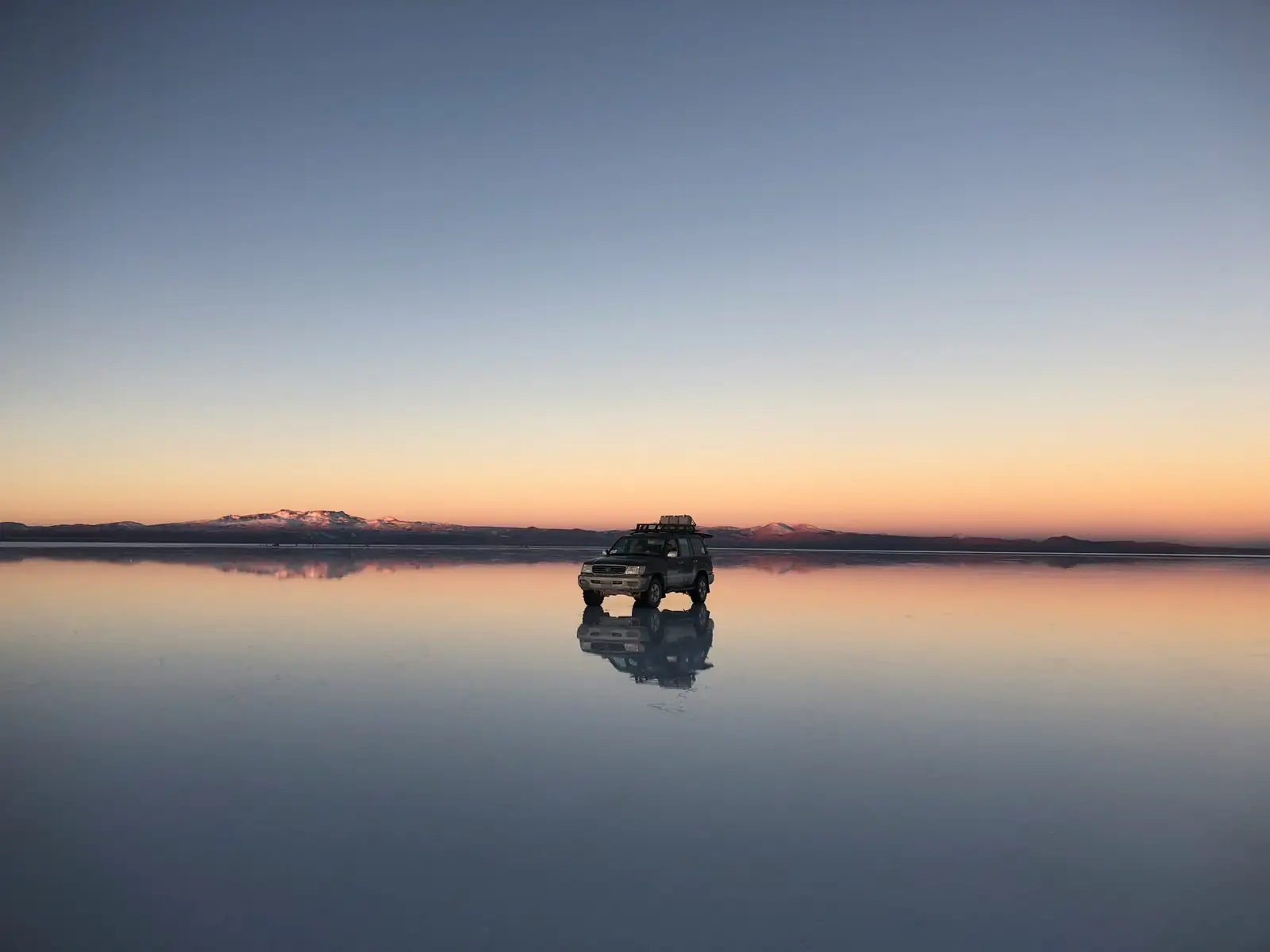
Staying in Colchani or Uyuni? A private excursion lets you set your own pace, with your own driver and guide and time for sunset photos.
See the private tour →✓ Free cancellation on most tours · ✓ Instant confirmation · ✓ Local licensed operators
Kachi Lodge: luxury glamping near Tunupa
If a salt hotel feels too conventional, Kachi Lodge is the high-end alternative. It is a small luxury camp of white geodesic domes set near the foot of Tunupa volcano on the northern side of the Salar. Travel press describe six guest domes, each with a large window facing the flat, plus a central dome for dining and lounging. The domes are heated with wood-burning stoves, which matters because nights at this altitude regularly fall below freezing.
Kachi is sold as an all-inclusive experience: full board, transfers and guided activities are included, and published itineraries generally require a minimum of two nights. Prices are in a different league from everything else in this guide; reports from recent years have quoted figures around US$1,000 per person per night, but rates change and are usually quoted on request through specialist travel agencies. We mention it because it is the closest thing to “sleeping on the salt” that exists today, and it is a genuine option for a once-in-a-lifetime celebration.
For most travelers, though, a night in a Colchani salt hotel plus a well-planned sunset and stargazing tour delivers a very similar emotional payoff at a fraction of the cost.
Salt hotel vs town hotel vs tour lodge vs glamping
The word “hotel” covers very different experiences around the Salar. This table compares the four main types of accommodation you will see while planning.
| Type | Heating | Hot water | Bathroom | Indicative cost | Who it suits |
|---|---|---|---|---|---|
| Salt hotel (Colchani, Tahua) | Usually yes: central, radiator or room heaters | Generally reliable | Private | Roughly US$90-250+ per room | Couples, comfort seekers, photographers |
| Town hotel or hostel (Uyuni) | Varies widely; check reviews | Usually yes, pressure varies | Private or shared | Roughly US$15-120 per room | Budget travelers, multi-day tour start and end |
| Tour lodge or salt hostel (Chuvica, lagoon route) | Rarely; blankets, sometimes a stove in the common room | Limited hours or a small cash fee | Often shared | Included in 3-day and 4-day tour price | Backpackers and tour groups |
| Luxury glamping (Kachi Lodge) | Wood-burning stove in each dome | Yes | Private | Around US$1,000 per person per night, all-inclusive (on request) | Special occasions, high-end travelers |
Which one should you choose?
If you only have one or two days in Uyuni, a salt hotel in Colchani is the best use of a single splurge night. You can do a day tour, come back to the hotel, and then go out again for sunset or stars without a long drive. If you are doing a 3-day tour to the lagoons, sleep in town before and after, and accept that the tour lodges are basic. If your budget is generous and you want the north shore, look at Tahua or Kachi as part of a private itinerary.
A combination we often suggest: one night in Uyuni town on arrival (cheap, practical, close to the agencies), one night in a Colchani salt hotel with a sunset tour, then either fly out or join a multi-day tour. That gives you the salt experience without paying salt-hotel prices for your whole stay.
🗺️ ONE-DAY SALAR TOUR
Pair your hotel night with a full day on the flat
The classic day excursion covers Colchani, the salt eyes, Playa Blanca and Incahuasi island, with local licensed guides and lunch on the salt.
Check availability →✓ Free cancellation on most tours · ✓ Instant confirmation · ✓ Local operators
Heating, hot water and altitude: what to expect
The Salar sits at about 3,650 m. Days are often mild in the sun (around 15-20 °C), but nights drop below freezing for much of the year, and June to August is the coldest stretch. Salt walls are thick and hold some warmth, but they do not generate heat. A salt room without a heater is a cold room. This section is the one we wish every guide included.
Heating
The larger salt hotels near Colchani and Tayka de Sal in Tahua use central heating, hot-water radiators, solar systems or in-room heaters. Smaller properties and town hostels vary much more: some have good electric heaters, some offer only extra blankets. On tours, the lodges in Chuvica and along the lagoon route rarely have heating in the rooms. Bring a warm sleeping layer (thermal leggings, a fleece and a hat), and consider renting or bringing a sleeping bag for multi-day tours. Our packing list for the Salar de Uyuni has a full cold-weather checklist.
When you read reviews, search for words like “cold,” “heater” and “calefacción.” If several recent guests mention cold rooms in July, believe them.
Hot water
In good salt hotels and mid-range town hotels, hot water is generally reliable, although pressure can be modest. In basic lodges, hot showers may run only at certain hours, may depend on solar heating, or may cost an extra fee in bolivianos, so carry small bills. After a long dusty day, a warm shower is not guaranteed on a budget tour; wet wipes and a quick-dry towel help.
Altitude
Sleeping at 3,650 m (and higher on the lagoon route) affects many people. Common effects are mild headache, poor sleep and breathlessness on stairs. Arriving in Uyuni from La Paz, which is also high, helps you adapt. Drink water, go easy on alcohol the first night, and rest on arrival rather than rushing out. Some hotels offer coca tea at reception. If symptoms are strong or worsen, talk to a doctor; this is general travel information, not medical advice.
Electricity, wifi and outlets
Colchani hotels have full electricity. Remote lodges may run on solar power or generators with limited hours, so charge cameras and power banks whenever you can. Wifi exists in most hotels but can be slow; do not count on video calls. Bolivia uses 230 V, and outlets commonly accept both flat and round plugs, but a universal adapter is still useful.
Combining a hotel night with a sunset or stargazing tour
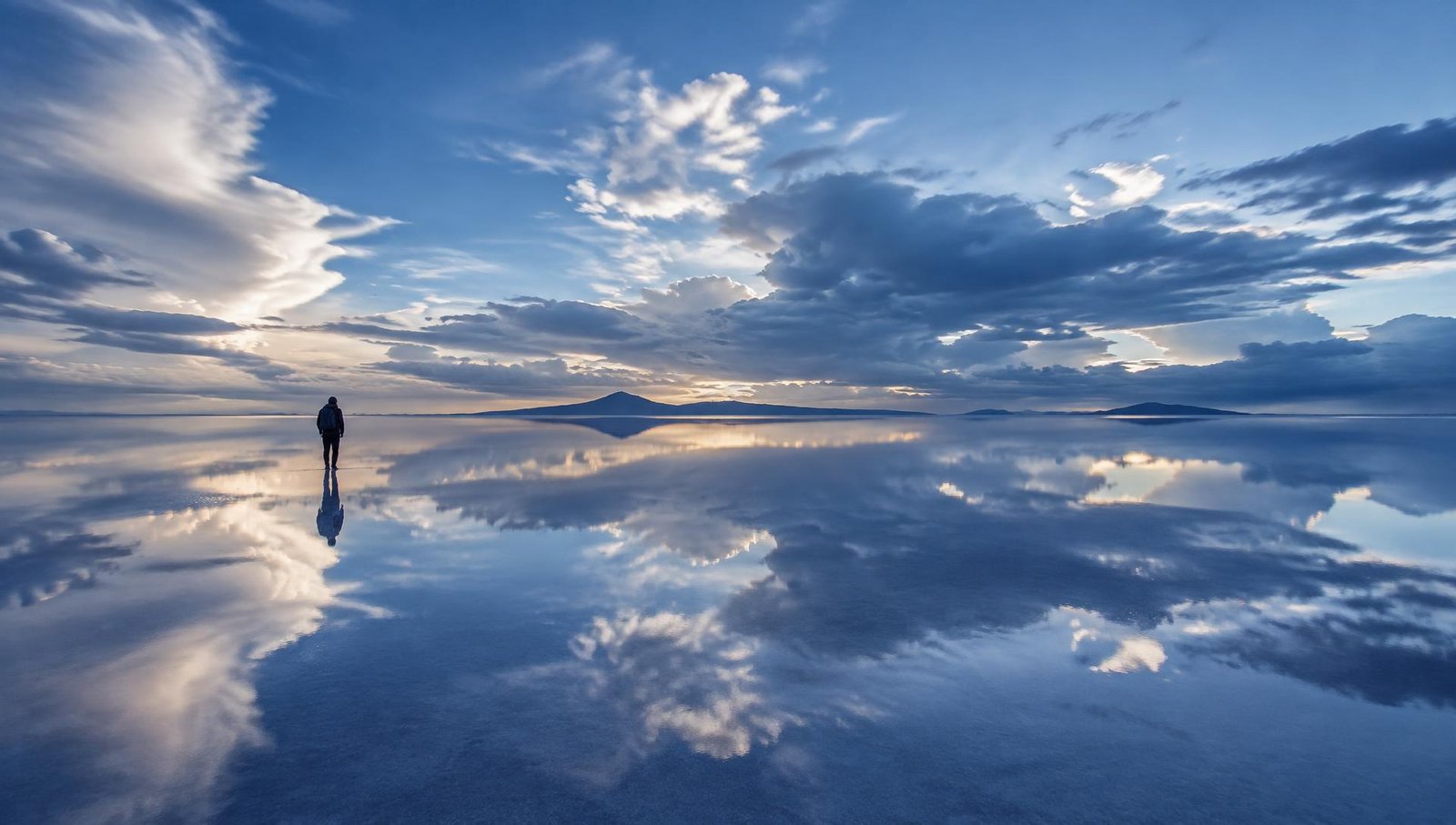
This is where a salt hotel really earns its price. Sunset on the Salar is often the most memorable moment of the whole trip, and in the rainy season, when a thin layer of water covers the crust, it can turn into the famous mirror effect. Stars are equally spectacular on clear nights, especially away from the moon. If you sleep in Colchani, you are only minutes away from both.
Here is how we would plan it:
- Afternoon check-in: arrive at your Colchani hotel by early afternoon, rest and drink water.
- Sunset tour: leave around 1-2 hours before sunset with a driver, ideally a private one, so you can stay as long as the light lasts.
- Stargazing: on a moonless night, combine sunset and stars in one outing, or go out again after dinner. Dress for well below freezing.
- Sunrise: if you still have energy, sunrise from the shore near your hotel is free and very quiet.
For mirror reflections, timing matters more than hotel choice. Read our guide on when to see the mirror effect (usually January to March), and if you travel between May and November, our dry season guide explains the hexagon patterns, clear skies and longer routes you get instead.
Most tour operators will pick you up at a Colchani hotel, but always confirm it when booking. Some shared tours only pick up in Uyuni town, which can mean an extra taxi ride each way. You can compare the options in the tours section of our homepage.
🌅 STAY FOR SUNSET
Book a room minutes from the salt
Filter Colchani and Uyuni hotels by guest rating, heating and breakfast, and lock in your dates early for January to March and July.
Find your room →✓ Free cancellation on many rooms · ✓ Verified reviews · ✓ No booking fees
Booking tips for salt hotels near the Salar de Uyuni
After years of helping friends and readers plan their trips, these are the points that make the biggest difference.
Book early for January to March and July
The mirror season (roughly January to March) is the busiest time for Colchani salt hotels, because everyone wants to be close to the flat for reflections at sunset. July is also busy because of holidays in the Northern Hemisphere and South America. The best-known salt hotels have limited rooms, and they fill up weeks or even months ahead around Carnival, Easter and late December. If your dates are fixed, book as soon as you know them and choose a rate with free cancellation.
Confirm heating and hot water in writing
Do not assume. Read the listing for “heating” and check recent reviews for comments about cold rooms. If you are unsure, message the hotel and ask if the room has a heater and whether hot water is available all day. A short answer in writing saves a miserable night.
Check transfers to and from your tour
Colchani hotels are 20-25 km from Uyuni. Ask your hotel whether it offers airport or bus station transfers and what they cost, and ask your tour operator whether pickup at the hotel is included. If not, budget for taxis and agree on the fare before getting in. You can also ask us via our contact page on WhatsApp if you are not sure how to connect your hotel with your tour.
Carry cash in bolivianos
Large hotels accept cards, but small lodges, taxis, craft stalls and shower fees on tours often need cash. Withdraw bolivianos in Uyuni town; there are no reliable ATMs in Colchani, Tahua or Chuvica.
Think about meals
Outside town there are few restaurants, so check whether dinner is available at your hotel and roughly what it costs. Many salt hotels include breakfast but charge separately for dinner. If you have dietary needs, tell the hotel in advance.
Flights and insurance
Flights between La Paz and Uyuni take about an hour and do not run in huge numbers, so book them early in busy months and leave buffer time before a multi-day tour. Weather and operational changes can affect schedules, which is one more reason to have travel insurance that covers trip interruptions and medical care at altitude.
✈️ FLY TO UYUNI
Skip the 10-hour bus with a 1-hour flight
Compare flights to La Paz and on to Uyuni, and see the cheapest dates at a glance before you book your salt hotel.
Search flights →✓ Compares many airlines · ✓ Flexible date search · ✓ Price alerts
Plan the night before and after a multi-day tour
If you are doing a 3-day or 4-day tour, you will usually need a bed in Uyuni the night before (tours tend to leave in the morning) and possibly the night you return. Some 4-day tours end in La Paz instead, so check before booking a return night. A salt hotel can make a great final treat after three nights in basic lodges, but only if your transport plans allow it.
Read the cancellation policy
Weather on the Salar is unpredictable in the rainy season. Heavy rain can occasionally close routes or change tour plans. Choose flexible rates where possible, and make sure your travel insurance covers trip changes. We use and recommend SafetyWing for flexible travel medical coverage on trips like this.
🛡️ TRAVEL INSURANCE
Covered at 3,650 m and beyond
Remote salt flats, long 4×4 days and high altitude: travel medical insurance gives you peace of mind far from the nearest city.
Get a quote →✓ Buy while already traveling · ✓ Monthly plans · ✓ Coverage in 180+ countries
Frequently Asked Questions
Can you stay in a hotel on the Salar de Uyuni itself?
No. The first salt hotel was built on the flat at Playa Blanca in the 1990s, but it caused waste and contamination problems and stopped operating as a hotel in 2002. Today all salt hotels are on the edge of the Salar, mainly around Colchani and Tahua. The old Playa Blanca building is now a museum and rest stop.
Are salt hotels really made of salt?
Yes. The walls, and often the floors, beds and tables, are made from salt blocks cut from the Salar and bonded with a wet-salt mortar. Roofs, windows, plumbing and mattresses are conventional. Palacio de Sal says it used about one million salt blocks.
Where are the salt hotels located?
The main cluster is around Colchani, on the eastern edge of the flat about 20-25 km north of Uyuni town (Palacio de Sal, Luna Salada, Cristal Samaña). Hotel Tayka de Sal is on the northern shore in Tahua, at the foot of Tunupa volcano. Basic salt hostels used on 3-day tours are in southern villages like Chuvica.
How much does a night in a salt hotel cost?
Prices change with season and demand, but well-known Colchani salt hotels typically range from roughly US$90 to over US$250 per room per night, with suites and peak dates higher. Basic salt hostels on tours are included in the tour price. Check current rates on booking platforms for your dates.
Are salt hotels warm at night?
The better ones are, because they have central heating, radiators or room heaters. Salt walls hold some warmth but do not produce heat, so a room without a heater will be cold, especially from June to August when nights fall well below freezing. Always confirm heating before booking.
Is it better to stay in Uyuni town or Colchani?
Stay in Uyuni town if you are on a budget or starting a multi-day tour, since agencies, ATMs, restaurants and transport are there. Stay in Colchani if you want a special night close to the flat for sunset, stars and sunrise, especially on a one-day visit.
What is Kachi Lodge?
Kachi Lodge is a luxury glamping camp of heated geodesic domes near Tunupa volcano on the northern side of the Salar. Stays are all-inclusive with full board, transfers and activities, usually with a two-night minimum, and rates are far higher than salt hotels.
Where do 3-day tours sleep on the first night?
Many 3-day tours spend the first night in a basic salt hostel on the southern edge of the flat, in villages such as Chuvica or Atulcha. Rooms are simple, heating is rare and hot showers may be limited or cost extra. Ask your operator which village and room type is included.
When should I book a salt hotel?
Book as early as possible for January to March (mirror season) and July, as well as around Carnival, Easter and the end-of-year holidays. Outside those periods, a few weeks ahead is usually enough, but the most famous properties can still fill up.
Do tour operators pick up from salt hotels in Colchani?
Many private tours and some shared tours do, but not all. Shared tours often meet in Uyuni town. Always confirm the pickup point before booking, and ask your hotel about transfers to the airport or bus station.
Conclusion: pick the right bed for your Salar trip
A salt hotel near the Salar de Uyuni is not just a novelty. Staying on the edge of the flat in Colchani or Tahua puts you minutes away from sunrise, sunset and some of the darkest skies you will ever see, and the best properties are warm, comfortable and memorable. Uyuni town remains the smart, affordable base for logistics and multi-day tours, while the tour lodges in Chuvica are simple places to rest between long days. Kachi Lodge sits at the top end for a once-in-a-lifetime splurge.
Our advice: decide your season and your tour first, then choose one special night in a salt hotel near Colchani and pair it with a sunset or stargazing outing. Book early for January to March and July, confirm heating in writing, and make sure your tour can pick you up. If you want to know more about who we are, visit our About page, or head back to the Mirror of the World homepage to explore more guides.
Ready to plan? Compare salt hotels on Booking.com and then book your Salar tour with local licensed guides. If you have a question we did not answer, send us a message on WhatsApp through our contact page, and we will help you choose.