
The first thing most travelers notice in Bolivia is not the view. It is the stairs. You step off the plane in El Alto, carry your bag up a short flight, and suddenly you are breathing like you just ran for a bus. That is normal, and for most people it passes. But altitude sickness in Uyuni and on the rest of the Salar de Uyuni route is a real issue worth planning for, because almost every night of the classic trip is spent above 3,600 meters (about 12,000 feet), and one night is usually spent around 4,300 meters.
We grew up in Bolivia, and we have watched friends, cousins and visitors handle the altiplano in every way possible: some barely noticed it, some spent a miserable first night with a pounding headache, and a few had to turn around. In this guide we explain the actual altitudes on the route (La Paz and El Alto, Uyuni town, the salt flat, Laguna Colorada, the Sol de Mañana geysers and San Pedro de Atacama), what acute mountain sickness is and how it feels, the warning signs of the two dangerous forms (HAPE and HACE), realistic acclimatization itineraries, what to drink and eat, the truth about coca tea, which medication to ask your doctor about, who should be extra careful, what tour operators usually carry, how to sleep better up high, and why your travel insurance needs to cover evacuation.
Important: This article is general travel information written by travelers, not doctors. It is not medical advice. Before a trip to high altitude, talk to your doctor or a travel-medicine clinic, especially if you have a heart or lung condition, are pregnant, or take regular medication. We follow the public guidance of the US CDC (Yellow Book) and the Wilderness Medical Society, but your own doctor should make the decisions for you.
How high is the Salar de Uyuni trip? Altitudes of every key stop
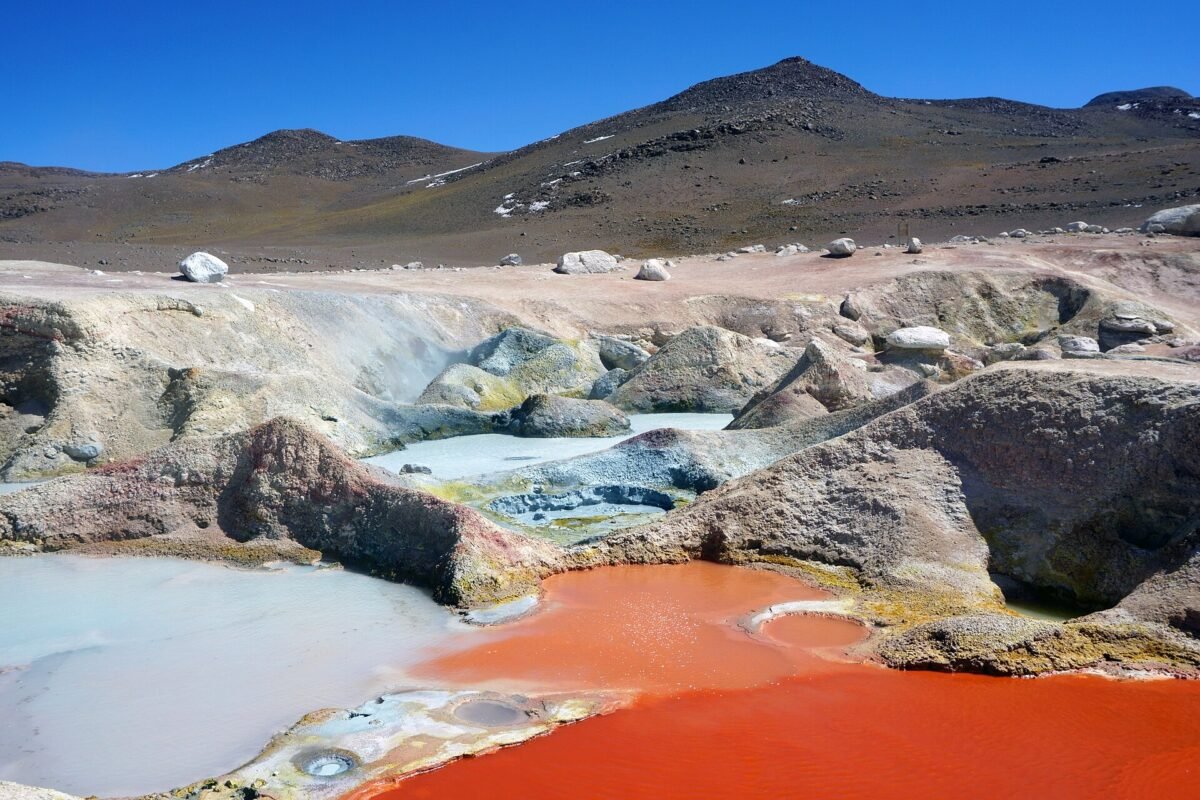
Here is the short version: the whole trip happens on the Bolivian altiplano, a high plateau that sits between roughly 3,600 and 4,000 meters, and the southern route climbs higher still. The salt flat itself is around 3,650 meters (about 12,000 feet). On the classic three-day tour, the second night is usually spent near Laguna Colorada at roughly 4,300 meters, and the early-morning geyser stop on day three goes close to 4,900 meters. The only genuinely “low” place on the circuit is San Pedro de Atacama in Chile, at about 2,400 meters.
Exact numbers vary a little between sources (and within a city like La Paz, the difference between neighborhoods can be several hundred meters), so treat the figures below as approximate.
| Place | Approx. altitude | Approx. feet | Why it matters |
|---|---|---|---|
| El Alto (La Paz international airport) | about 4,060 m | about 13,300 ft | Most international travelers land here. It is a rapid arrival at very high altitude. |
| La Paz (city center) | about 3,640 m | about 11,900 ft | Many people sleep their first nights here. Lower southern neighborhoods help a little. |
| Lake Titicaca | about 3,810 m | about 12,500 ft | A popular pre-Uyuni stop that is just as high as La Paz. |
| Potosí | about 4,090 m | about 13,400 ft | One of the highest cities in the world; on the overland route from Sucre. |
| Sucre | about 2,810 m | about 9,200 ft | The best lower base in southern Bolivia for a gentler start. |
| Uyuni town / airport | about 3,660 m | about 12,000 ft | Starting point of nearly every tour. |
| Salar de Uyuni (salt surface) | about 3,650 m | about 12,000 ft | Flat and high; day one of the tour stays at this level. |
| Laguna Colorada | about 4,280 m | about 14,000 ft | The usual area for the second night of the 3-day tour. |
| Sol de Mañana geothermal field | about 4,850 m (sources vary, up to ~5,000 m) | about 15,900 ft | The highest point most travelers reach, usually at dawn. |
| Laguna Verde | about 4,300 m | about 14,100 ft | Near the Chilean border, last big stop of the tour. |
| San Pedro de Atacama (Chile) | about 2,400 m | about 7,900 ft | Where the crossing ends. A real descent, and a relief for many. |
To put that in context, the CDC says unacclimatized travelers are at risk of altitude illness when they sleep at about 2,450 meters (8,000 feet) or higher. Every overnight stop on the Bolivian side of this trip is well above that line. The CDC also places a rapid arrival by plane above about 3,400 meters in its high-risk category, which is exactly what flying into El Alto or Uyuni is.
🛡️ BEFORE YOU GO
Get insurance that covers medical evacuation
Lagoons and geysers on the Uyuni route are hours from a hospital. Choose a policy that includes emergency medical evacuation, and read the wording on altitude and adventure activities before you buy.
Check SafetyWing coverage →✓ Buy online in minutes · ✓ Can be purchased while already traveling · ✓ Read the policy wording before you buy
What is acute mountain sickness (AMS)?
As you go higher, air pressure drops, and each breath carries less oxygen into your lungs. Your body can adapt to this, but adaptation (acclimatization) takes days, not hours. If you go up faster than your body adjusts, you can develop altitude illness. The mildest and most common form is acute mountain sickness, usually shortened to AMS.
AMS is not a sign of being unfit. According to the CDC, physical fitness and training do not protect you, and the best predictor of how you will do is how you did before at a similar altitude and ascent rate. Marathon runners get headaches in Uyuni; retirees sometimes feel fine. People who exercise hard on day one can actually make things worse, because they push themselves when they should be resting.
Common symptoms of altitude sickness
The CDC describes AMS as feeling a lot like a hangover. The main symptom is a headache, together with one or more of the following:
- Loss of appetite or nausea, sometimes vomiting
- Unusual tiredness or weakness
- Dizziness or light-headedness
- Poor sleep (although disturbed sleep at altitude is common even without AMS)
Symptoms usually start between about 2 and 12 hours after arriving at a new altitude, often during or after the first night. If you stay at the same altitude and rest, mild AMS typically improves within one to two days. That timing is useful: the first night in La Paz or Uyuni, and the first night near Laguna Colorada, are the moments to watch most closely.
Things that feel like altitude sickness but may not be
Not every headache on the altiplano is AMS. Dehydration, a long overnight bus ride, too much sun on the salt, caffeine withdrawal and a cold all produce similar feelings. The CDC actually suggests that regular coffee drinkers keep their usual intake, so they don’t confuse a withdrawal headache with an altitude headache. And symptoms that start after three or more days at the same altitude without climbing higher should not be blamed on AMS; they deserve a different explanation, so get checked.
Warning signs of HAPE and HACE: when altitude sickness becomes an emergency
Two less common forms of altitude illness are dangerous and can be fatal if ignored. Both need immediate action, which almost always means going down.
HACE (high-altitude cerebral edema)
HACE is swelling of the brain and is generally considered a severe progression of AMS. The warning signs are neurological: confusion, unusual drowsiness, behaving “not like themselves,” and loss of coordination (stumbling, being unable to walk a straight line heel-to-toe). The CDC notes that HACE is rare below about 4,300 meters, which is a good reason to take day two and day three of the southern tour seriously, since that is exactly where the route goes.
HAPE (high-altitude pulmonary edema)
HAPE is fluid in the lungs. It can appear without classic AMS symptoms first. Early signs are a reduced ability to exercise, a cough, chest congestion and breathlessness that is out of proportion to what you are doing. Red flags are being short of breath while resting, a wet or gurgling cough, pink or bloody sputum, and blue or gray lips.
| Condition | Typical signs | What to do |
|---|---|---|
| Mild AMS | Headache plus nausea, fatigue, dizziness or poor appetite | Rest at the same altitude, no further ascent, hydrate normally, avoid alcohol. Tell your guide. |
| Moderate to severe AMS | Symptoms getting worse despite rest, vomiting, headache not relieved by simple painkillers | Do not go higher. Descend if not improving. Seek medical help. |
| HACE | Confusion, extreme drowsiness, loss of balance or coordination | Emergency. Descend immediately, use oxygen if available, get medical care. |
| HAPE | Breathlessness at rest, persistent cough, chest tightness, bloody sputum, blue lips | Emergency. Descend immediately, use oxygen if available, get medical care. |
The Wilderness Medical Society guidelines say descent is the definitive treatment for severe altitude illness, usually by 300 to 1,000 meters or until symptoms resolve, and that supplemental oxygen helps when descent is not immediately possible. On the Uyuni route, “descending” can mean a long drive in the dark on rough tracks, which is why reporting symptoms early, before they become severe, matters so much.
Golden rule: Never go up to sleep at a higher altitude while you still have symptoms, even mild ones. If you are getting worse while resting at the same altitude, go down. This rule comes straight from the CDC’s guidance and it is the one we repeat to every visitor.
How to acclimatize before the Salar de Uyuni tour
The CDC’s general rules for altitude are simple to state and hard to follow in Bolivia, because the geography does not cooperate. Above 3,000 meters, the CDC recommends increasing your sleeping altitude by no more than about 500 meters per night, and adding an extra rest night for every 1,000 meters gained. It also recommends avoiding going from low altitude to sleeping above about 2,750 meters in a single day, and keeping exercise mild for the first 48 hours.
Bolivia makes that difficult. Flying from sea level to El Alto means jumping more than 3,500 meters in a few hours. And on the standard 3-day tour, the second night near Laguna Colorada is about 600 to 650 meters higher than the first night near the salt flat, slightly more than the 500-meter guideline. You can’t change the geography, but you can change what you do before the tour starts.
Option 1: Arrive in La Paz and slow down
If you fly into El Alto, plan at least two or three full nights in La Paz before going anywhere higher, and keep the first day very light. The CDC specifically mentions La Paz as a place where travelers can sleep a night or two lower than the airport before ascending. In practice, the center of La Paz is several hundred meters lower than El Alto, and the southern neighborhoods lower still, so where you book your hotel actually matters. Walk slowly, skip the steep hikes and the Huayna Potosí day trips until you feel good. Our guide on how to get from La Paz to Uyuni covers the bus, train and flight options for the next leg.
Option 2: Start low and climb gradually (Sucre and Potosí)
This is our favorite route for people who worry about altitude. Fly into a lower Bolivian city such as Sucre (about 2,810 m), spend a few nights there, then travel overland to Potosí (about 4,090 m) and on to Uyuni. You still end up high, but your body gets time to adjust in steps instead of in one jump. Potosí is very high, so take it easy there; but after Sucre and Potosí, Uyuni often feels manageable.
Option 3: Start in San Pedro de Atacama (and know the catch)
Many travelers do the trip in reverse, starting in San Pedro de Atacama at about 2,400 meters. Spending two or three nights there is a gentle first step. The catch: the tour from Chile climbs to the border at over 4,000 meters on the first morning, and the first night is usually spent around Laguna Colorada at roughly 4,300 meters. That is a jump of almost 2,000 meters in sleeping altitude in one day, far beyond the CDC’s 500-meter guideline, so the reverse direction is harder on the body, not easier. If you start in Chile, it is worth asking your doctor specifically about this ascent profile. Our Uyuni to San Pedro de Atacama tour guide explains both directions in detail.
| Itinerary | Example plan | Altitude profile | Our verdict |
|---|---|---|---|
| Fly to La Paz, then Uyuni | 2–3 nights La Paz, then bus/flight to Uyuni, 3-day tour | Very fast arrival (El Alto ~4,060 m), then stable around 3,600–3,700 m before the tour | Fine for many people if you rest the first 48 hours. Highest initial risk. |
| Sucre → Potosí → Uyuni | 2–3 nights Sucre (~2,810 m), 1–2 nights Potosí (~4,090 m), then Uyuni | Gradual, stepwise climb | Best option for acclimatization if your schedule allows. |
| Lake Titicaca → La Paz → Uyuni | Several nights around 3,600–3,800 m before the tour | High from day one, but time at altitude builds acclimatization | Good if you already spent time in Peru or around the lake. |
| San Pedro de Atacama → Uyuni (reverse tour) | 2–3 nights San Pedro (~2,400 m), then 3-day tour into Bolivia | Low start, then a jump to ~4,300 m on the first night | Harder on the body. Discuss with your doctor before booking. |
| One-day Salar tour only | Uyuni day tour, back to town at night | Stays around 3,650–3,700 m | No extra altitude gain beyond Uyuni itself. |
If your time is short, consider the one-day Salar tour instead of the three-day southern circuit. It stays at roughly the same altitude as Uyuni town, so you skip the nights at 4,300 meters and the dawn visit to the geysers. You can compare the formats in our Salar de Uyuni tours compared guide.
🧂 SALAR DE UYUNI
Book a tour that fits your acclimatization
Compare the one-day Salar trip and multi-day routes in one place, so you can pick a pace your body can handle. Clear itineraries and free cancellation on many tours make it easier to plan around your rest days.
See Uyuni tours on Civitatis →✓ Itinerary shown before you book · ✓ Tours in English and Spanish · ✓ Check cancellation terms per tour
Pre-acclimatization at home
The CDC notes that spending at least two nights above about 2,750 meters in the two weeks before your trip can help. For most people that is not realistic, but if you live near mountains or are already traveling in Peru (Cusco, for example), arriving in Bolivia after time at altitude is a genuine advantage.
Hydration, alcohol and food at altitude
Drink enough, but don’t force it
The air on the altiplano is extremely dry, and you lose more water through breathing than you notice. Mild dehydration causes headaches and fatigue that mimic AMS, so drink regularly and watch the color of your urine. However, the Wilderness Medical Society is clear that forcing large amounts of water does not prevent altitude illness and can be risky, because overdrinking can drop your blood sodium levels. The goal is normal hydration, not a gallon challenge. Carry a refillable bottle on the tour; jeeps stop for long stretches between towns.
Alcohol and sleeping pills
The CDC recommends avoiding alcohol for the first 48 hours at altitude, and advises against using alcohol or other respiratory depressants (some sleeping pills and opioids) to help you sleep at altitude, because they can make breathing at night worse. A beer on the salt flat at sunset is a classic photo, but save it for later in the trip, after you have been up high for a couple of days and feel well.
What to eat
Appetite often drops at altitude. Eat small, frequent meals, and lean toward easily digested carbohydrates: bread, rice, potatoes, quinoa soup. Bolivian tour cooks are used to this, and the classic dinner of soup followed by a simple main is a good choice. Avoid huge, heavy meals right before bed. Bring snacks you know you like, such as crackers, nuts or energy bars, because on a bad-headache day a familiar snack is easier than a plate of llama steak.
Coca tea: what it is, what it does, and the customs and drug-test caveats
In Bolivia, mate de coca (coca leaf tea) is everywhere: hotel lobbies, tour jeeps, roadside stalls. Chewing coca leaves is a traditional practice in the Andes and is legal in Bolivia. Many locals swear by it for altitude, and a warm cup on a freezing morning is genuinely comforting. Our grandparents drank it; our family still does.
But be honest with yourself about the evidence. The Wilderness Medical Society guidelines do not recommend coca leaves, coca tea or other coca products for preventing altitude sickness, because they have not been adequately studied. Coca tea is not a replacement for gradual ascent, rest, or a conversation with your doctor about medication. Think of it as a local custom and a warm drink, not as protection.
Drug tests
Coca tea contains small amounts of cocaine alkaloids, and drinking it can cause a positive urine drug test for cocaine metabolites. If your job involves drug testing (pilots, commercial drivers, military, healthcare, sports), avoid coca tea, coca candies and coca leaves entirely, and do it well before your return; a cup of tea is generally not accepted as an explanation for a positive result.
Customs
Do not take coca leaves, coca tea bags or coca candy home. In the United States, coca leaves are a controlled substance, and US Customs and Border Protection treats bringing them into the country as illegal regardless of the form. Many other countries also restrict them. If you are crossing into Chile at the end of the tour, finish or leave your coca in Bolivia: Chilean border checks are strict about plant and food products, and coca is not something to risk. Check the rules for your own country before you travel.
Local tip: If you want the ritual without the drug-test risk, Bolivian hotels and tour cooks also serve herbal teas such as chamomile (manzanilla) and muña, a minty Andean herb. A hot drink, a slow walk and an early night do a lot.
🏨 REST DAYS IN LA PAZ & UYUNI
Sleep somewhere comfortable for your first nights
Good sleep is half of acclimatization. Compare hotels in La Paz, Sucre and Uyuni with heating and a quiet room, and book a lower neighborhood or an extra night to let your body adjust.
Search Here for Hotels.com Best Hotel Deals!✓ Compare many hotels in one search · ✓ Filter by neighborhood and amenities · ✓ Check cancellation policy before booking
Medication: acetazolamide and other options to discuss with your doctor
The most commonly prescribed medication for preventing altitude sickness is acetazolamide (sold under brand names such as Diamox in some countries). Both the CDC and the Wilderness Medical Society describe it as a preventive option for travelers at moderate or high risk, which, given the rapid arrival into El Alto and the nights above 4,000 meters, includes many Uyuni travelers. It works by helping the body acclimatize faster; it does not mask symptoms.
We are deliberately not giving dosages here. Acetazolamide is a prescription medicine in many countries, it has side effects (tingling in fingers and toes and a changed taste of carbonated drinks are commonly reported), and it is not suitable for everyone. Some people with certain allergies or medical conditions need a different plan. A doctor or travel clinic can decide whether it is right for you, how and when to take it, and whether to give you anything else for emergencies.
Things worth asking your doctor about before the trip:
- Whether your planned itinerary puts you in a moderate or high risk category, and whether preventive medication makes sense for you.
- How your existing medications or conditions interact with altitude.
- Which over-the-counter painkiller is appropriate for an altitude headache in your case.
- What you should carry for an emergency on a remote route several hours from a hospital.
- If you are traveling with children, how the advice changes for them.
Also note what does not work. The Wilderness Medical Society does not recommend ginkgo biloba for preventing AMS, and it notes that small over-the-counter oxygen canisters and “oxygen bars” are unlikely to prevent altitude sickness. Buying a can of oxygen at the airport is not a plan.
Who should take extra care at altitude
Anyone can get altitude sickness, but some travelers should plan more carefully and always speak with a doctor before booking a trip that sleeps above 4,000 meters:
- Anyone with a previous history of HAPE or HACE. The CDC and WMS place them in the high-risk category.
- People who had moderate or severe AMS before at a similar altitude or ascent rate.
- People with heart or lung disease, including COPD, pulmonary hypertension and heart failure.
- People with sickle cell disease (the CDC lists it as a reason to avoid high altitude) or sickle cell trait (caution advised).
- People with diabetes, who need to monitor glucose closely; the CDC notes some glucose meters can read inaccurately at altitude.
- People with severe obstructive sleep apnea.
- Pregnant travelers. The CDC suggests avoiding sleeping above about 3,050 meters (10,000 feet) during pregnancy and considering how far the route is from medical care. Almost every night of this trip is above that.
- Children, who get altitude sickness at similar rates to adults but may not be able to describe their symptoms. Watch for fussiness, poor appetite, unusual sleepiness or vomiting.
Being older is not by itself a reason to stay home; the CDC notes people over 50 may have a slightly lower risk of AMS. Many grandparents visit the Salar every year. The point is to plan the pace and get medical advice that fits your health, not your age.
✈️ FLIGHTS TO BOLIVIA
Plan your route for a gentler arrival
Compare flights into La Paz, Santa Cruz or a lower city like Sucre, and see whether a route via Cusco or Chile fits your acclimatization plan. Search many airlines at once to compare arrival cities.
Compare flights on Skyscanner →✓ Compare many airlines · ✓ Flexible date search · ✓ No booking fees from Skyscanner
What tour operators carry, and what to ask before you book
Most reputable Uyuni operators carry a small oxygen cylinder and a basic first-aid kit in each vehicle, especially on multi-day trips. But standards vary a lot between agencies, and a jeep in the Sud Lípez desert is a long way from anywhere. Before you book, ask the agency directly:
- Does every vehicle carry supplemental oxygen, and does the driver know how to use it?
- Is there a first-aid kit, and is the driver or guide trained in first aid?
- How does the vehicle communicate in areas without phone signal (radio or satellite phone)?
- What is the plan if a passenger develops severe symptoms on day two, near Laguna Colorada?
- Where is the nearest health post or clinic along the route?
Supplemental oxygen buys time, but it is not a cure. If someone shows signs of HAPE or HACE, the right response is to start heading down while using the oxygen, not to sit at 4,300 meters waiting for it to work. A good driver will understand this. If an agency is vague or dismissive when you ask, that is useful information. Our comparison of Salar de Uyuni tours and trip cost and budget guide can help you weigh price against safety, and it is worth remembering that the cheapest jeep is rarely the best equipped.
Tell your driver and your group about any symptoms early. On a shared tour, people often hide a headache so they don’t “ruin” the day for others. Don’t. Drivers on this route have seen altitude sickness many times and would rather adjust the plan early.
Sleeping at altitude: what to expect on the tour
Poor sleep at altitude is extremely common. Many people wake up frequently, have vivid dreams or notice an irregular breathing pattern at night (pauses followed by deeper breaths, called periodic breathing). This is a normal response to altitude and is not the same as AMS, though it can be unsettling. The CDC notes that oxygen levels are lowest during sleep, which is why sleeping altitude matters more than the highest point you visit during the day.
That is good news for the Sol de Mañana visit: you go up to roughly 4,850 meters, but only for a short dawn stop, before heading toward Laguna Verde and the border, and for many travelers down to San Pedro de Atacama the same day. The harder night, physically, is usually the one near Laguna Colorada.

Tips for the nights near Laguna Colorada
- Expect basic lodging: shared rooms, limited heating and very cold nights, often well below freezing in the dry season. Read our Laguna Colorada and Eduardo Avaroa reserve guide for what the area is like.
- Being cold makes everything feel worse. Sleep in thermal layers, a hat and warm socks, and bring or rent a good sleeping bag. Our Salar de Uyuni packing list covers layers in detail.
- Go to bed early. Day three often starts before 5 a.m. to reach the geysers at sunrise.
- Keep water by your bed, but don’t overdrink before sleep.
- If you wake with a severe headache, vomiting, confusion or breathlessness at rest, wake your guide immediately. Do not wait until morning.
For the first night of the tour, many itineraries use salt hotels near the edge of the salt flat, at roughly the same altitude as Uyuni town. These are more comfortable and a good chance to rest well before the climb. See our list of salt hotels near the Salar de Uyuni.
🛏️ SALT HOTELS
Rest well on night one in a real salt hotel
A warm, comfortable first night near the salt flat helps you recover before the climb to the lagoons. Compare salt hotels and Uyuni stays with photos and guest reviews.
Find salt hotels on Booking.com →✓ Real guest reviews · ✓ Many properties with free cancellation · ✓ Compare prices in one place
Travel insurance that covers evacuation
This is the part people skip, and it is the part that matters most if something goes wrong. The southern Uyuni route crosses some of the emptiest country in South America, and serious medical care is far away. If you develop HAPE or HACE, or have any other emergency, you may need ground or air transport to a city hospital, which can be very expensive without coverage.
When you choose a policy, check:
- That it includes emergency medical evacuation and repatriation, with a meaningful limit.
- Whether it has an altitude limit. Some policies exclude trekking or activities above a certain altitude, or cover them only with an add-on. Sightseeing by vehicle is usually treated differently from mountaineering, but read the wording.
- That it covers both Bolivia and Chile if you are crossing to San Pedro de Atacama.
- Whether it covers pre-existing conditions you have declared.
- How to contact the emergency assistance line, and save the number offline on your phone.
Keep a copy of your policy and your passport with your guide or in your day pack. On a 3-day tour, your main bag usually rides on the roof of the jeep.
Gear we recommend for altitude on the Uyuni trip
None of these items prevent altitude sickness on their own, but they make the trip safer and more comfortable. We link to Amazon searches so you can compare brands and pick what suits you.
- Fingertip pulse oximeter
Useful for tracking trends in your oxygen saturation; remember readings at altitude are naturally lower than at home, and symptoms matter more than the number. - Insulated water bottle
Keeps water from freezing on cold nights near Laguna Colorada and makes regular sipping easy. - Electrolyte tablets or powder
Helps you drink enough without relying on plain water alone, especially after a long, dry day in the jeep. - SPF 50 sunscreen and SPF lip balm
UV is intense at 3,600+ meters and the salt reflects it; sunburn and cracked lips make a rough day worse. - Cold-weather sleeping bag or liner
The lodges on night two can be freezing; being warm helps you sleep better at altitude. - Rechargeable headlamp
For pre-dawn starts to Sol de Mañana and lodges where electricity is limited.
As an Amazon Associate we earn from qualifying purchases.
A day-by-day altitude plan for the classic 3-day tour
Here is how we would pace the standard Uyuni to Laguna Colorada to border route, from an altitude point of view. Itineraries vary by agency, so use this as a guide.
Before the tour
Arrive in Uyuni having already spent at least two nights at roughly 3,600 meters or more (La Paz, Lake Titicaca or Potosí), or after a gradual climb from Sucre. Spend your first evening in Uyuni resting rather than walking around for hours. If you still have a headache, delay the tour by a day. Most agencies can rebook, and it is far easier to wait in town than to get worse in the desert.
Day 1: Train Cemetery, Colchani and the salt flat (about 3,650 m)
This is the easiest day for altitude, since you stay close to Uyuni’s elevation. Stops usually include the Train Cemetery and Colchani salt village, the open salt flat and Isla Incahuasi. The climb up Incahuasi’s cactus trail is short but steep: walk slowly and stop as often as you need. Sun and wind on the salt are fierce, so cover up and drink regularly.
Day 2: Lagoons and the Siloli desert (climbing to about 4,300 m)
The jeep climbs steadily through volcanic landscapes, high lagoons and the Siloli desert, ending near Laguna Colorada at roughly 4,280 meters. This is the biggest jump in sleeping altitude of the trip. Eat a light dinner, avoid alcohol, dress warmly and tell your guide about any symptoms that evening, not the next morning.
Day 3: Sol de Mañana, hot springs and Laguna Verde (up to about 4,850 m, then down)
An early start takes you to the Sol de Mañana geothermal field at dawn, the highest point of the trip. Move slowly near the steaming vents and stay on firm ground, because the mud pools are boiling hot. After the hot springs and Laguna Verde, most tours either cross to Chile and descend to San Pedro de Atacama at about 2,400 meters, or drive back to Uyuni. Many travelers feel noticeably better within hours of reaching San Pedro.
🏙️ LA PAZ FIRST
Use your acclimatization days to explore La Paz
Gentle city tours, the cable cars and a day at Lake Titicaca are easy ways to spend your rest days. Pick low-effort tours while your body adjusts to the altitude.
See La Paz tours on Civitatis →✓ Read the itinerary before booking · ✓ Guided options in English · ✓ Check cancellation terms per tour
Still planning the bigger picture? Our overview of Uyuni tour options and the guide to the dry season on the Salar (when nights are coldest) can help you decide when and how to go. For other high-altitude regions in the Andes, our sister site Uncover the Andes has more English guides.
Frequently asked questions
How high is Uyuni?
Uyuni town and the Salar de Uyuni sit at about 3,650 to 3,660 meters (roughly 12,000 feet) above sea level. On the 3-day southern tour you sleep around 4,300 meters near Laguna Colorada and briefly reach about 4,850 meters at the Sol de Mañana geothermal field.
Will I get altitude sickness in Uyuni?
It is impossible to predict for an individual. Many travelers feel mild symptoms such as a headache, tiredness or poor sleep during the first day or two at altitude. Fitness does not protect you; a gradual ascent, rest days and advice from your doctor reduce the risk.
How many days should I acclimatize before the Salar de Uyuni tour?
Many travelers spend at least two or three nights at around 3,600 meters (La Paz, Lake Titicaca, Potosí or Uyuni) before starting a multi-day tour, or climb gradually from a lower city such as Sucre. Follow your doctor’s advice and delay the tour if you still have symptoms.
What are the first symptoms of altitude sickness?
The main symptom is a headache, usually with nausea, loss of appetite, fatigue or dizziness. Symptoms typically begin within 2 to 12 hours of arriving at a new altitude, often after the first night.
What are the danger signs of HAPE and HACE?
Warning signs of HACE include confusion, unusual drowsiness and loss of balance or coordination. Warning signs of HAPE include breathlessness at rest, a persistent cough, chest tightness and pink or bloody sputum. Both are emergencies that require immediate descent and medical care.
Does coca tea prevent altitude sickness?
Coca tea is a traditional and legal drink in Bolivia, but the Wilderness Medical Society does not recommend coca products for preventing altitude sickness because they have not been adequately studied. Coca tea can also cause a positive drug test, and coca leaves are illegal to bring into the United States.
Should I take acetazolamide (Diamox) for Uyuni?
Acetazolamide is a prescription medication that the CDC and the Wilderness Medical Society describe as a preventive option for travelers at moderate or high risk. Whether it is right for you, and how to take it, is a decision for your doctor or a travel-medicine clinic.
Is it easier to start the tour from San Pedro de Atacama?
Not for altitude. San Pedro is low at about 2,400 meters, but the reverse tour climbs to around 4,300 meters to sleep on the first night, a much bigger jump than the Uyuni-first direction. Discuss this ascent profile with your doctor.
Do Uyuni tour jeeps carry oxygen?
Most reputable operators carry a small oxygen cylinder and a first-aid kit, but standards vary. Ask the agency before booking whether every vehicle carries oxygen, how drivers communicate without phone signal, and what the plan is if a passenger becomes seriously ill.
Can I visit the Salar de Uyuni if I am pregnant or have a heart condition?
Talk to your doctor first. The CDC suggests pregnant travelers avoid sleeping above about 3,050 meters, and almost every night on this trip is higher. People with heart or lung disease, sickle cell disease or a history of HAPE or HACE need individual medical advice before going.
Conclusion
The Salar de Uyuni is one of the most extraordinary places on Earth, and altitude is the price of admission. Most travelers manage it well with a little planning: arrive with time to spare, climb gradually if you can, take the first 48 hours easy, skip the alcohol at first, drink normally, keep warm, and speak up the moment you feel unwell. Learn the warning signs of HAPE and HACE, and remember that going down is the treatment that works. Talk to your doctor before you go, especially about medication like acetazolamide, and buy insurance that covers evacuation.
Ready to plan the trip? Start with our guide on getting from La Paz to Uyuni, build in your rest days, and then choose a tour that matches the pace your body needs. The salt will be there waiting, and it looks even better when you are not nursing a headache.