
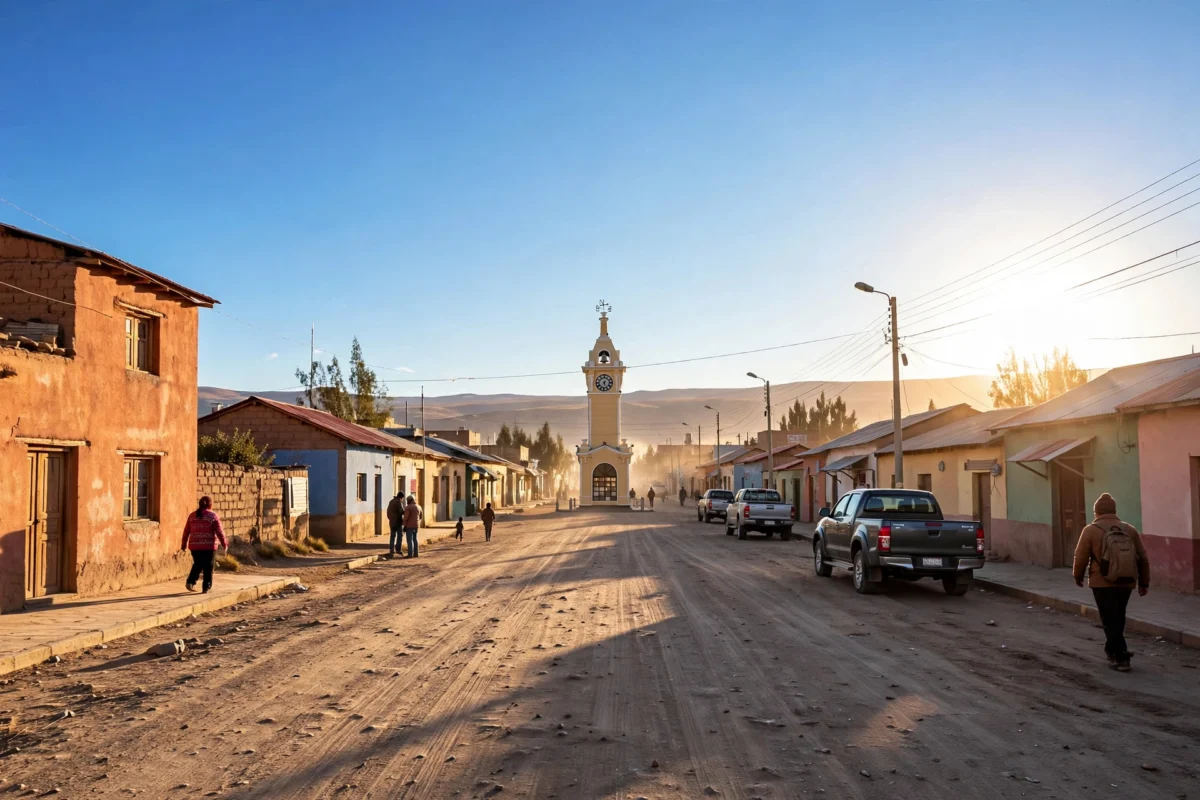
Almost everyone arrives in Uyuni with one goal: the Salar de Uyuni. But the salt flat does not start at the bus terminal — it starts in a small, dusty, high-altitude town that most travelers rush through without a second thought. That is a mistake. Uyuni town is where you acclimatize, stock up on cash, confirm your tour, eat your last hot meal before days of basic high-desert lodges, and — if you plan it right — see two of the area’s most characterful sights before your 4×4 even leaves. This guide covers everything practical for 2026: arriving, where to stay, what to eat, money and SIM cards, and how to use a buffer day instead of wasting it.
Key takeaways
- Uyuni town sits at about 3,656 m (12,000 ft) — take your first day gently and adjust before touring.
- Everything you need is within a few flat blocks of the clock tower on Avenida Potosí: hotels, agencies, ATMs and restaurants.
- Sleeping in town is cheaper and more flexible; salt hotels out by the flats are an experience, but they sit 15–25 km away and work best as part of a tour.
- The train cemetery and Colchani make an easy half-day trip if you have spare hours.
- Carry Bolivian cash: card acceptance is limited and ATMs can run dry on busy weekends.
Arriving in Uyuni: bus, plane and train
Most travelers reach Uyuni on an overnight bus from La Paz, a journey of roughly 10–12 hours. Buses arrive early in the morning near the center of town: you can walk to most hotels in five to ten minutes, drop your bag, and have breakfast while the tour agencies open. If you are still deciding between the bus and flying, our guide on how to get to Uyuni from La Paz compares both options — and if your trip starts in the capital, the La Paz travel guide on Uncover the Andes will help you plan those first days at altitude.
Uyuni also has a small airport, Joya Andina, about a 10–15 minute drive from the center, with flights connecting mainly to La Paz. Flying saves a full night of travel if your time in Bolivia is short, though prices vary a lot by season. The train is the romantic option: services link Uyuni with Oruro and toward Villazón on certain days, and schedules change often, so confirm departures before relying on the railway. Whichever way you arrive, build in slack — a delayed bus is annoying, but a missed tour departure is worse.
Getting your bearings: the clock tower and the main streets
Uyuni is small, flat and easy to read. The landmark everyone uses is the clock tower on Avenida Potosí, the main commercial street, with the highest concentration of tour agencies, restaurants, pharmacies and hotels around it. A couple of blocks away, Plaza Arce and the surrounding streets hold more local eateries and market stalls. The bus offices cluster in the same central area, and the train station is a short walk away.
Because the town grid is compact, “location” when choosing a hotel simply means: how many blocks from Avenida Potosí are you willing to walk with your luggage, in thin air, possibly at 6 a.m.? Two or three blocks is nothing on the map and surprisingly real at 3,656 m on your first morning. Laundry, bakeries and gear rental are also in these central streets, so there is rarely a reason to stay on the far edge of town.
Where to stay in Uyuni town (and the salt hotel question)
Accommodation in Uyuni town falls into three rough bands. Budget hostels and basic hotels cluster near the bus offices, with dorms or simple private rooms typically in the range of US$10–30 per night. Mid-range hotels on or near Avenida Potosí add reliable hot showers, heating (essential — nights are bitterly cold most of the year), breakfast and better Wi-Fi, roughly US$35–80. A few boutique properties push toward US$90–150 with proper insulation and in-house restaurants. These are indicative ranges, not quotes: they move with season, and the mirror-effect months (roughly January to March) are the most competitive.
Then there is the famous alternative: sleeping in a salt hotel out at the edge of the flats, near Colchani. These hotels are built largely from salt blocks — walls, beds, even furniture — and waking up on the edge of the Salar is genuinely memorable. The trade-off is distance: they sit well outside town, there is nothing to walk to, and they make most sense as the first or last night of a multi-day tour rather than as a base. Our dedicated guide to salt hotels near Salar de Uyuni explains the main options and what the experience is really like.
| Factor | Staying in Uyuni town | Salt hotel near the flats |
|---|---|---|
| Typical price range | US$10–150 by category | Usually US$80–250+, often with meals |
| Access to restaurants & agencies | Walk everywhere in minutes | None nearby — you depend on the hotel |
| Best for | Buffer nights, budget travelers, flexibility | A special night before/after a tour |
| Heating & comfort | Varies — ask before booking | Generally built for the cold; still ask |
| Getting to your tour | Agencies pick up or you walk over | Usually arranged within the tour |
One Uyuni-specific tip whichever you choose: confirm your room has heating and reliable hot water. At this altitude, a cold shower before a 5 a.m. tour departure is a genuinely miserable start to the day.
Where to eat in Uyuni: what to try
Around Avenida Potosí and the side streets near the clock tower you will find the traveler-oriented restaurants — pizza, pasta, international menus and set dinners aimed at people fresh off (or about to start) a tour. They are convenient, but do not skip the Bolivian food, which is where the town eats best and cheapest.
Look for a midday almuerzo (set lunch) in a local eatery: soup, a main course and a drink for a few dollars. Dishes worth trying include sopa de maní (a rich peanut soup), pique macho (a hearty pile of beef, sausage, fries and peppers, meant for sharing), salteñas (the baked, juicy empanadas eaten as a mid-morning snack — eat them leaning forward, the broth is real), and anything made with local quinoa. Around the market streets you can also find llama meat, a traditional altiplano protein. In the evening, eat early — kitchens wind down sooner than in big cities.
Half-day extras: the train cemetery and Colchani
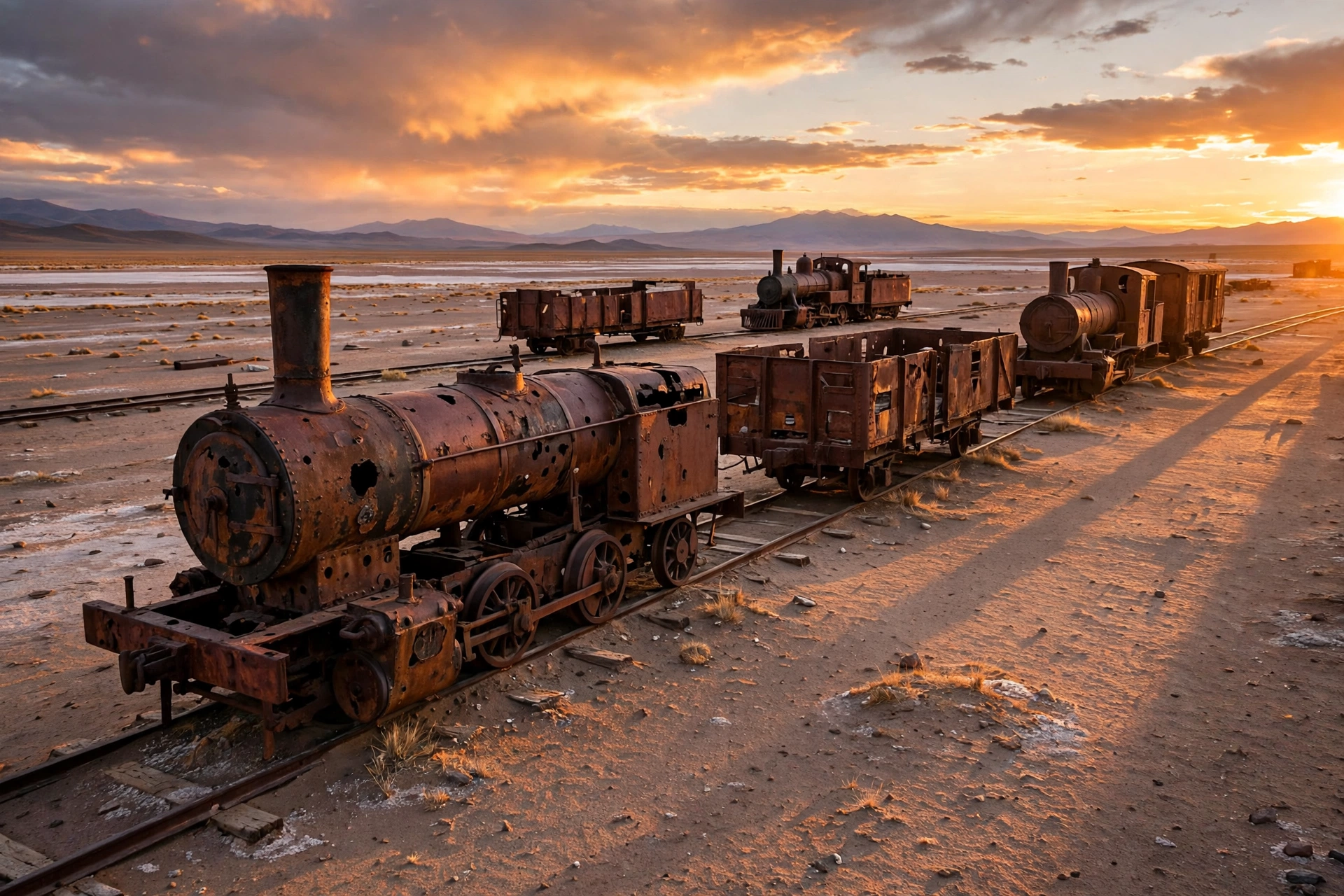
If you arrive in the morning and your tour leaves the next day, you have the perfect window for Uyuni’s two classic half-day sights. The train cemetery (Cementerio de Trenes), about 3 km from town, is a surreal field of rusting steam locomotives left over from Bolivia’s mining railway era. Most tours stop here on day one, but visiting independently at golden hour — by taxi or a short local excursion — means fewer people and far better light for photos.
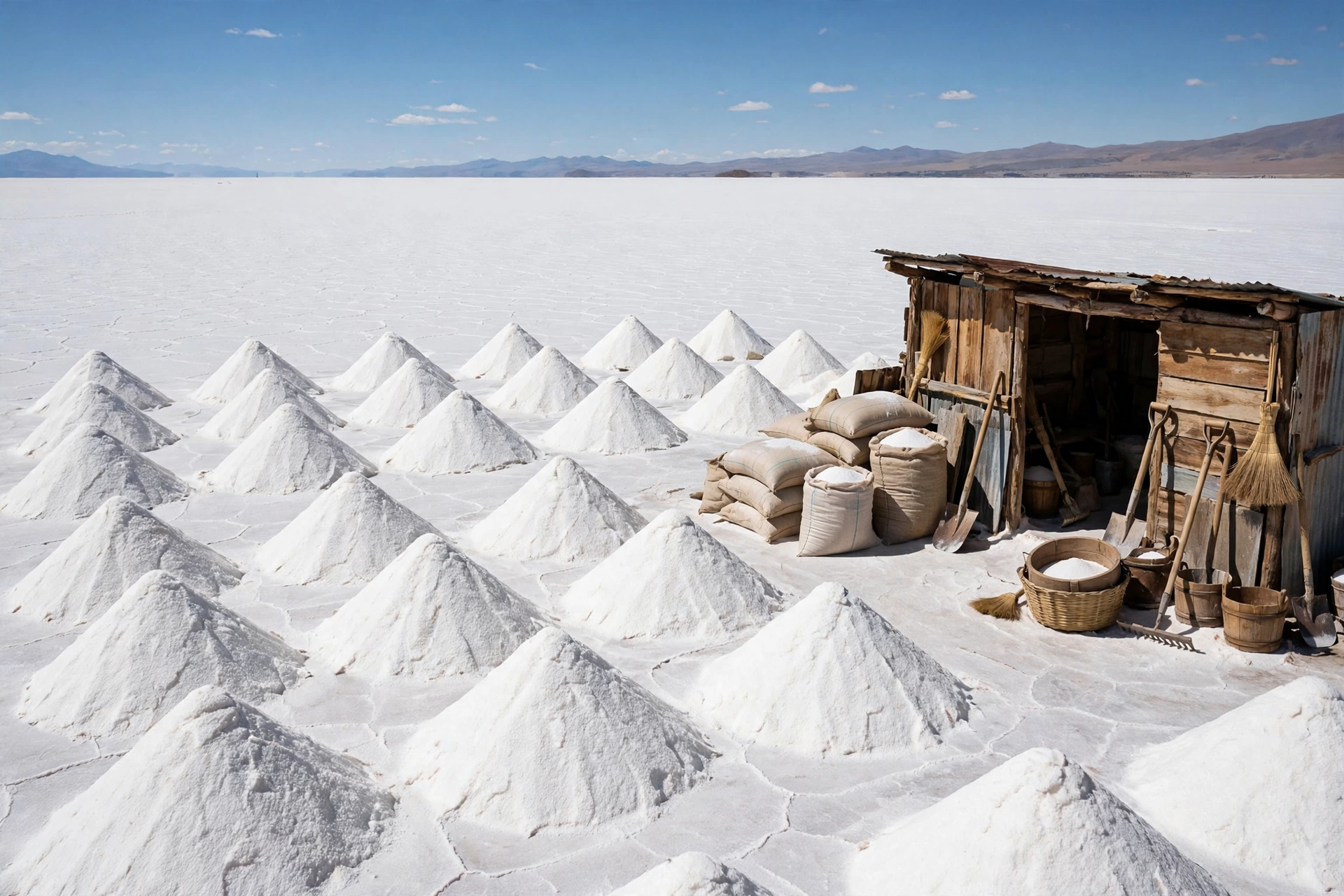
Colchani, roughly 20 km from town on the edge of the salt flat, is the village where local families harvest and process salt by hand. You can see the conical salt piles drying in the sun, watch salt being bagged in small workshops, and browse the craft market for salt carvings and textiles. Standard tours pass through too, but going on your buffer day lets you take it slowly. We cover both places in depth in our guide to the Uyuni train cemetery and Colchani. A round-trip taxi, or a half-day local tour booked on Avenida Potosí, is the simplest way to combine them.
Money, ATMs and SIM cards in Uyuni
Bring cash discipline to Uyuni. The town has bank ATMs around the center, but they can be empty or out of service at peak times, and many smaller businesses, taxis and market stalls are cash-only. Withdraw bolivianos in La Paz or on arrival — not on the morning of your tour — and keep small notes for taxis, snacks and tips. For a fuller breakdown of what the whole trip tends to cost, see our Salar de Uyuni trip cost and budget guide.
For connectivity, a Bolivian SIM card is cheap and easy to buy in town with your passport; top-up credit is sold everywhere. Coverage in town is fine, but expect the signal to fade out on the flats — download offline maps before you leave. Hotel Wi-Fi exists but is rarely fast; upload your photos back in La Paz, not from a salt-flat lodge.
Using a buffer day the smart way
We strongly recommend sleeping at least one night in Uyuni before a multi-day tour, and ideally a flexible night after it too. The “before” night protects you against bus delays and gives your body its first hours at 3,656 m in a real bed, with a pharmacy nearby if the altitude bites. Use it to confirm your tour in person, buy snacks and extra water, and charge every battery you own — the lodges on the route have limited charging. The “after” night is insurance against a late return, plus a hot shower and a proper dinner before onward travel. If your route continues south or east, the Sucre and Potosí travel guide covers the classic next stops, including Potosí, which pairs naturally with Uyuni.
Safety and altitude notes
Uyuni is a calm, small town and most travelers have no safety problems beyond common sense: watch your belongings at the bus offices, agree taxi fares before you ride (meters are not the norm), and take care on unlit streets late at night. The bigger risks are physical. The altitude is serious — headaches, poor sleep and nausea are common on day one, so walk slowly, eat light, skip alcohol on arrival night and drink water steadily. The sun at this elevation burns fast even when the air feels cold: sunscreen, sunglasses and a hat are not optional, especially on the reflective salt. And the cold surprises people: nights drop below freezing much of the year, so layers matter as much in town as out on the flats.
Plan your trip
Ready to turn this guide into an itinerary? Compare flights to La Paz and Uyuni on Skyscanner, book guided experiences through Civitatis, and travel with proper high-altitude coverage from SafetyWing — medical care on the altiplano is basic and evacuation is expensive, so insurance is one line item we never skip.
PLAN YOUR SALAR DE UYUNI TRIP
Book the tour, the hotel and the cover in one go
Frequently asked questions
How many nights should I stay in Uyuni town?
At least one night before your tour, and ideally one after. The first protects you from transport delays and starts your altitude adjustment; the last gives you a shower and a buffer before onward travel.
Is Uyuni town worth exploring, or just a stopover?
It is a working town, not a pretty colonial city — but the train cemetery, Colchani and the market streets give it more character than most travelers expect.
Can I walk from the bus arrival area to my hotel?
Usually yes — buses arrive near the center and most hotels are a 5–10 minute flat walk. At 3,656 m, though, a short taxi ride with heavy luggage is money well spent.
Should I book my salt flat tour in Uyuni or in advance?
Booking in Uyuni gives you the most choice and often the best price, and agencies leave daily. In peak mirror season (roughly January to March), booking ahead is safer if your dates are fixed.
Are there ATMs in Uyuni?
Yes, around the town center, but they can run out of cash or go offline. Withdraw in La Paz or as soon as you arrive, and do not rely on cards outside hotels and larger agencies.
What is the altitude of Uyuni and will I feel it?
Uyuni sits at about 3,656 m (12,000 ft), and most people feel something — a headache, broken sleep or breathlessness on stairs. Take day one slowly, hydrate, eat light and avoid alcohol until you have acclimatized.
Is it better to sleep in town or in a salt hotel?
In town for practicality and price; in a salt hotel for the experience. Many travelers do both: town hotels on the buffer nights and a salt hotel as part of a multi-day tour.
Can I visit the train cemetery and Colchani without a tour?
Yes. Both are close to town and reachable by taxi or a short half-day excursion booked locally. Most standard tours also include them, so check your itinerary before duplicating the visit.
Does Uyuni have good Wi-Fi and phone signal?
In town, mobile coverage is decent and a local SIM is cheap; hotel Wi-Fi is usually slow. Out on the flats, expect little to no signal — download offline maps first.
When is the best time to base myself in Uyuni?
For the mirror effect, the rainy months of roughly January to March; for easier roads and classic hexagon landscapes, the dry season from about May to October. The town works year-round as a base — just pack for cold nights in every season.