
This guide contains affiliate links. If you book through them we may earn a small commission at no extra cost to you, which helps keep this site independent.
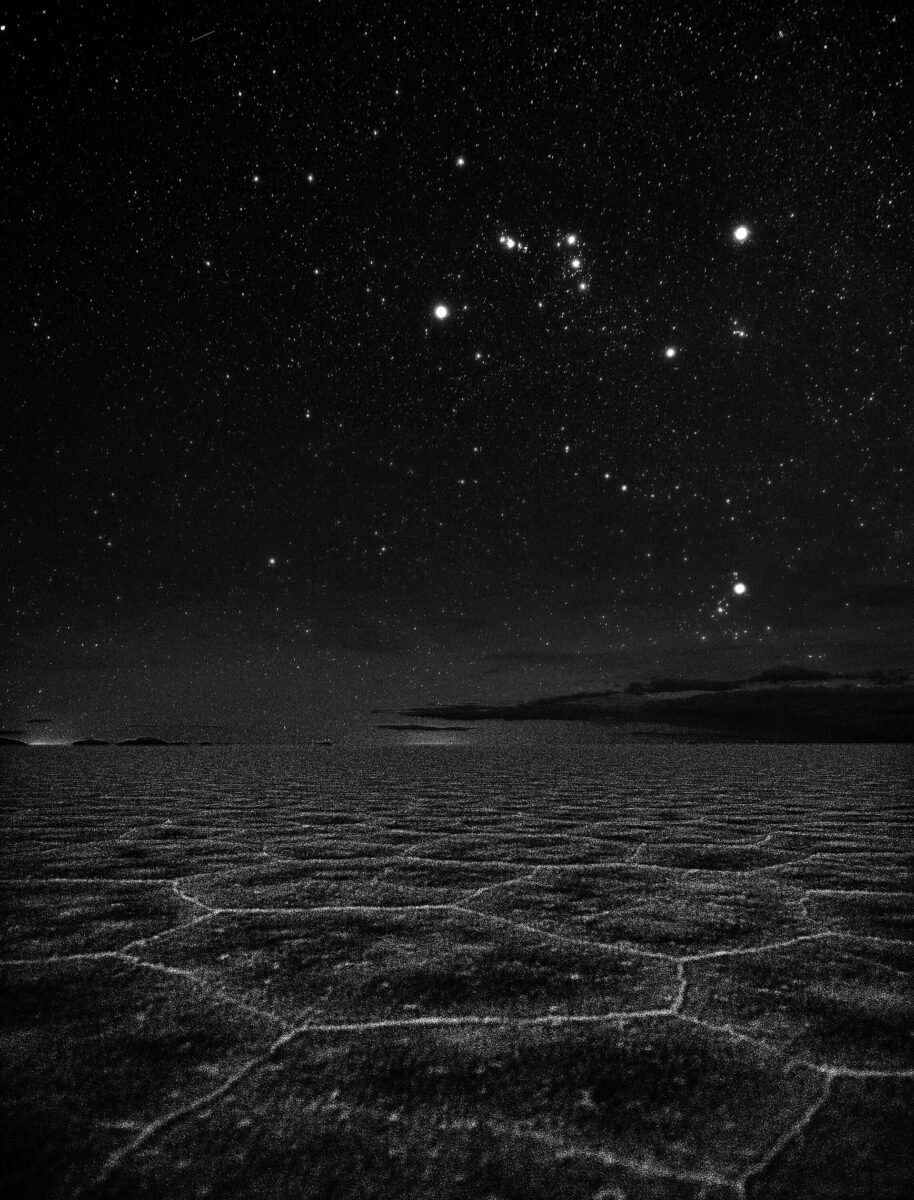
Most visitors see the Salar de Uyuni in daylight, squinting at the white glare and posing with toy dinosaurs. Far fewer stay until the sun goes down. That is a mistake. When the last light fades, the salt flat turns into one of the finest natural observatories on Earth. There is almost no light pollution, the air at 3,650 meters is thin and dry, and the horizon is perfectly flat in every direction. On a moonless night the Milky Way arches from one edge of the sky to the other, and in the rainy season, when a thin layer of water covers the salt, the stars reflect beneath your feet so it feels as if you are standing in space.
This guide explains how stargazing and sunrise tours work in Uyuni, how much they cost in 2026, which months and nights give the best sky, how cold it really gets, and how to photograph the stars with a phone or a camera. If you have one extra evening in Uyuni, this is how to spend it.
What is a Uyuni stargazing tour?
A stargazing tour is a short trip from the town of Uyuni onto the salt flat in the evening or before dawn. Most operators offer two versions:
- Sunset and stars: Departure in the late afternoon, sunset on the salt, then one to two hours of stargazing before returning to town around 9 or 10 pm.
- Stars and sunrise: Departure in the early hours, often around 4 to 5 am, stargazing in the last dark hours, then sunrise over the salt flat and return for breakfast.
Both last around four to five hours. A typical tour includes hotel pickup, a 4×4 or minibus, a driver or guide, rubber boots in the rainy season and sometimes hot drinks and blankets. Civitatis lists a stargazing tour with hotel pickup and an English-speaking guide from about US$60 per person, and private versions cost more because you pay for the whole vehicle.
| Tour type | Typical timing | Duration | Approx. price (2026) | Best season |
|---|---|---|---|---|
| Shared sunset + stargazing | Leaves about 4 to 5 pm, back about 9 to 10 pm | 4 to 5 hours | From about US$60 per person | All year, best on moonless dry nights |
| Shared stars + sunrise | Leaves about 4 to 5 am, back about 8 to 9 am | 4 to 5 hours | From about US$60 per person | Rainy season for reflections |
| Private night tour | Flexible | 4 to 6 hours | Price per vehicle, often well above US$150 total | Photographers and couples |
| Stars included in 3-day tour | Evening at the salt hostel or refuge | Variable | Included | Dry season; nights are very cold |
Book the night tour
See the Milky Way over the salt flat
A sunset and stargazing tour with hotel pickup and an English-speaking guide is one of the most memorable experiences in Bolivia. Compare dates and book with free cancellation on many departures.
Hotel pickup included · English-speaking guide · Free cancellation on many dates
Why the sky over Uyuni is so special
Several factors combine to make the salt flat a world-class place for stargazing:
- Altitude. At around 3,650 meters you are above a large part of the atmosphere’s water vapor and dust, so stars look sharper and brighter.
- Darkness. The salt flat covers more than 10,000 square kilometers with almost no settlements. Once you are a few kilometers from the town of Uyuni, artificial light practically disappears.
- Dry air. For most of the year humidity is very low, especially from May to November, which keeps the sky transparent.
- Southern sky. At about 20 degrees south, you see the brightest part of the Milky Way, the Southern Cross, Alpha Centauri and the two Magellanic Clouds, satellite galaxies of our own that are invisible from most of the Northern Hemisphere.
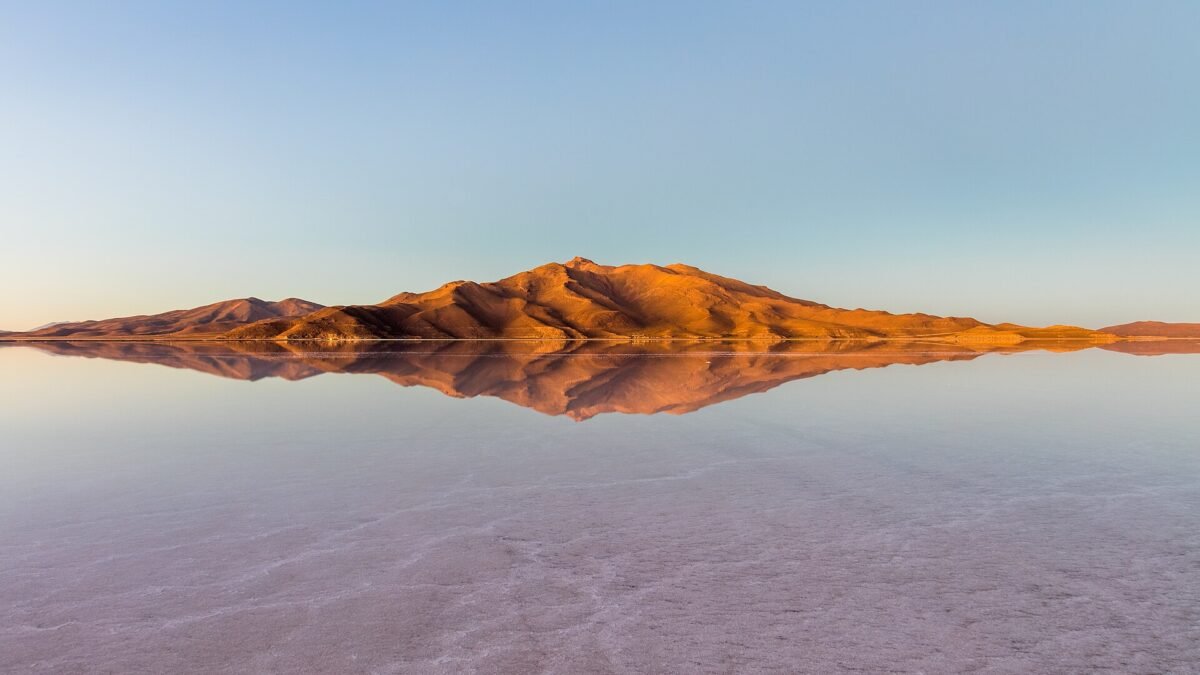
- The mirror. In the rainy season, a thin layer of still water turns the salt flat into a giant reflecting surface. On a calm, moonless night the stars appear above and below the horizon.
Best time of year for stargazing in Uyuni
There is a trade-off. The dry season gives the clearest skies, while the rainy season gives the reflections. According to long-term weather data from WeatherSpark, August is the clearest month of the year in Uyuni, with clear, mostly clear or partly cloudy skies around 79 percent of the time, closely followed by June, July and September. January is the cloudiest month, with overcast or mostly cloudy skies about 60 percent of the time.
| Month | Average high / low in Uyuni | Sky conditions | Stargazing verdict |
|---|---|---|---|
| January | About 20 °C / 5 °C | Cloudiest month, frequent afternoon storms | Chance of star reflections on calm nights, but many cloudy evenings |
| February | About 20 °C / 4 °C | Very cloudy, rainy | Reflections possible, high risk of clouds |
| March | About 19 °C / 4 °C | Clearing, water often still on the flat | Good balance of reflections and clear nights |
| April | About 17 °C / 1 °C | Mostly clear, drying flat | Very good, last chance for reflections |
| May | About 14 °C / -2 °C | Clear and dry | Excellent, cold nights |
| June | About 12 °C / -3 °C | Very clear | Excellent, Milky Way core high in the sky |
| July | About 12 °C / -3 °C | Very clear, coldest month | Excellent, dress for freezing temperatures |
| August | About 14 °C / -3 °C | Clearest month | Excellent, peak season crowds |
| September | About 17 °C / -2 °C | Very clear | Excellent |
| October | About 19 °C / 0 °C | Clear, windier | Very good |
| November | About 20 °C / 2 °C | Clouds start to build | Good, first rains late in the month |
| December | About 21 °C / 4 °C | Rainy season begins | Variable; reflections may begin |
For the Milky Way’s bright core, the best months are roughly April to September, when it rises high above the salt in the evening. In the rainy season months of January to March, the core is visible mainly before dawn, which is why many photographers choose stars and sunrise tours at that time of year. If you want a sense of how the salt flat changes through the year, read our month-by-month mirror effect guide and our dry season guide.
The moon: the most important factor
Even the clearest sky loses most of its stars when a bright moon is up. A full moon over the white salt is beautiful in its own right, almost like a second daylight, but the Milky Way vanishes. For the best stargazing, plan your night within about five days of the new moon, or choose a time when the moon has already set or not yet risen.
These are the new moon dates for the coming months. Use the nights a few days on either side as your target window.
- 9 November 2026 and 9 December 2026
- 7 January 2027, 6 February 2027 and 8 March 2027
- 6 April 2027, 6 May 2027 and 4 June 2027
- 4 July 2027, 2 August 2027 and 31 August 2027
- 30 September 2027, 29 October 2027 and 28 November 2027
Dates are based on published 2027 lunar calendars in Universal Time; in Bolivia (UTC−4) a new moon that falls just after midnight UTC may appear on the previous date. Combine the moon calendar with the weather forecast. In the dry season, cloud is rare, so the moon is the main variable. In the rainy season, clouds are the bigger risk, so keep at least two possible nights in your plan.
How cold does it get on a stargazing tour?
Very cold. In June, July and August, the average low in Uyuni town is around minus 3 °C, and on the open salt flat with even a light wind it often feels like minus 10 °C or lower. At the refuges near Laguna Colorada, where three-day tours spend the night, temperatures below minus 15 °C are common in winter. In the rainy season nights are milder, but you will stand in water for long periods, so cold feet are the main problem.
Dress as if you were going skiing:
- A thermal base layer, ideally merino wool, top and bottom.
- A fleece mid-layer and a warm packable down jacket.
- Warm hat, gloves you can operate a phone with, and a buff or scarf.
- Thick wool socks and, in the rainy season, the rubber boots provided by the operator.
- Disposable hand warmers for your pockets and for wrapping around camera batteries.
- A red-light headlamp, which lets you see without ruining your night vision or other people’s photos.
For a complete list for every season, see our guide on what to pack for the Salar de Uyuni.
Warm up after the stars
A heated room for when you get back at 10 pm
After hours on the frozen salt, heating and hot water matter more than anything. Compare Uyuni hotels and filter by heating and reviews on Hotels.com.
Search Here for Hotels.com Best Hotel Deals!
Compare hotels in one place · Guest reviews · Member prices on many stays
Sunrise tours: an alternative or a bonus
If you are not a night person, a sunrise tour is the next best thing. You leave town in the dark, often see the stars for the last hour, and then watch the sky change from deep blue to pink and orange as the sun appears over the eastern mountains. In the rainy season, the early morning is usually the calmest part of the day, which means the best chance of a perfect mirror reflection before wind ripples the water.
In the dry season, sunrise reveals the hexagonal salt patterns in raking light, which is wonderful for photography. Bring a hot drink and patience: the coldest moment of the night is often just before the sun rises.
How to photograph the stars at Uyuni
You do not need professional equipment to take a memorable photo of the night sky over the salt flat, but you do need a stable support and the right settings.
With a smartphone
Recent iPhones, Pixels and Samsung phones have night modes that can capture the Milky Way when the phone is perfectly still.
- Mount the phone on a small tripod, or rest it on a bag on the salt or the jeep’s hood.
- Turn off the flash and switch to night mode; on many phones the exposure extends to 10 to 30 seconds when the phone detects a tripod.
- Use the timer or a Bluetooth remote shutter so touching the screen does not cause blur.
- Tap to focus on a bright star or set focus to infinity if your camera app allows it.
- Include the horizon, a jeep or a friend standing still to give scale.
With a camera
| Setting | Recommended starting value | Why |
|---|---|---|
| Lens | 14 to 24 mm wide angle, f/2.8 or brighter | Captures a large part of the sky and lets in maximum light |
| Aperture | Widest available (f/1.8 to f/2.8) | More light in a short exposure |
| Shutter speed | 10 to 20 seconds | Longer exposures turn stars into trails |
| ISO | 3,200 to 6,400 | Brightens the stars without too much noise on modern sensors |
| Focus | Manual, set on a bright star using live view magnification | Autofocus fails in the dark |
| White balance | About 3,800 to 4,200 K | Natural blue night sky |
| File format | RAW | More flexibility to reduce noise and adjust color |
A sturdy tripod is essential. On the salt, wind is the enemy, so hang your bag from the center column to add weight. In the rainy season, keep the tripod legs shallow in the water and rinse them with fresh water afterwards, because salt corrodes metal. A flexible mini tripod is a good lightweight option if you only shoot with a phone or a compact camera.
For a much deeper technical guide, including panoramas and focus stacking, read Uncover the Andes’ article on Milky Way photography at the Salar de Uyuni.
Insurance for night tours
Freezing nights and remote roads
Night tours, extreme cold and high altitude are exactly the situations where you want medical cover. SafetyWing includes emergency medical care and evacuation and can be bought online in minutes.
Buy after departure · Flexible monthly plan · Covers 180+ countries
What you can see in the sky over Uyuni
Even without a telescope, the sky above the salt flat is full of things worth pointing out. Many guides bring a laser pointer and explain the main features:
- The Milky Way core, the bright central region of our galaxy, toward the constellations of Sagittarius and Scorpius.
- The Southern Cross, the small but famous constellation on the flags of Brazil, Australia and New Zealand.
- Alpha and Beta Centauri, the “pointers” next to the Southern Cross. Alpha Centauri is the nearest star system to the Sun.
- The Large and Small Magellanic Clouds, two dwarf galaxies visible to the naked eye as faint, misty patches.
- Planets, which shine without twinkling and change position from month to month.
- Satellites and meteors, which are surprisingly common on a dark night. Lie down on a blanket and give your eyes 20 minutes to adapt.
Indigenous Andean cultures also read the “dark constellations” in the Milky Way: shapes formed by dust clouds rather than stars, such as the llama, the fox and the serpent. Ask your guide if they know these stories.
Stargazing on a 3-day tour
If you are already doing the three-day Southwest Circuit, you will probably spend a night at a salt hostel near the flat and another at a refuge near Laguna Colorada, at around 4,300 meters. These are some of the darkest places in South America. Step outside after dinner, wrap up warmly and look up. The cold is intense, but the sky is unforgettable. If your tour ends in Chile, San Pedro de Atacama is also famous for astronomy tours. Our guide to the Uyuni to San Pedro de Atacama tour explains the route, and our comparison of Uyuni tours shows which formats include nights near the salt.
Safety tips for night tours
- Book with an established operator. At night it is easy to get lost on the salt flat. Experienced drivers know the safe tracks and the areas where the crust is thin or water is deep.
- Stay close to the vehicle. Without landmarks it is surprisingly hard to find the jeep again in the dark.
- Watch your step around holes. The “ojos de sal” are natural openings where water bubbles up through the crust.
- Mind the altitude. If you arrived the same day from sea level, a late night in the cold is hard on the body. Our article on altitude sickness in Uyuni explains the warning signs.
- Respect other photographers. Avoid white flashlights and car headlights when people are taking long exposures.
Getting to Uyuni
Fly in and keep your energy for the night
The one-hour flight from La Paz to Uyuni saves a night on the bus, so you arrive rested for an evening under the stars. Compare fares on Skyscanner.
Compare airlines · Flexible dates · No booking fees
Frequently Asked Questions
How much does a stargazing tour in Uyuni cost?
Shared sunset and stargazing tours start at around US$60 per person in 2026, usually with hotel pickup and a guide. Private night tours cost more because you pay for the whole vehicle.
What is the best month for stargazing at the Salar de Uyuni?
The clearest skies are from May to September, with August the clearest month on average. For stars reflected in water, aim for the rainy season between January and March on calm nights near the new moon.
Can you see the Milky Way from Uyuni?
Yes. On moonless nights the Milky Way is spectacular because of the altitude, the dry air and the absence of light pollution. The bright core is highest in the evening sky between about April and September.
When is the best time to see stars reflected on the salt flat?
Star reflections need a thin layer of still water, which usually appears between January and March, combined with a night near the new moon and no wind. Pre-dawn hours are often the calmest.
How cold is a Uyuni stargazing tour?
In the dry season, temperatures drop below freezing, often feeling like minus 10 °C or colder on the open salt flat with wind. Rainy season nights are milder, but you stand in water. Dress in thermal layers, a down jacket, hat and gloves.
Is a sunrise tour or a stargazing tour better?
If you want the Milky Way, choose a stargazing tour near the new moon. If you prefer colorful skies and the best chance of a calm mirror in the rainy season, choose a sunrise tour, which often includes the last hour of stars.
Can I photograph the stars with my phone at Uyuni?
Yes. Most recent phones have a night mode that can capture the Milky Way if the phone is completely still on a tripod or a stable surface. Use the timer or a remote shutter to avoid shake.
Do stargazing tours run every night?
Most operators run tours nightly when there are enough participants and the weather allows. Tours may be cancelled in storms or if roads are flooded, so keep a spare night in your plan.
How long does a stargazing tour last?
Typically four to five hours including transport from Uyuni town, sunset or sunrise, and time to observe the sky.
Does the full moon ruin stargazing in Uyuni?
A full moon hides most of the fainter stars and the Milky Way, although it makes the salt flat glow beautifully. For true stargazing, choose nights within about five days of the new moon.
Conclusion: stay for the night shift
The Salar de Uyuni by day is one of the world’s most famous landscapes. The Salar de Uyuni by night is one of its best-kept secrets. A few hours on the salt under a moonless sky, with the Milky Way overhead and, if you are lucky, reflected beneath your feet, is the kind of experience that stays with you for decades.
Check the moon calendar, choose your season, pack your warmest layers and book a tour with a reliable operator for one of your evenings in Uyuni. You will not regret losing a few hours of sleep.
Stay near the salt
Sleep close to the darkest skies
Salt hotels around Colchani and the edge of the flat put you closer to sunrise and stargazing spots. Compare them on Booking with free cancellation on many rooms.
Free cancellation on many rooms · Verified reviews · Unique salt architecture
Want help choosing the right night for your stargazing tour? Message us on WhatsApp at +1 (210) 264-6444.