

This guide contains affiliate links. If you book through them we may earn a small commission at no extra cost to you, which helps keep this site independent.
“How many days do I need in Uyuni?” is one of the first questions travelers ask when they add the Salar de Uyuni to a South America trip. The honest answer depends on what you want to see. The salt flat itself can be visited in a single day from the town of Uyuni. The colored lagoons, geysers and flamingos of the Lípez desert need at least three days. Add travel time from La Paz, a night or two to adjust to the altitude and perhaps a sunset or stargazing tour, and the numbers quickly grow.
This guide gives you a clear answer for different travel styles, followed by four day-by-day itineraries: a two-day express visit, a four-day classic with the three-day jeep tour, a five-day route that ends in Chile, and a seven-day loop through Uyuni, Potosí and Sucre. Each one includes realistic travel times, approximate costs in 2026 and tips to avoid wasting a day.
The short answer
- Minimum: 2 days. One travel day plus one full day on the salt flat. Enough for the classic photos, Isla Incahuasi and sunset, but you miss the lagoons.
- Recommended: 4 to 5 days. Enough for the three-day Southwest Circuit to the lagoons and geysers, plus arrival and a buffer day. This is what most travelers do.
- Ideal: 6 to 7 days. Adds a sunrise or stargazing tour, more time to acclimatize, and a side trip to Potosí and Sucre or a start in Tupiza.
The table below compares the four itineraries in this guide so you can choose quickly.
| Itinerary | Days | Route | What you see | Approx. cost per person (excl. international flights) | Best for |
|---|---|---|---|---|---|
| Express | 2 days | La Paz – Uyuni – La Paz | Salt flat, Isla Incahuasi, Train Cemetery, sunset | About US$250 to 450 | Short trips, tight schedules |
| Classic | 4 days | La Paz – Uyuni – 3-day tour – Uyuni | Salt flat plus lagoons, geysers and flamingos | About US$350 to 650 | First-time visitors |
| To Chile | 5 days | La Paz – Uyuni – 3-day tour – San Pedro de Atacama | Salt flat, lagoons, then Atacama Desert | About US$400 to 700 | Travelers continuing to Chile |
| Southern loop | 7 days | La Paz – Uyuni – Potosí – Sucre | Salt flat, lagoons, colonial cities and mines | About US$550 to 900 | Slow travelers, culture lovers |
For a detailed breakdown of each cost item, see our Salar de Uyuni trip cost guide.
What decides how many days you need
1. Where you start
The town of Uyuni is remote. From La Paz you can fly in about an hour or take an overnight bus of roughly ten hours. From San Pedro de Atacama the usual way in is the three-day tour itself. From Argentina you will probably start in Tupiza, four days away by jeep. Our guide on how to get to Uyuni from La Paz compares flights, buses and the train.
2. Whether you want the lagoons
The salt flat is only the northern part of the attraction. The famous lagoons, including Laguna Colorada and Laguna Verde, are about 300 kilometers south across rough desert tracks. They cannot be visited on a one-day tour. If they are on your list, plan for a three-day tour at minimum.
3. Altitude
Uyuni sits at about 3,650 meters, and the lagoon circuit climbs to nearly 5,000 meters. If you fly directly from sea level, a day of rest before a multi-day tour is wise. Our article on altitude sickness in Uyuni explains how to acclimatize.
4. Season
In the rainy season, from roughly December to April, the mirror effect is the main attraction and some lagoon routes can be affected by flooding. Many travelers then prefer two or three separate day trips from Uyuni, such as a sunrise tour and a full-day tour, rather than the long circuit. Check our month-by-month mirror effect guide before you lock in dates.
Itinerary 1: Uyuni in 2 days (express)
This is the fastest way to see the salt flat from La Paz and works well for a long weekend.
Day 1: Fly La Paz to Uyuni, full-day salt flat tour. Take the earliest flight from El Alto to Uyuni. Tours usually leave town around 10:00 to 10:30 am, so a morning flight connects well. The standard full-day tour visits the Train Cemetery and Colchani, the salt flat’s center for perspective photos, Isla Incahuasi (in the dry season) and ends with sunset on the salt. Sleep in Uyuni or a salt hotel near Colchani.
Day 2: Sunrise or free morning, fly back to La Paz. If you have energy, join a sunrise tour that leaves around 4:30 to 5:00 am. Otherwise, have a slow breakfast, visit the small market and fly back in the afternoon.
Pros: Fast, efficient, no nights in basic refuges. Cons: No lagoons, very little time to acclimatize, and a delayed flight can cost you the tour. Keep a buffer before any international flight.
Save a day of travel
The 1-hour flight that saves a night on the bus
The La Paz to Uyuni flight is short but seats are limited, especially in July, August and around holidays. Skyscanner shows the whole month so you can pick the cheapest day.
Compare airlines · Whole-month view · No booking fees
Itinerary 2: Uyuni in 4 days (classic)
This is the best balance for most travelers: the full Southwest Circuit plus a recovery night in Uyuni.
| Day | Plan | Overnight | Altitude |
|---|---|---|---|
| Day 0 (night) | Overnight bus from La Paz, or evening flight | Bus or Uyuni hotel | 3,650 m |
| Day 1 | 3-day tour starts around 10:30 am: Train Cemetery, Colchani, salt flat, Isla Incahuasi, sunset | Salt hostel near the flat | About 3,700 m |
| Day 2 | Ollagüe viewpoint, high lagoons, flamingos, Árbol de Piedra, Laguna Colorada | Refuge near Laguna Colorada | About 4,300 m |
| Day 3 | Sol de Mañana geysers at dawn, Polques hot springs, Laguna Verde, return drive to Uyuni | Hotel in Uyuni | Up to about 5,000 m |
| Day 4 | Rest morning, then flight or bus to La Paz, Potosí or the next stop | La Paz or onward | Varies |
Most three-day tours that return to Uyuni arrive in the evening of day three after a long drive. If you are flying out, book the flight for the next day, not the same evening. Our comparison of 1-day, 3-day and 4-day Uyuni tours explains what each format includes and how much they cost.
Book the 3-day tour
The lagoons, the geysers and the salt flat
Compare 3-day Uyuni tours with fixed prices and clear inclusions. Booking ahead means you know exactly what is covered before you arrive in town.
Clear inclusions · English descriptions · Free cancellation on many dates
Itinerary 3: 5 days, Uyuni to San Pedro de Atacama
If Chile is your next destination, there is no need to go back to Uyuni. Three-day tours can drop you at the Hito Cajón border on the morning of day three, where a transfer takes you down to San Pedro de Atacama.
Day 1: La Paz to Uyuni. Fly or take the overnight bus. Rest, buy water and snacks, check your tour and pick up cash for park fees.
Day 2: Tour day 1. Train Cemetery, Colchani, salt flat, Isla Incahuasi and sunset. Night in a salt hostel.
Day 3: Tour day 2. High lagoons, flamingos, Siloli Desert and Laguna Colorada. Night in a basic refuge, often very cold.
Day 4: Tour day 3. Sunrise at the Sol de Mañana geysers, Polques hot springs, Laguna Verde, Bolivian exit formalities at Hito Cajón and transfer to San Pedro. Afternoon free to rest at a much lower altitude, around 2,400 meters.
Day 5: San Pedro de Atacama. Recover, then join an afternoon tour to the Valle de la Luna or simply enjoy the town.
Our full guide to the Uyuni to San Pedro de Atacama tour explains the border procedure, Chilean customs rules on food and how to choose an operator.
Itinerary 4: 7 days, Uyuni, Potosí and Sucre
This loop combines the natural highlights of the southwest with two of Bolivia’s most interesting cities. It is ideal if you have a week and want a mix of landscapes and history.
| Day | Route | Travel time | Highlights |
|---|---|---|---|
| 1 | Fly La Paz to Uyuni | About 1 hour | Afternoon at the Train Cemetery, sunset tour |
| 2 to 4 | 3-day tour, returning to Uyuni | Full days in a 4×4 | Salt flat, lagoons, geysers, flamingos |
| 5 | Bus Uyuni to Potosí | About 4 hours | Cerro Rico, Casa Nacional de Moneda |
| 6 | Bus or shared taxi Potosí to Sucre | About 3 hours | Colonial center, Recoleta viewpoint |
| 7 | Fly Sucre to La Paz or Santa Cruz | About 1 hour | End of the trip |
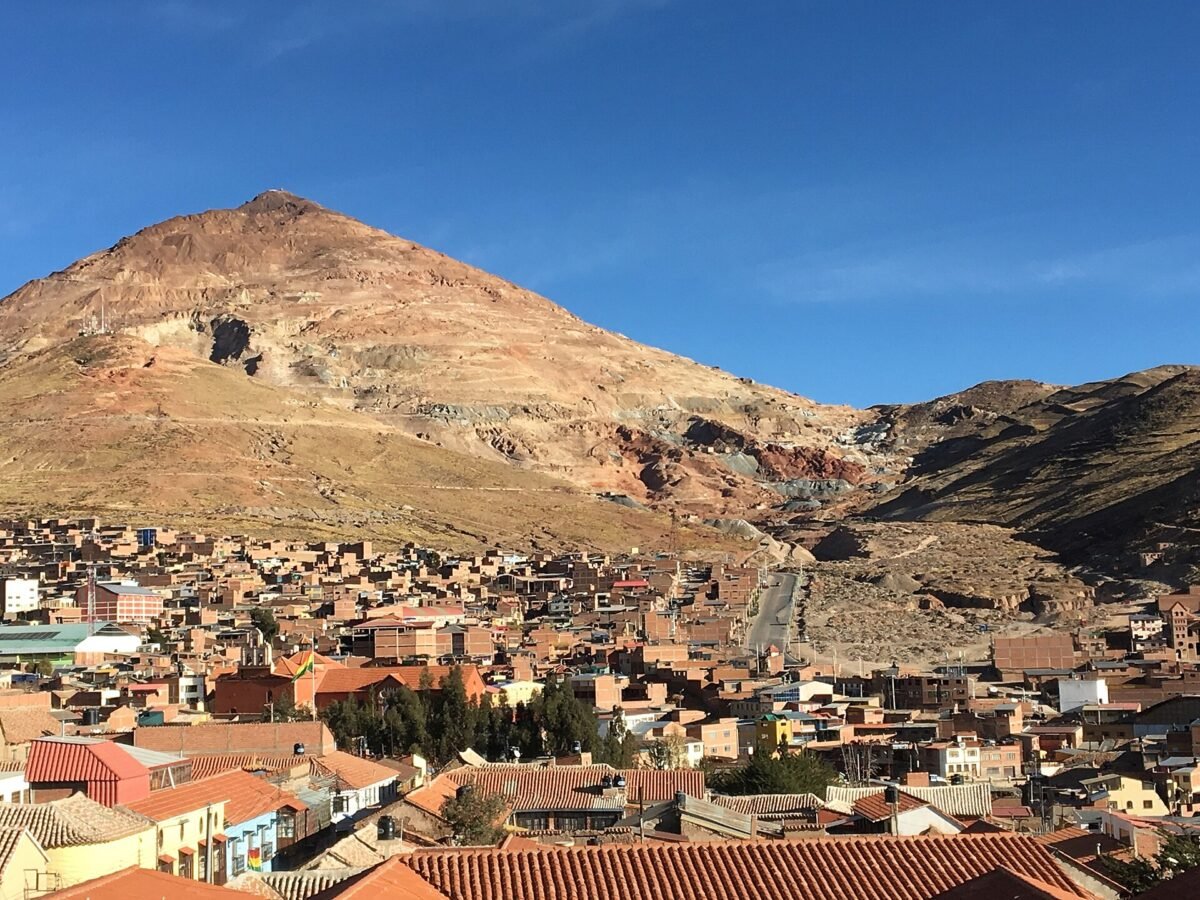
Potosí, at around 4,000 meters, was once one of the richest cities in the world thanks to the silver of the Cerro Rico. Sucre, much lower and milder, is Bolivia’s constitutional capital, with whitewashed colonial streets and a relaxed atmosphere. Both are on the UNESCO World Heritage list. For more ideas on combining regions, Uncover the Andes has a detailed Bolivia travel blueprint.
Bonus: a 3-day rainy season itinerary for the mirror effect
Between January and March, many travelers come to Uyuni for one thing: the mirror. When a thin sheet of rainwater covers the salt, the sky reflects perfectly on the ground and the horizon disappears. The three-day lagoon tour still runs in this season, but some sections can be diverted by flooded rivers, and the reflections are best close to Uyuni anyway. That is why a short, flexible itinerary based in town often works better.
Day 1: Arrive and catch the sunset. Fly from La Paz in the morning, rest at your hotel and join a sunset tour in the late afternoon. Sunset is when the reflections turn pink, orange and violet, and it is the most photographed moment of the rainy season.
Day 2: Full-day mirror tour. A full-day tour in the rainy season usually focuses on the flooded areas near Colchani and the old salt hotel rather than Isla Incahuasi, which can be cut off by deep water. Expect rubber boots, plenty of time for reflection photos and lunch on a dry patch or in a salt building. In the evening, rest or add a stargazing tour if the sky clears.
Day 3: Sunrise and departure. The early morning is usually the calmest time of day, so the water is like glass. Join a sunrise tour, return for breakfast and fly back to La Paz in the afternoon.
Weather in the rainy season changes from day to day. A wind of only a few kilometers per hour creates ripples that break the mirror, and in very wet years tours may avoid the deepest areas. Staying two or three nights gives you more chances to see the perfect reflection.
Is Uyuni town worth extra time?
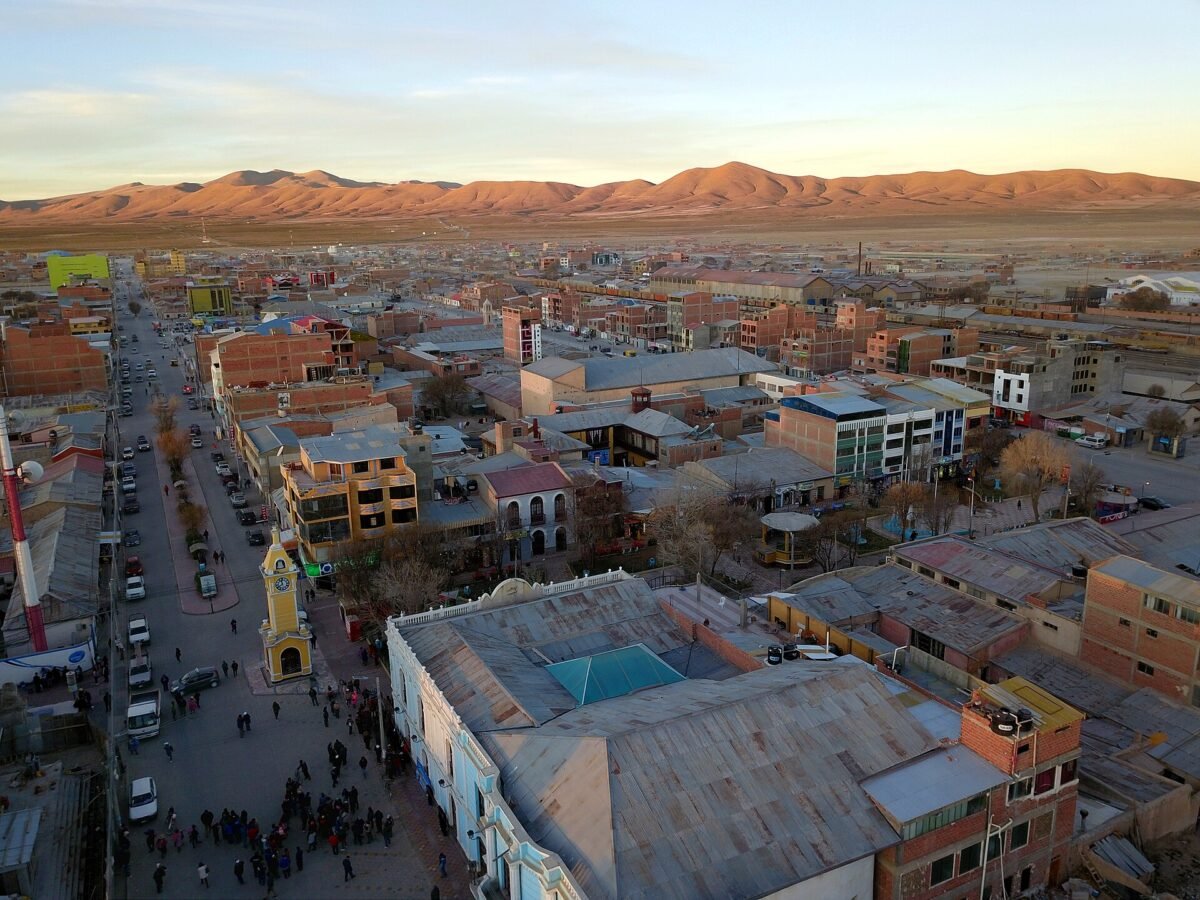
Uyuni itself is a functional town that grew up around the railway in the late nineteenth century. It has a pleasant main square with a clock tower, a pedestrian avenue lined with tour agencies and pizzerias, a small market where you can buy snacks and coca leaves, and a railway museum atmosphere thanks to the old locomotives scattered around town. Most visitors spend a night before and after their tour and find that is plenty.
If you do have a spare afternoon, walk to the Train Cemetery on the edge of town, browse the market for alpaca wool hats and gloves you will need on the tour, and organize cash for park fees. Evenings are quiet, and restaurants close relatively early, so plan dinner before 9 pm. Uyuni is generally calm, but keep an eye on your belongings in the bus terminal area and around the market, as you would in any transit town.
Alternative: start in Tupiza
If you are coming from Argentina, consider adding a night in Tupiza and taking the four-day jeep tour that ends in Uyuni. It visits red canyons and remote villages on day one, then follows the lagoon circuit, and finishes with sunrise on the salt flat. Including travel from the border, it fits nicely into six days. It is slower than starting in Uyuni, but quieter and gentler on the body because Tupiza is lower, around 2,950 meters.
Should you add a sunset, sunrise or stargazing tour?
If you have one extra evening, a sunset and stargazing tour is the best upgrade. Agencies in Uyuni run tours of about four to five hours that combine the golden hour on the salt with time under the night sky, often from around US$60. In the dry season, the sky above the salt is exceptionally clear, and around the new moon the Milky Way is spectacular. In the rainy season, sunrise tours are popular because the still morning air gives the best reflections.
The extra evening
Stars over the salt you will never forget
A sunset and stargazing tour adds a completely different side of the Salar de Uyuni. Compare departures with hotel pickup and English-speaking guides.
Hotel pickup · English-speaking guide · Free cancellation on many dates
Where to sleep in Uyuni
Uyuni is a small, dusty town with a mix of budget hostels, mid-range hotels and a few comfortable options. Heating and hot water are the two features to check in reviews, because nights are freezing for much of the year. For a special night, salt hotels near Colchani and on the edge of the salt flat offer a unique experience and better access for sunrise and sunset tours. Compare them in our guide to salt hotels near the Salar de Uyuni.
Warm nights in Uyuni
Book a room with real heating
Compare Uyuni hotels by price, reviews and amenities, and filter for heating and breakfast before your tour. Hotels.com lists options from budget stays to salt hotels.
Search Here for Hotels.com Best Hotel Deals!
Compare hotels in one place · Guest reviews · Member prices on many stays
Common itinerary mistakes
- Booking an international flight on the same day the tour ends. Three-day tours return late, and road blockades or breakdowns can add hours.
- Arriving from sea level and starting the 3-day tour immediately. Spend at least one or two nights at altitude first, in La Paz, Sucre or Uyuni itself.
- Expecting the lagoons on a one-day tour. They are hundreds of kilometers away; only multi-day tours reach them.
- Ignoring the season. In February a dry-season itinerary may not work, and in July a mirror is impossible.
- Not carrying cash. Park fees and toilets are cash only. Plan for around Bs 250 to 350 per person on a multi-day tour, plus tips.
Flight trouble?
Delayed or cancelled? Check what you are owed
Domestic and international flights in the Andes are often delayed. If a disruption cost you hours, AirHelp checks in minutes whether you are entitled to compensation and handles the claim.
Free eligibility check · They deal with the airline · Fee only if successful
What to pack for any Uyuni itinerary
Whatever the length of your trip, temperatures swing from warm afternoons to freezing nights, and the sun is relentless. The essentials:
- A warm jacket, hat and gloves, such as a packable down jacket.
- Thermal base layers for the refuge nights.
- Sunscreen like EltaMD UV Clear SPF 46 and UV400 sunglasses.
- A rechargeable headlamp and a power bank.
- The Lonely Planet Bolivia guide if you are planning a longer route through the country.
Our complete packing list for the Salar de Uyuni is organized by season.
Travel insured
Long roads, high altitude: travel covered
Multi-day Uyuni itineraries take you far from hospitals and pharmacies. SafetyWing covers emergency medical care and evacuation, and you can buy it online even after your trip starts.
Buy online in minutes · Monthly subscription · Covers 180+ countries
Frequently Asked Questions
Is one day enough for the Salar de Uyuni?
One full day is enough to see the salt flat itself, the Train Cemetery, Colchani and Isla Incahuasi, and to watch the sunset. It is not enough to visit the lagoons, geysers and flamingos of the Lípez desert, which require a three-day tour.
How many days do you need for Uyuni and the lagoons?
Plan at least four days: one to arrive in Uyuni and three for the jeep tour. Five days is more comfortable because it gives you a buffer for delays and time to recover from the altitude.
Is it better to do a 1-day or 3-day Uyuni tour?
If you have the time, the three-day tour is the better choice because it includes the salt flat plus the colored lagoons, geysers and hot springs. The one-day tour suits travelers on a tight schedule or those visiting in the rainy season for the mirror effect.
Can I visit Uyuni as a day trip from La Paz?
Not realistically. Although the flight takes about an hour, tours last all day and return after sunset, when there are usually no flights back. Plan at least one night in Uyuni.
How many days should I spend in Uyuni town?
The town itself has limited attractions, so one night before and one after your tour is usually enough. Spend extra nights only if you want additional tours such as sunrise or stargazing.
Do I need extra days to acclimatize before a Uyuni tour?
If you arrive from sea level, spending one or two nights at altitude before a three-day tour is wise, since the route reaches nearly 5,000 meters. La Paz, Sucre or Uyuni all help you adjust.
How long does it take to get from La Paz to Uyuni?
About one hour by plane, or roughly ten hours by overnight bus. There is also a train from Oruro, which runs only on certain days of the week.
Can I combine Uyuni with San Pedro de Atacama?
Yes. Many three-day tours end at the Chilean border, from where a transfer takes you to San Pedro de Atacama. It is a convenient way to continue to Chile without returning to Uyuni.
Is a week too long for Uyuni?
A week only on the salt flat would be long, but a week in southern Bolivia is ideal. You can combine Uyuni and the lagoon circuit with Potosí and Sucre, or start the tour in Tupiza.
What is the best season for a short Uyuni trip?
For a short trip focused on the mirror effect, visit between January and March. For a short trip with reliable access to all areas, including Isla Incahuasi, choose between May and November.
Conclusion: plan four to five days and enjoy the trip
If you remember one number, make it four to five days. That gives you the salt flat, the lagoons and geysers, a reasonable acclimatization and a buffer for the delays that are part of travel in remote Bolivia. Two days works if you only want the classic salt flat experience, and a week lets you add sunrise, stargazing or the colonial cities of Potosí and Sucre.
Once you know your number of days, the next step is easy: secure your flight to Uyuni, book a warm room for the first night and choose a tour with clear inclusions.
Ready to plan?
Find your stay for every night of the trip
Compare hotels in La Paz, Uyuni, Potosí and Sucre on Booking, with free cancellation on many rooms and verified reviews from other travelers.
Free cancellation on many rooms · Verified reviews · Options for every budget
Not sure which itinerary fits your dates? Send us a message on WhatsApp at +1 (210) 264-6444 and we will help you plan your trip.