
This guide contains affiliate links. If you book through them we may earn a small commission at no extra cost to you, which helps keep this site independent.
For almost two decades, the first hurdle between an American traveler and the Salar de Uyuni was not the altitude or the long jeep rides. It was paperwork. Bolivia charged US citizens a tourist visa fee of around US$160, asked for bank statements, a yellow fever card, hotel bookings and passport photos, and made the whole process feel like a small exam before the trip even started. That chapter is now closed. On 1 December 2025 the government of President Rodrigo Paz eliminated the tourist visa requirement for US citizens, together with travelers from Israel, South Korea, South Africa and a handful of European countries.
This guide explains exactly what changed, what you still need to show at the border, how long you can stay, and how the new rules play out on the routes most travelers use to reach the salt flat: flying into La Paz, crossing from San Pedro de Atacama in Chile, or coming up from Argentina through Villazón and Tupiza. Immigration rules can change quickly in South America, so we also show you where to double check before you fly.
The short answer: do US citizens need a visa for Bolivia in 2026?
No. If you hold a US passport and you are traveling to Bolivia for tourism, you do not need to apply for a visa in advance and you do not pay a visa fee at the border. You show a valid passport, receive an entry stamp and you are in. The US Embassy and the US State Department both list a visa as not required for tourism or short business trips, and Bolivian officials announced that visitors from the countries on the new list can stay up to 90 days.
That does not mean there are zero requirements. Your passport still needs six months of validity, you need an address where you will stay, and border officers can ask about your plans, your onward travel and your funds. A yellow fever vaccination certificate can also be requested, especially if you arrive from a country with yellow fever transmission or you plan to visit the tropical lowlands. We will go through each of these points below.
What changed on 1 December 2025
Bolivia introduced the visa requirement for US citizens in 2007 under President Evo Morales, presented as a reciprocity measure because Bolivians must apply for a US visa. Americans were placed in the so-called Group 3 of countries, which needed a visa and paid the highest fee. The rule was briefly lifted in December 2019 by the interim government of Jeanine Áñez and reinstated in early 2021 under President Luis Arce. During that period, US visitors could obtain the visa at a consulate, at the airport or at a land border, but the process was slow and the list of documents long.
Rodrigo Paz took office in November 2025, ending the long era of the Movement Toward Socialism party, and one of his first announcements was the removal of visa barriers for tourists. Foreign Minister Fernando Aramayo presented the measure as part of a plan to rebuild tourism revenue, which officials estimate fell by hundreds of millions of dollars after visitor numbers declined. For travelers heading to Uyuni, the practical effect is simple: you can now book a last-minute flight to La Paz or decide in San Pedro de Atacama to cross into Bolivia without planning a visa appointment weeks ahead.
| Requirement | Before Dec 2025 (visa regime) | From Dec 2025 (visa-free) |
|---|---|---|
| Tourist visa | Required, Group 3 country | Not required |
| Visa fee | About US$160, cash in dollars | None |
| Passport validity | 6 months | 6 months |
| Proof of accommodation | Hotel booking or invitation letter | Address of stay may be requested |
| Proof of funds | Bank statement or credit card | May be asked at the officer’s discretion |
| Yellow fever certificate | Requested with the visa application | Requested if arriving from risk areas or visiting the lowlands |
| Passport photo and forms | Required | Not required |
| Maximum stay | 30 days, extendable to 90 per year | Up to 90 days per year |
Documents to carry when you enter Bolivia
Visa-free does not mean document-free. Pack these items in your day bag, not in the checked luggage, because you will need them at the airport counter or the border post.
- US passport valid for at least six months from the day you enter Bolivia, with at least one or two blank pages for the entry and exit stamps.
- Address of your first night, ideally a hotel booking confirmation. The State Department lists the address of stay as an entry requirement, and immigration forms ask for it.
- Onward or return ticket, or at least a printed plan showing how you will leave Bolivia, for example a bus ticket to Chile or a tour that ends in San Pedro de Atacama.
- Yellow fever vaccination certificate (the yellow card) if you have one, and certainly if you arrive from Brazil, Peru, Colombia or another country with transmission risk.
- Proof of funds, which in practice means a credit card or two and some US dollars in clean, undamaged bills.
- Travel insurance policy with medical evacuation, printed or saved offline. It is not checked at the border, but on a multi-day tour through the Lípez desert it is the document that matters most.
Keep the small paper or digital record you receive when you enter. Some border posts still hand out a migration card, and others record everything electronically. Either way, make sure you see the stamp in your passport and check the date and number of days before you leave the counter.
Travel insurance for high altitude
Remote salt flat, zero hospitals nearby
The nearest proper clinic can be six hours away from Laguna Colorada. SafetyWing covers emergency medical care and evacuation for nomads and travelers, and you can buy it even after you leave home.
Buy online in minutes · Monthly plan you can cancel · Covers 180+ countries
How long can US citizens stay in Bolivia?
The headline number is 90 days. According to the US Embassy guidance repeated by most travel resources, US citizens can stay up to 90 days within a one-year period as tourists. Many travelers report that the officer writes a shorter period, such as 30 days, on the entry stamp. Look at the number written next to your stamp before you leave the booth. If you need more time than you were given, you can request an extension at an office of the Dirección General de Migración in a major city such as La Paz, Potosí or Santa Cruz, as long as the total stays within the annual allowance.
For a typical Uyuni trip, the stay limit is not a real constraint. Most visitors spend two to four weeks in Bolivia, combining La Paz, Lake Titicaca, Sucre or Potosí with a one-day or three-day salt flat tour. If you are planning a slow overland trip through the Andes, however, keep a simple log of your entry and exit dates. Overstaying, even by a few days, results in a daily fine that you pay before you can leave the country, and it can cause delays at a remote border post where the officer may not have change or a card machine.
Entering Bolivia by air: La Paz and Santa Cruz
Most American travelers arrive by plane. There are no direct flights from the United States to Bolivia at the moment, so you will connect through Lima, Bogotá, Panama City, São Paulo, Santiago or Miami-area hubs, depending on the airline. The two main international gateways are El Alto International Airport (LPB), which serves La Paz at roughly 4,060 meters above sea level, and Viru Viru International Airport (VVI) in Santa Cruz, which sits in the warm lowlands.
From either city you can fly domestically to Uyuni (UYU). The domestic leg is short, about an hour from La Paz, and saves you a long overnight bus. Our guide to getting from La Paz to Uyuni compares the flight, the tourist buses and the train with current prices.
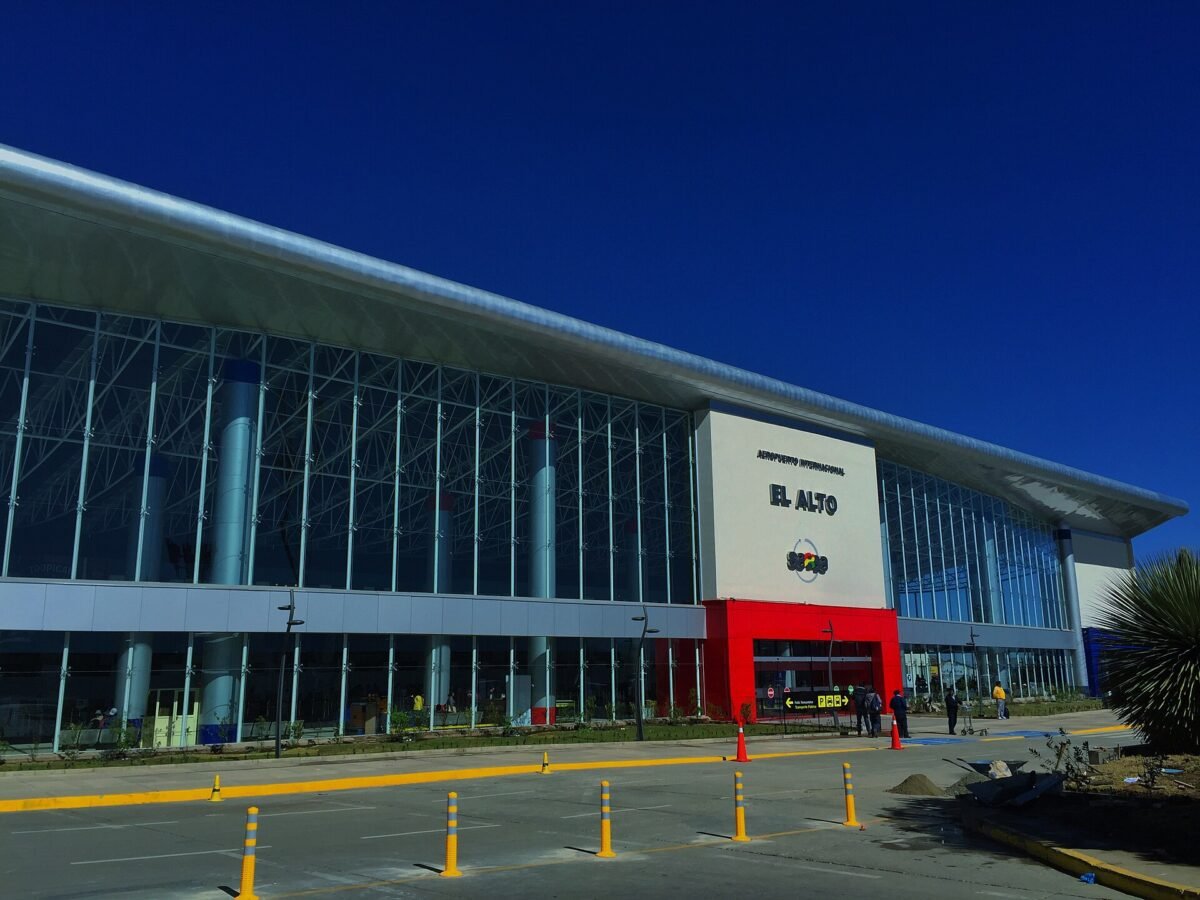
A practical tip for El Alto: the airport is one of the highest international airports in the world. Walk slowly through immigration and baggage claim, drink water and avoid alcohol the first night. If you are worried about the altitude, read our article on altitude sickness in Uyuni, which explains acclimatization schedules and medication options to discuss with your doctor before you travel.
Santa Cruz is a softer landing because of its low altitude, around 400 meters, and it is the better gateway for travelers coming from Brazil or connecting through Panama. If you arrive from a country with yellow fever risk, the certificate is more likely to be checked there.
Compare flights to Bolivia
Find the cheapest way to La Paz or Uyuni
There are no nonstop flights from the US, so the routing matters. Skyscanner shows connections through Lima, Bogotá, Panama and Santiago side by side, including the short domestic hop to Uyuni.
Compare hundreds of airlines · Whole-month price view · No booking fees
Entering Bolivia by land on the way to Uyuni
Many Uyuni visitors never touch La Paz. They arrive overland from Chile at the end of a trip through the Atacama Desert, or from northern Argentina via Salta and Jujuy. Visa-free entry applies at land borders in exactly the same way as at airports, but the experience is very different: remote posts, high altitude, limited opening hours and sometimes a slow queue in the cold.
| Border crossing | Coming from | Distance or time to Uyuni | What to know |
|---|---|---|---|
| Hito Cajón | San Pedro de Atacama, Chile | Usually crossed on a 3-day tour that ends or starts in Uyuni | High-altitude post near Laguna Blanca. Chilean exit formalities are handled in San Pedro. Fresh food cannot enter Chile. |
| Ollagüe | Calama, Chile | About 5 to 7 hours by road | Used by the Calama–Uyuni buses. Basic facilities, very cold at night. |
| Villazón / La Quiaca | Jujuy and Salta, Argentina | About 2 hours to Tupiza, then roughly 4 to 5 hours more to Uyuni | Busy pedestrian bridge. Bolivia relies on Argentine exit registration at this border. |
| Desaguadero / Kasani | Puno, Peru | About 2 to 3 hours to La Paz, then a flight or overnight bus to Uyuni | Most common route from Lake Titicaca and Cusco. |
| El Alto airport (LPB) | International flights | About 1 hour by domestic flight | Highest-altitude arrival. Easiest for visa-free stamping. |
From San Pedro de Atacama (Hito Cajón)
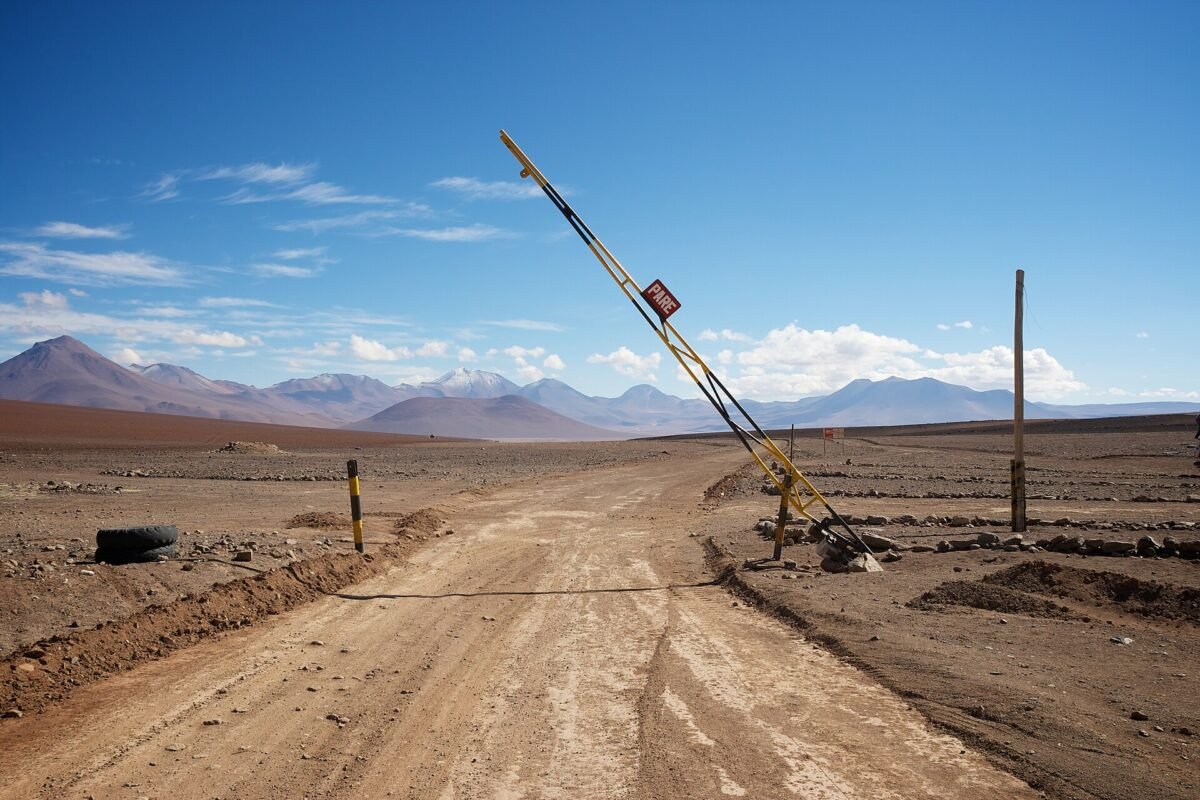
This is the classic backpacker crossing and the start of the reverse version of the three-day Lípez tour. Your agency in San Pedro collects you early in the morning, takes you to Chilean immigration in town or at the edge of town, and then drives up to the Bolivian post of Hito Cajón, at roughly 4,500 meters. There you get your Bolivian entry stamp, pay the Eduardo Avaroa reserve fee a little later, and switch to a Bolivian 4×4. If you are going the other direction, from Uyuni to Chile, our detailed guide to the Uyuni to San Pedro de Atacama tour explains every step of the border morning.
Two things catch Americans by surprise here. First, the Bolivian post has no ATM and no bank, so bring small bills in bolivianos for the park fee and toilets. Second, the altitude jump from San Pedro (about 2,400 meters) to the border is fast. If you start the tour from Chile, you go from desert town to 4,500 meters in roughly an hour, which is a big reason why many people prefer to start in Uyuni and finish in Chile.
From Argentina (Villazón and Tupiza)
The Villazón–La Quiaca crossing is a short walk across a bridge. The Argentine side processes your exit, and since Bolivia now receives that information electronically, you may not get a traditional Bolivian stamp at this crossing. The British government notes that Bolivia stopped stamping at the Argentine border and instead uses Argentina’s exit registration. Ask the officers and keep a photo of whatever document or screen they show you, in case another official asks later in the trip. From Villazón it is about an hour and a half to Tupiza, which is the starting point of the four-day Southwest Circuit that ends in Uyuni.
From Peru (Desaguadero and Kasani)
Most travelers coming from Cusco and Puno cross at Desaguadero, or at Kasani if they go through Copacabana on Lake Titicaca. Both are straightforward and visa-free for US citizens. If you want ideas for linking Peru and Bolivia, our partner site Uncover the Andes has a 10-day Peru and Bolivia overland itinerary that includes La Paz and the salt flat.
Yellow fever: do you need the certificate for Uyuni?
The Salar de Uyuni and the Lípez desert sit at 3,600 to 5,000 meters, far above the habitat of the mosquitoes that transmit yellow fever. You do not need the vaccine because of the salt flat itself. The question is about entry rules and the rest of your trip. The US State Department lists the International Certificate of Yellow Fever Vaccination as an entry requirement, particularly for travel to tropical areas, and the UK government says a certificate is required if you arrive from a country with transmission risk.
In practice, our advice is this: if you are flying straight from the United States to La Paz and only visiting the Altiplano, the certificate is rarely requested. If your itinerary includes the Amazon around Rurrenabaque, the Santa Cruz lowlands or you arrive from Brazil, Peru or Colombia, get vaccinated at least ten days before travel and carry the yellow card. It is valid for life and costs far less than a missed connection. Talk to a travel clinic, because the vaccine is not suitable for everyone.
Money, customs and what you can bring into Bolivia
The US State Department notes that you can bring up to US$50,000 into Bolivia and take out up to US$20,000 without special procedures. More useful for a salt flat trip is the fact that cash is still king in southern Bolivia. Park fees, toilets, small shops in Colchani and tips for drivers and cooks are paid in bolivianos.
Bolivia also changed its currency regime in 2026. The boliviano had been pegged at 6.96 to the dollar for about 15 years, but the Central Bank ended that peg in June 2026, and by September 2026 the official rate was above 12 bolivianos per dollar. This matters for budgeting because many online guides still quote prices at the old rate. Our Salar de Uyuni budget breakdown uses the new rate and shows how much cash to carry for a one-day or three-day tour.
| Item | Typical cost | How to pay |
|---|---|---|
| Eduardo Avaroa reserve entrance (foreigners) | About Bs 150 per person | Cash only, at the ranger post |
| Isla Incahuasi entrance | About Bs 30 per person | Cash only |
| Polques hot springs | About Bs 6 per person | Cash only |
| Toilets on the tour route | About Bs 1 to 6 per use | Cash, small coins |
| Driver and cook tip, 3-day tour | About Bs 50 to 100 per traveler | Cash |
| Tourist visa for US citizens | Free since Dec 2025 | Not applicable |
Customs at the Chilean border are stricter than those in Bolivia. When you leave Bolivia for Chile at Hito Cajón or Ollagüe, Chile’s agricultural service (SAG) bans fresh fruit, vegetables, meat, dairy, honey and seeds. Eat your snacks before the crossing or declare them. Fines are steep and inspectors open bags.
Step-by-step: your entry day at El Alto
- Fill in any immigration form the airline or the airport gives you, using the address of your first hotel.
- Walk slowly to the immigration hall. At 4,000 meters even a short corridor feels long.
- Hand over your passport and answer simple questions: purpose of the visit (tourism), length of stay and where you will go. Saying “Uyuni, La Paz and Lake Titicaca” is perfect.
- Check your stamp. Make sure the date is correct and note the number of days written by the officer.
- Collect your bags and go through customs, usually a quick scan.
- Change a small amount of money or use an ATM inside the terminal for taxi fare, then head to your hotel and rest.
If you are connecting the same day to Uyuni, leave at least two to three hours between the international arrival and the domestic departure. Delays on regional flights are common, and if your inbound flight is cancelled or arrives very late you may be entitled to compensation, depending on the airline and route.
Flight delayed or cancelled?
Your connection to Uyuni slipped? Check what you are owed
If your flight to South America arrived hours late or was cancelled, AirHelp checks your eligibility for compensation in a couple of minutes and handles the claim for you.
Free eligibility check · They deal with the airline · Fee only if you win
Where to stay your first night
Because you need an address of stay, it makes sense to book at least the first night before you fly. In La Paz, choose a hotel with heating in Sopocachi or San Jorge, where the altitude is slightly lower than in the city center and the streets are calmer at night. In Uyuni, many hotels are basic, so check reviews for heating and hot water. If you want a special experience, our guide to salt hotels near the Salar de Uyuni covers the best properties in Colchani and the edge of the salt flat.
First night sorted
Book a heated room before you land
A confirmed address speeds up the immigration form and guarantees a warm bed after a long flight. Compare hotels in La Paz and Uyuni on Hotels.com and filter by heating, breakfast and reviews.
Search Here for Hotels.com Best Hotel Deals!
Compare hotels in one place · Real guest reviews · Member prices on many stays
Bolivia vs neighbors: entry rules for US citizens
Most Uyuni trips are part of a wider route. Here is how Bolivia’s new policy compares with its neighbors for a US passport holder in 2026. Each country sets its own maximum stay and can change it, so check the official site before you go.
| Country | Visa for US tourists | Typical stay granted | Notes for Uyuni travelers |
|---|---|---|---|
| Bolivia | Not required (since Dec 2025) | Up to 90 days per year | Carry 6-month valid passport and address of stay |
| Chile | Not required | Up to 90 days | Strict agricultural inspection when arriving from Bolivia |
| Argentina | Not required | Up to 90 days | Exit registration used for the Villazón crossing |
| Peru | Not required | Up to 90 days, set by the officer | Desaguadero and Kasani are the main crossings to Bolivia |
For a deeper country-by-country summary, Uncover the Andes keeps an updated page on Bolivia visa requirements for 2026, including the rules for Canadians, Britons and Australians.
Common mistakes US travelers still make
- Using an old blog post. Many articles written before December 2025 still say Americans need a US$160 visa. If a page asks you to upload bank statements or pay a visa fee online for Bolivia, double check its date and source.
- Arriving with a nearly expired passport. Six months of validity is a strict rule. Airlines can deny boarding at check-in.
- Not checking the number of days on the stamp. A 30-day stamp on a 45-day trip means a trip to the migration office or a fine at exit.
- Forgetting the Argentine exit registration. At Villazón, make sure Argentina processes your exit, because Bolivia relies on that record.
- Carrying only large dollar bills. Small, clean bills and bolivianos make life much easier in the Lípez desert.
- Skipping insurance. Remote tours, unpaved roads and extreme altitude are exactly the situations where evacuation coverage is worth it.
Planning the rest of your Uyuni trip
With the visa out of the way, the important decisions are when to go and which tour to take. Between January and April, rain can turn the salt crust into the famous mirror, while from May to November the flat is dry, white and cold at night. Our month-by-month guide to the mirror effect helps you pick the right dates, and the comparison of 1-day, 3-day and 4-day Uyuni tours explains which itinerary fits your time and budget.
Book the salt flat
Lock in your Uyuni tour with a fixed price
Visa-free entry means you can plan a short trip around a long weekend. Civitatis lists 1-day, 3-day and private tours with clear inclusions, English descriptions and free cancellation on many dates.
Clear inclusions · Free cancellation on many tours · Reviews from real travelers
Gear worth packing for border days
Border crossings in the Altiplano are cold, bright and dusty. A few small items make the wait at Hito Cajón or Villazón much more comfortable:
- A strong mineral sunscreen such as EltaMD UV Clear SPF 46, because the UV index at 4,000 meters is extreme even in winter.
- Polarized UV400 sunglasses for the white glare of the salt and the high desert.
- A thin merino thermal base layer for early-morning departures at minus 10 °C.
- A slim RFID passport wallet to keep your passport, yellow card and printed bookings together.
- The Lonely Planet Bolivia travel guide for offline maps of border towns and bus terminals.
For a complete checklist by season, see our Salar de Uyuni packing list.
Safety and travel advisories
The US State Department asks travelers to exercise increased caution in Bolivia because of civil unrest, and advises against travel to the Chapare region because of crime. Neither issue affects the Uyuni area in a typical year, but road blockades by protesters can happen anywhere in the country, sometimes cutting the La Paz–Oruro–Uyuni highway for a day or two. Enroll in the State Department’s STEP program so the embassy can reach you, follow local news through your hotel or tour operator, and keep a buffer day in your itinerary before an international flight.
Frequently Asked Questions
Do US citizens need a visa to visit the Salar de Uyuni?
No. Since 1 December 2025, US citizens can enter Bolivia for tourism without a visa. You only need a passport valid for at least six months and the usual entry documents, such as the address of your first night and proof of onward travel if requested.
How long can Americans stay in Bolivia without a visa?
Up to 90 days within a one-year period for tourism. The officer may stamp a shorter period at entry, so check the number of days written in your passport and request an extension at a migration office if you need more time.
Is there still a US$160 Bolivian visa fee for Americans?
No. The fee disappeared with the visa requirement in December 2025. Any website that still asks Americans to pay a Bolivian tourist visa fee is outdated or unofficial.
Do I need a yellow fever vaccine to visit Uyuni?
Not for the salt flat itself, which is far too high for mosquitoes that carry yellow fever. However, a certificate can be required if you arrive from a country with yellow fever risk or plan to visit tropical areas such as the Amazon, so ask a travel clinic about your full route.
Can I cross from San Pedro de Atacama to Bolivia without a visa?
Yes. US citizens can enter Bolivia at Hito Cajón on the San Pedro de Atacama route without a visa. You complete Chilean exit formalities in San Pedro, then receive the Bolivian entry stamp at the border post before continuing into the Eduardo Avaroa reserve.
Does my passport need six months of validity for Bolivia?
Yes. The US State Department lists six months of passport validity from the date of entry as a requirement, plus blank pages for the stamps. Airlines can deny boarding if your passport does not meet that rule.
What happens if I overstay my time in Bolivia?
You pay a daily fine at the migration office or the border when you leave, and the process can delay your departure. Request an extension before your stamped days run out if you plan to stay longer.
Do I need a return ticket to enter Bolivia?
It is not always checked, but officers and airlines can ask for proof that you will leave Bolivia. A return flight, a bus ticket to Chile or a tour ending in San Pedro de Atacama is enough.
Can the visa-free rule change again?
Yes. Bolivia has changed its policy for US citizens several times since 2007. Before you travel, check the US State Department page for Bolivia and the website of the Bolivian embassy in Washington.
Is travel insurance mandatory for Bolivia?
It is not an entry requirement, but it is strongly recommended for Uyuni tours, which spend days far from hospitals at altitudes up to 5,000 meters. Choose a policy that covers medical evacuation and high-altitude travel.
Conclusion: the easiest time in years to visit Uyuni
For American travelers, Bolivia has never been easier to reach. The removal of the tourist visa saves around US$160, an afternoon of paperwork and a lot of uncertainty at the border. What remains is common sense: a passport with six months of validity, an address for your first night, a little cash in bolivianos and solid travel insurance for the high desert.
Now is the moment to plan the trip you have been postponing. Book your first night, compare flights to La Paz or Uyuni, and secure a tour with clear inclusions before the high season fills up.
Ready to go?
Your passport is all you need to start planning
Compare places to stay in Uyuni and La Paz on Booking, from budget hostels to salt hotels on the edge of the flat, with free cancellation on many rooms.
Free cancellation on many rooms · Verified guest reviews · Pay at the property options
Questions about your route? Message us on WhatsApp at +1 (210) 264-6444 and we will help you plan your Uyuni itinerary.