
This guide contains affiliate links. If you book through them we may earn a small commission at no extra cost to you, which helps keep this site independent.
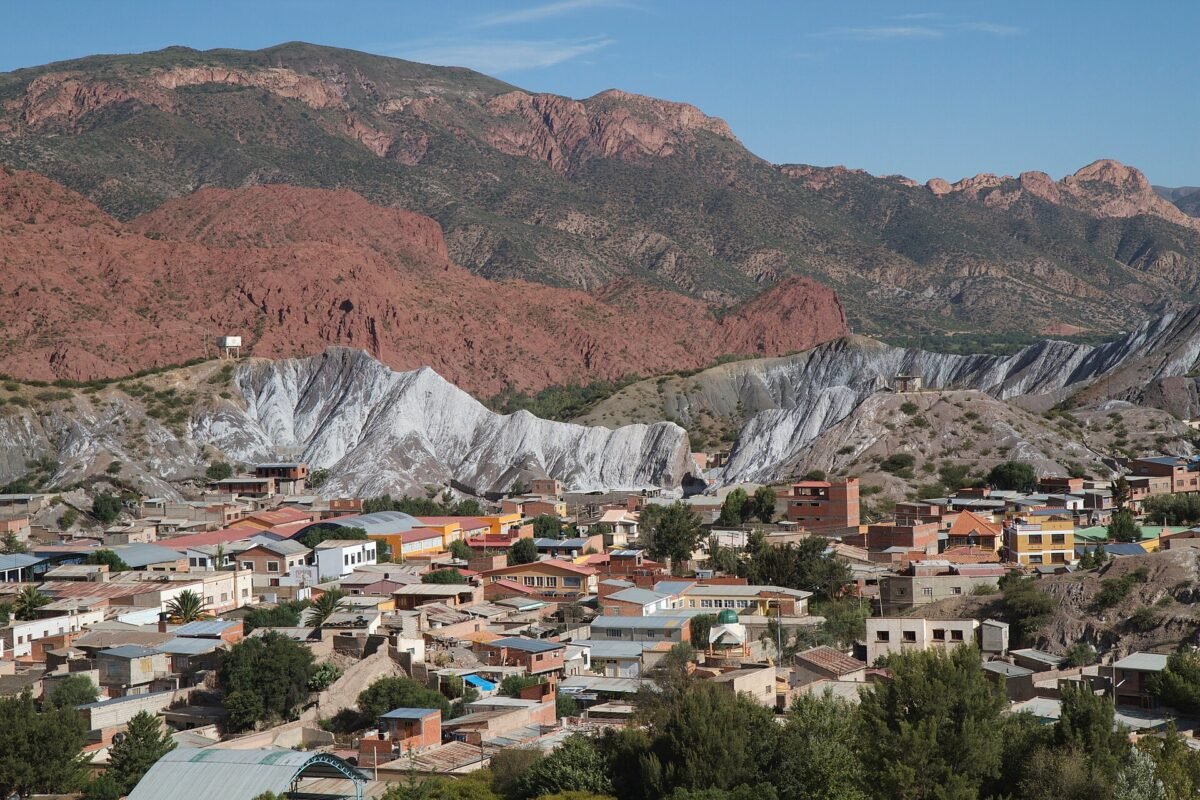
Most travelers meet the Salar de Uyuni from the town of Uyuni itself, rushing out to the white flat on day one and racing to the lagoons on days two and three. There is another way to do it, slower and arguably more beautiful. The four-day jeep tour from Tupiza, a small town of red canyons near the Argentine border, approaches the salt flat from the south. It climbs through cactus valleys and abandoned mining settlements into the Lípez desert, visits the colored lagoons and geysers of the Eduardo Avaroa reserve, and saves the Salar de Uyuni for the grand finale: sunrise on the salt on the last morning.
This guide covers the complete route day by day, what the tour costs in 2026, the park fees you pay in cash, how to get to Tupiza, and an honest comparison with the standard three-day tour from Uyuni. If you are coming up from Salta and Jujuy in Argentina, or you simply want a less crowded version of Bolivia’s most famous road trip, this is the itinerary to consider.
Why start the Uyuni tour in Tupiza?
The biggest argument is the order of the scenery. On a classic Uyuni departure, the salt flat comes first and the rest of the trip, however spectacular, can feel like an epilogue. Starting from Tupiza flips the story. You travel through landscapes that few Uyuni-based tours reach, such as the Quebrada de Palala and the eroded rock towers of El Sillar, and you arrive at the salt flat already acclimatized after three nights at altitude. The Uyuni salt flat sunrise on the final morning is the reward.
The second argument is acclimatization. Tupiza sits at roughly 2,950 meters, which is about 700 meters lower than Uyuni. Spending a night or two there before the tour, then climbing gradually to San Pablo de Lípez on day one, is gentler on the body than going from La Paz to Uyuni and up to 4,900 meters within 48 hours. Our article on altitude sickness in Uyuni explains why gradual gains matter.
The third argument is crowds. Dozens of jeeps leave Uyuni every morning on almost identical schedules. Departures from Tupiza are fewer, so viewpoints and lodges on the first two days are quieter, and you only merge with the main tour traffic around Laguna Colorada.
Tupiza vs Uyuni: which starting point fits you?
| Factor | 4-day tour from Tupiza | 3-day tour from Uyuni |
|---|---|---|
| Duration | 4 days, 3 nights | 3 days, 2 nights |
| Typical shared price (2026) | From about US$280 per person | From about US$150 to 250 per person |
| Salar de Uyuni | Last morning, at sunrise | First day |
| Extra scenery | Quebrada de Palala, El Sillar, San Pablo de Lípez, mining villages | Train Cemetery and Colchani on day one |
| Starting altitude | About 2,950 m | About 3,650 m |
| Maximum altitude | About 5,000 m near Sol de Mañana | About 5,000 m near Sol de Mañana |
| Crowds | Quieter first two days | Busy at most stops |
| Ends in | Uyuni town (around midday) | Uyuni or San Pedro de Atacama |
| Best for | Travelers arriving from Argentina, slower pace | Travelers short on time, arriving from La Paz |
If you are still deciding between the main formats, our full comparison of Salar de Uyuni tours: 1-day vs 3-day vs 4-day goes deeper into private versus shared trips.
How to get to Tupiza
Tupiza is small but well connected because it sits on the road and railway between Uyuni and the Argentine border at Villazón.
- From Argentina: Cross the bridge between La Quiaca and Villazón, then take a van, shared taxi or minibus north to Tupiza. Wikivoyage reports frequent departures from early morning until evening, costing around Bs 15 to 20 and taking about 1 to 1.5 hours.
- From La Paz: Several companies run direct overnight buses to Tupiza. Expect a long ride, roughly 12 to 14 hours, with fares that depend on bus class.
- From Uyuni: Buses take about 5 to 6 hours, usually with a stop in Atocha. This route makes sense if you want to do the tour in reverse or visit Tupiza after the salt flat.
- By train: The state rail company Ferroviaria Andina runs a slow but scenic service linking Oruro, Uyuni, Atocha, Tupiza and the south, only a couple of times per week. In recent timetables the Uyuni–Tupiza section takes close to six hours. Check the current schedule at the station, because it changes often.
Arriving the day before your tour is essential. Departures usually leave at around 7:30 am, and you want to meet your driver, check the jeep and buy snacks and water the evening before.
Base yourself in Tupiza
Sleep near the canyons before the big climb
Tupiza hotels are simple but friendly, with courtyards and views of the red cliffs. Compare rooms with hot water and breakfast before your early tour departure.
Search Here for Hotels.com Best Hotel Deals!
Compare hotels in one place · Real guest reviews · Member prices on many stays
The 4-day Tupiza to Uyuni route, day by day
The itinerary below follows the route used by most Tupiza operators in 2026. Order and overnight villages can vary slightly with road conditions, weather and the lodge availability, but the highlights are the same.
| Day | Route | Main stops | Highest point | Overnight |
|---|---|---|---|---|
| 1 | Tupiza to Quetena | Quebrada de Palala, El Sillar, Nazarenito mining community, San Pablo de Lípez | About 4,250 m and higher passes | Quetena (basic lodge) |
| 2 | Quetena to Huayllajara | Laguna Kollpa, Salar de Chalviri and Polques hot springs, Laguna Verde, Dalí Desert, Sol de Mañana geysers | About 5,000 m at the geysers | Refugio Huayllajara near Laguna Colorada |
| 3 | Huayllajara to Villa Candelaria | Laguna Colorada, Siloli Desert and Árbol de Piedra, Laguna Hedionda, Ollagüe volcano viewpoint, Chiguana and San Juan salt flats | About 4,600 m | Villa Candelaria or San Juan area |
| 4 | Villa Candelaria to Uyuni | Sunrise on the Salar de Uyuni, Isla Incahuasi, Colchani salt village | About 3,650 m | Tour ends in Uyuni around 1:30 pm |
Day 1: Red canyons and the road to Lípez
The first morning is the reason many people choose Tupiza. You leave town through a landscape that looks more like the American Southwest than the Andes: deep-red rock walls, giant cardón cacti and dry riverbeds. The first stop is usually the Quebrada de Palala, a wide red gorge that was once a trading route for llama caravans. Shortly after comes El Sillar, a ridge of sharp eroded pinnacles where the road runs along a natural saddle above the valleys.
As the jeep climbs, the vegetation thins and the air cools. You pass small mining communities such as Nazarenito, where people still work tin, silver and zinc in tiny family operations, and reach San Pablo de Lípez at about 4,250 meters. The night is spent in Quetena, one of the highest villages in the region. Lodging is basic: shared rooms, thick blankets, and usually no heating. Dinner is simple and hot, and you will be grateful for every layer you packed.
Day 2: Hot springs, green lagoon and the geysers
Day two is a feast. The jeep heads west into the core of the Eduardo Avaroa Andean Fauna National Reserve, where you pay the entrance fee at the ranger post. Highlights include Laguna Kollpa, white with borax deposits, and the Salar de Chalviri, home to the Polques hot springs. A soak in the natural pool at around 4,400 meters, with flamingos in the distance and the Andes all around, is one of the best moments of the whole trip. Bring a swimsuit and a quick-dry towel.
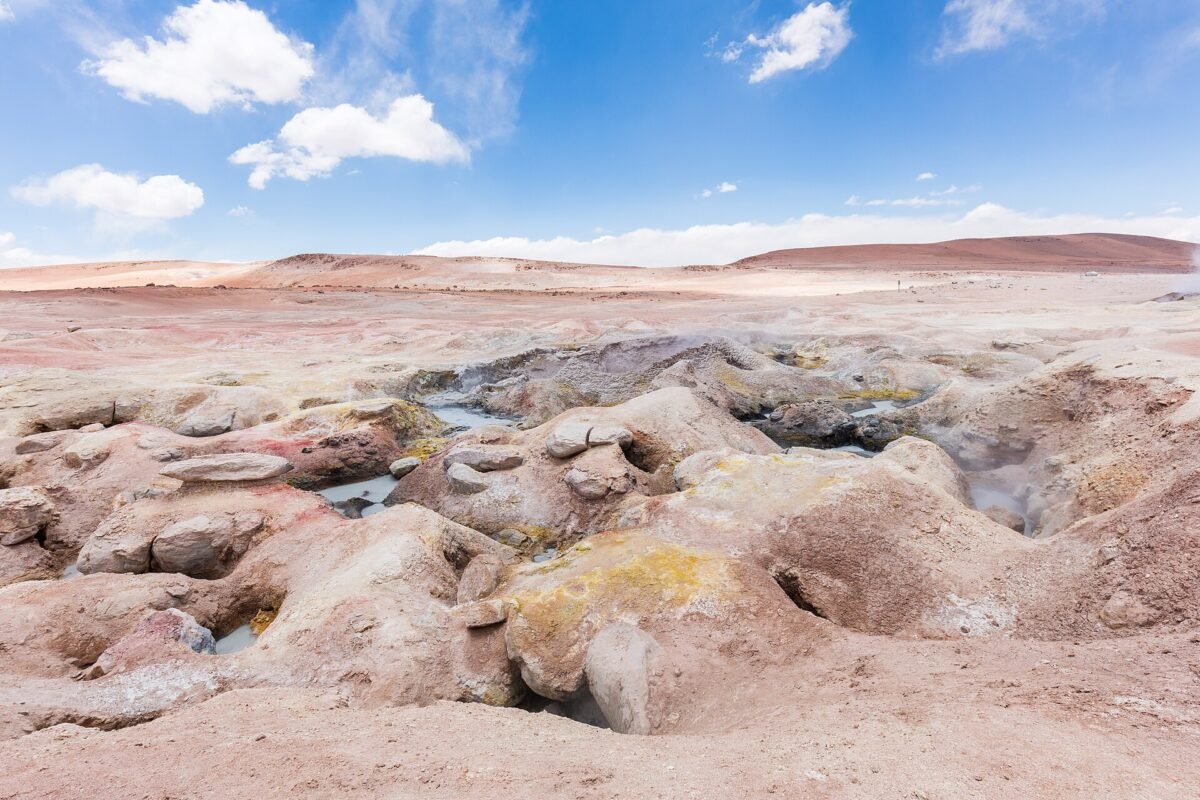
After lunch you visit Laguna Verde at the foot of the Licancabur volcano, on the Chilean border. Its color depends on wind and minerals, so it can be emerald one day and grey the next. The surreal rock formations of the Dalí Desert follow, then the climb to the Sol de Mañana geothermal field, a crater landscape of boiling mud pools and steam vents at close to 5,000 meters. Stay on the marked paths; the crust around the pools is thin and accidents happen.
The night is spent at a refuge near Laguna Colorada, often at Huayllajara. It is cold, frequently below minus 10 °C in the dry season, and showers may not exist. Sleep in your thermal layers and keep your phone and camera batteries inside your sleeping bag.
Day 3: Flamingos, stone trees and volcanoes
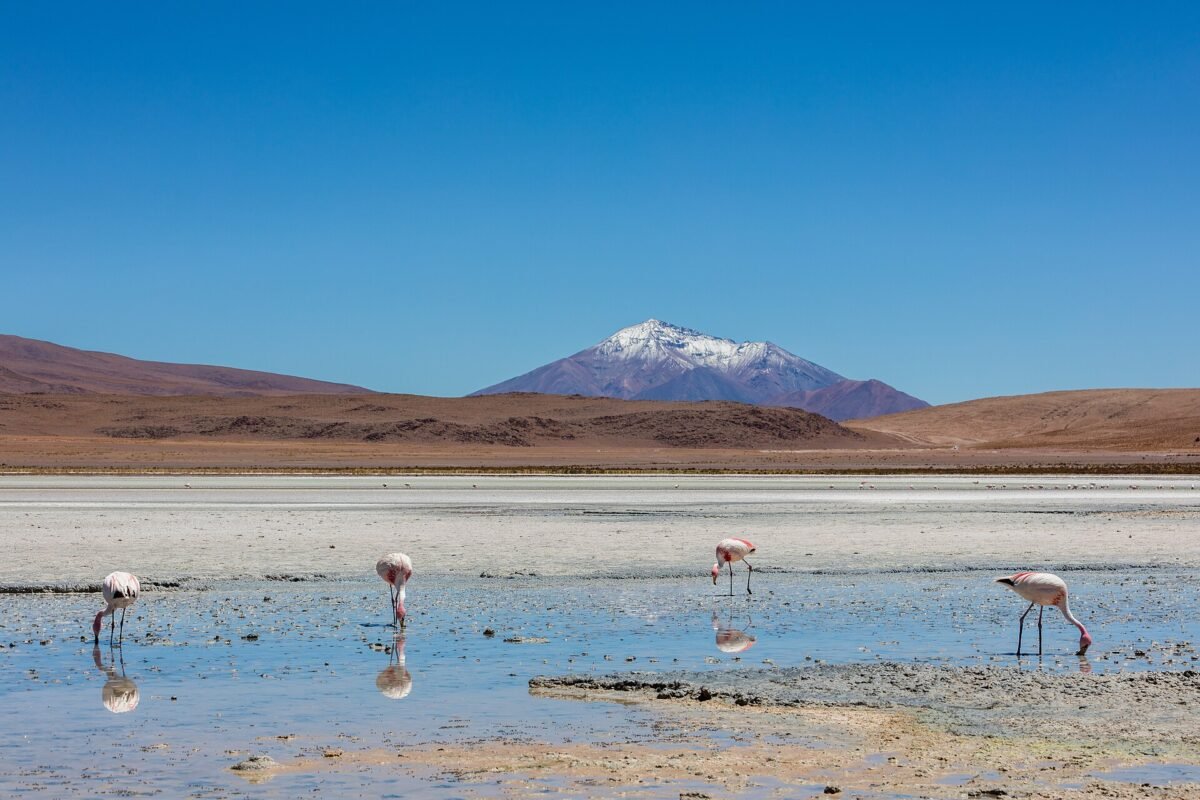
You wake up next to one of the most photographed lakes in South America. Laguna Colorada owes its red tones to algae and minerals, and it hosts thousands of flamingos, especially the James’s flamingo. For background on the lagoons and the wildlife, read our guide to Laguna Colorada and Laguna Verde.
The route continues north through the Siloli Desert, where the wind has sculpted the famous Árbol de Piedra, a stone tree balanced on a thin trunk of rock. The afternoon is a string of high lagoons, including Laguna Hedionda, with more flamingos and fewer tourists, and a viewpoint over the active Ollagüe volcano, which often releases a thin plume of gas from its summit. You then cross the small Chiguana and San Juan salt flats, a preview of what is coming.
Night three is usually spent in Villa Candelaria or a nearby village at the southern edge of the Salar de Uyuni. Accommodation here is often more comfortable, sometimes in a hostel built partly from salt blocks, and a cold shower may be available.
Day 4: Sunrise on the salt flat
The final day starts in the dark. The jeep drives onto the salt flat before dawn, so you watch the sun rise over the world’s largest salt flat, about 10,582 square kilometers of white crust. In the dry season the hexagonal salt patterns glow pink and orange; in the rainy season you may get a perfect mirror. After breakfast you visit Isla Incahuasi, a rocky island covered with giant cacti; our guide to Isla Incahuasi covers the trail and the entrance fee. You also stop for perspective photos and visit the salt-processing village of Colchani before arriving in Uyuni around midday.
On some itineraries the Train Cemetery is included at the end, on others it is not. It is only a few minutes from town, so you can visit on your own the same afternoon. Our article on the Uyuni Train Cemetery and Colchani explains what to see.
Book with clear inclusions
Prefer to start in Uyuni? Compare tours in one place
If the Tupiza schedule does not match your dates, Civitatis lists 1-day, 3-day and private Uyuni tours with English descriptions, transparent inclusions and free cancellation on many departures.
Clear inclusions · English descriptions · Verified reviews
How much does the Tupiza to Uyuni tour cost in 2026?
Prices in Tupiza vary more than in Uyuni because there are fewer operators and many trips are put together by combining small groups. Published 2026 prices give a useful benchmark. For example, the shared four-day tour sold by Nomades costs US$280 per person and needs at least five passengers to confirm. It includes a Spanish-speaking driver, all meals, a sleeping bag and basic shared lodging. Private versions with hotels instead of refuges cost considerably more, because you pay for the whole vehicle.
| Cost item | Approximate amount | Notes |
|---|---|---|
| Shared 4-day tour, basic lodges | From about US$280 per person | Minimum group of 5 to 6, Spanish-speaking driver |
| Private 4-day tour, hotels | Often US$600 or more per person | Depends heavily on group size |
| Eduardo Avaroa reserve entrance | Bs 150 per person | Cash, paid at the ranger post |
| Polques hot springs | Bs 6 per person | Cash |
| Isla Incahuasi | Bs 30 per person | Cash |
| Toilets along the route | About Bs 6 per use in some places | Bring coins |
| Rubber boot rental (rainy season) | About Bs 20 | Needed when the flat is flooded |
| Optional transfer back to Tupiza | About US$15 | Shared transport from Uyuni |
| Recommended extra cash | About Bs 350 per person | Fees, water, snacks, tips and souvenirs |
Remember that Bolivia’s exchange rate changed in 2026, when the official peg of 6.96 bolivianos per dollar ended. If a quote is in bolivianos, convert it using the current rate before comparing it with a dollar price. For a full picture of transport, food and lodging costs, see our Salar de Uyuni trip cost breakdown.
Tips for booking in Tupiza
- Book a day or two ahead in high season. In July, August and around Christmas, shared groups fill up. In quieter months you can usually arrange a tour on arrival, but you may wait a day for the group to reach five people.
- Ask exactly what is included. Confirm meals, water, sleeping bag, number of passengers per jeep (six is normal, seven is uncomfortable) and whether the Train Cemetery is part of the final day.
- Ask about the guide. Most tours have a driver who also acts as guide, usually in Spanish only. English-speaking guides are available on some departures for an extra cost.
- Check the vehicle. Look for working seatbelts, decent tires, a spare tire and a first-aid kit. Reputable operators carry oxygen.
- Read recent reviews. Look for comments about safe driving, food quality and how the company handled problems.
Things to do in Tupiza before or after the tour
Tupiza deserves at least one full day of its own. The town sits in a valley surrounded by red-rock formations that look like scenes from a western, which is fitting: the outlaws Butch Cassidy and the Sundance Kid spent their last days in this region. According to the most widely accepted version, they died after a shootout in the mining village of San Vicente in November 1908, following the robbery of a mine payroll. Some agencies in Tupiza organize long day trips to San Vicente, which is several hours away on dirt roads.
Closer to town, the most popular activities are:
- Canyon hikes. A loop through the Cañón del Inca, Valle de los Machos and Puerta del Diablo can be done in a day, on foot or by bike.
- Horse riding. Local stables offer rides through the canyons. Wikivoyage reports prices of about Bs 30 per hour, or around Bs 150 for three hours.
- Jeep or bike tours. Half-day trips cover the main viewpoints if you are short on time.
- Market life. Tupiza’s central market is a good place to buy coca tea, snacks, fruit and water for the tour.
What to pack for the 4-day tour
The extra night and the remote southern route make packing even more important than on a three-day tour. Temperatures fall well below freezing at night between May and September, and the sun is brutal during the day. Our what to pack for the Salar de Uyuni list is organized by season; these are the essentials for this route:
- A warm down jacket, hat and gloves for the night at Laguna Colorada. A packable down jacket compresses into a small pocket and weighs very little.
- A merino wool thermal base layer to sleep in.
- High-protection sunscreen such as EltaMD UV Clear SPF 46 and SPF lip balm.
- Polarized UV400 sunglasses for the salt and the lagoons.
- A 20,000 mAh power bank, because electricity in the refuges is limited.
- A rechargeable headlamp for pre-dawn starts and lodges without lights.
- Swimsuit and quick-dry towel for the Polques hot springs.
- At least two liters of water per day, plus snacks.
- The Lonely Planet Bolivia guide if you want background on the villages and mining history along the way.
Insurance for remote routes
Four days without a hospital
The Lípez desert is one of the most remote regions in South America. SafetyWing covers emergency medical care and evacuation, and you can sign up online even if you are already traveling.
Buy after you leave home · Flexible monthly plan · Covers 180+ countries
Best time to do the Tupiza to Uyuni tour
The southern circuit runs all year, but the experience changes with the seasons:
- April to June: Clear skies, dry roads and fewer travelers. Nights are cold but manageable. Excellent for photography.
- July to September: Peak season and the coldest nights, often around minus 15 °C or lower near Laguna Colorada. Book early.
- October to November: Warmer days, still dry, and a good balance of weather and crowds. Our dry season guide explains what to expect on the salt flat during these months.
- December to March: The rainy season. Afternoon storms can flood roads and rivers in the south, and some routes are diverted. The reward is the chance of a mirror effect on the final morning, although parts of the flat, including Isla Incahuasi, may be unreachable when the water is deep.
Doing the route in reverse: Uyuni to Tupiza
Some operators in Uyuni sell the trip in the opposite direction, starting with the salt flat and ending in Tupiza. It is a good choice if you are heading south to Argentina afterwards, because Tupiza is only about an hour and a half from the Villazón border. The downside is that you lose the gradual climb and the dramatic finale on the salt. If your onward plans include Chile instead, the three-day tour ending in San Pedro is the natural option; see our Uyuni to San Pedro de Atacama guide.
Getting there by air
Flying into Bolivia? Compare every route
Whether you land in La Paz, Santa Cruz or Salta in Argentina, Skyscanner shows all connections side by side so you can plan the cheapest way to Tupiza or Uyuni.
Hundreds of airlines · Flexible-date search · No booking fees
Safety on the southern circuit
The Tupiza route crosses some of the emptiest country in Bolivia. That is part of its magic, but it also means you rely completely on your driver and vehicle. Choose an established agency, insist on seatbelts, and speak up if a driver seems tired or drinks alcohol. Carry basic medicine for headaches and stomach problems, and tell the driver immediately if you feel severe altitude symptoms such as a headache that does not improve, vomiting or confusion. The only real treatment for serious altitude illness is descent. For a broader view of safety in the country, Uncover the Andes has an honest guide on whether Bolivia is safe to travel in 2026.
Frequently Asked Questions
How long is the tour from Tupiza to Uyuni?
The standard tour lasts four days and three nights. It leaves Tupiza around 7:30 am on day one and usually reaches Uyuni around midday or early afternoon on day four. Some operators offer five-day versions with extra lagoons or mining towns.
How much does the Tupiza to Uyuni tour cost?
Shared four-day tours start at around US$280 per person in 2026, with a minimum group size of about five. Private tours with hotels cost much more. On top of the tour price you pay roughly Bs 186 per person in park and site fees in cash, plus tips and personal expenses.
Is the Tupiza to Uyuni tour better than starting in Uyuni?
It is better for travelers who have more time, want quieter roads and prefer a gradual climb. You see canyons and villages that standard Uyuni tours skip, and you finish with sunrise on the salt flat. If you are short on time, the three-day tour from Uyuni is cheaper and shorter.
What is the maximum altitude on the Tupiza tour?
The highest point is around the Sol de Mañana geysers, at roughly 4,900 to 5,000 meters. The first night in Quetena and the second near Laguna Colorada are both above 4,000 meters.
Do I need to book the Tupiza tour in advance?
In July, August and the Christmas holidays it is wise to book a few days ahead. In other months you can often book on arrival in Tupiza, but you may need to wait until a group of five or six is complete.
Is there an English-speaking guide on the Tupiza to Uyuni tour?
Most shared tours have a Spanish-speaking driver who also acts as guide. English-speaking guides are available on some departures and private tours for an additional cost, so ask before booking.
What fees are not included in the tour price?
Typically the Eduardo Avaroa reserve entrance of Bs 150, the Polques hot springs at Bs 6 and Isla Incahuasi at Bs 30, plus toilets, water, snacks, boot rental in the rainy season and tips for the driver and cook.
How do I get from Argentina to Tupiza?
Cross the border from La Quiaca to Villazón on foot, then take a van, shared taxi or minibus to Tupiza. The ride takes about 1 to 1.5 hours and costs around Bs 15 to 20.
Can I do the Tupiza tour in the rainy season?
Yes, tours run all year, but between December and March heavy rain can flood rivers and roads in the south, and the route may be changed. The salt flat may show a mirror effect, while some places like Isla Incahuasi can be inaccessible.
Where does the Tupiza to Uyuni tour end?
In the town of Uyuni, usually around 1:30 pm on the fourth day. From there you can take a bus or flight to La Paz, continue to Chile, or arrange shared transport back to Tupiza for about US$15.
Conclusion: the slow road to the mirror of the world
The Tupiza to Uyuni tour is the connoisseur’s way to see southwestern Bolivia. It adds a full day of canyons and mining villages, lets your body adjust gradually to altitude, and keeps the most iconic moment, sunrise on the Salar de Uyuni, for the end. It costs a little more and demands an extra night in a cold refuge, but most travelers who choose it say it is the highlight of their time in South America.
If the route fits your plans, book your Tupiza hotel for the night before departure, pack for freezing nights and bright days, and line up a reliable operator. If you need to save time, compare Uyuni departures instead and keep Tupiza for your next trip.
Your last night in Uyuni
Rest well after four days in the desert
After the tour you will want a hot shower and a real bed. Compare Uyuni hotels and salt hotels on Booking, with free cancellation on many rooms.
Free cancellation on many rooms · Verified reviews · Options for every budget
Need help matching the tour with your dates? Write to us on WhatsApp at +1 (210) 264-6444 and we will help you plan your route through southern Bolivia.